

Bleeding disorders and Bleeding problems has been troubling people from ancient time but it took one event involving a royal family to get to the details of the Royal Disease, Haemophilia.
In 1905, the then Czar of Russia, Nicholas had a son who was suffering from a bleeding disorder. The young man was being treated by a Russian Holy man known to heal wounds but it was of no use. Many didn’t know then that the young man’s mother, Queen Alice, had carried a gene from her grandmother England’s Queen Victoria.
A thorough analysis of the British Royal family revealed how a single genetic factor caused the rare genetic disease Hemophilia. The Queen Victoria family tree analysis revealed how the genes are passed down from the carrier females through their X chromosomes to her sons and daughters leading to fatal condition in the males. Since then, it has been known as a royal disease as the daughters of Queen Victoria spread the disease to Spanish, Russian and German royal families after they married into these families.
But there’s much more to the disease than this. Over the years many more types of Haemophilia has been discovered as scientists unravelled the genetics of the disease. The disease gained prominence during the World Wars as bleeding wounds from war injuries became a potent problem.
The disease is a potent problem for most people as it causes unstoppable bleeding from any cuts and wounds, and since it’s a hereditary disease people need to be screened before marriage. This led to the development of World Haemophilia Day, which is celebrated on 17th April every year, commemorating the foundation of World Federation of Haemophilia back in 1963.
Since 1989, the initiation year, the World Haemophilia Day has always acted to normalize the life of people suffering from the disease and to create awareness amongst the general public at large. Despite the best of the efforts people aren’t that sure of the disease, specially the not so popular types of the disease. Together with Thalassemia, Haemophilia remains the topmost genetic blood disorder of the world.
So let discuss and burst the myths
What is Haemophilia?
The CDC defines Haemophilia as an inherited bleeding disorder which results in uncontrolled bleeding because of the blood’s inability to clot.
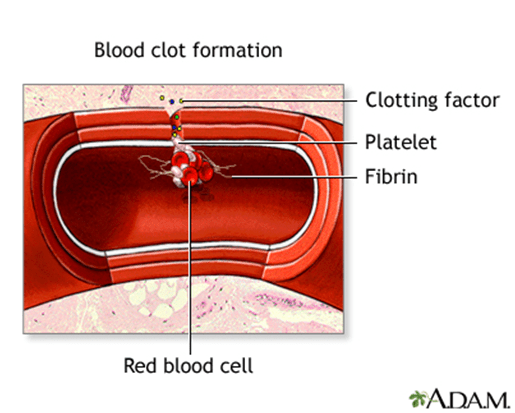
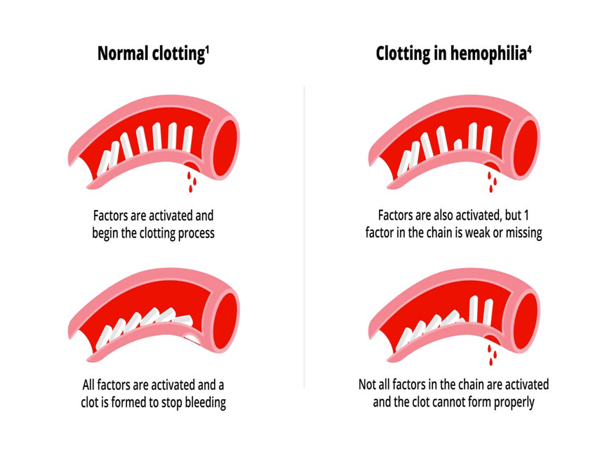
This happens due to the absence of blood clotting factors which helps the blood to clot and stops bleeding after a wound, cut or injury. Now, for a normal person bleeding would stop in few minutes as the clotting factors will rush to the wounded region to prevent bleeding.
But for a person suffering from haemphilia the situation is different as there is a deficiency of factor VIII (8) or factor IX (9) which are needed to stop bleeding.
Types of Haemophilia
Depending on the clotting factors affected, the disease is of 2 kinds
- Haemophilia A or the Royal Haemophilia caused due to
clotting factor VIII(8) deficiency - Hemophilia B or Christmas Disease) caused due to clotting factor IX (9) deficiency
Another very rare type of Haemophilia came to be known to the world in 1953. Haemphilic C is a rare disease where there is a deficiency of clotting factor XI (11) or thromboplastin. This is a very rare form of the disease occuring in 1 in 100,000 people.
This particular kind is quite prevalent in Israeli Jews because intermarriage.
This third kind isn’t that serious as it doesn’t cause profuse bleeding like that seen in the other 2 kinds.
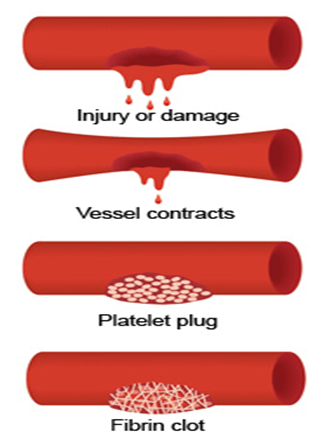
Thromboplastin, the affected factor in this type of Haemophilia is the chief agent responsible for developing the clotting cascade. This protein creates thrombin which governs the function of the primary factor the brings the platelets together for blood clotting. Thrombin converts Fibrinogen to fibrin and this fibrin helps in platelet accumulation required for blood clotting.
How these clotting factors change?
Haemophilia genetics is governed by how these clotting factors change in a person suffering from the disease. As with other such biological components of blood, the clotting factors too are protein by nature.
Now, proteins are the chief biomolecules which drive cell function but major problems of proteins begin when they are made. Any problem anywhere in their making, packaging or assembling process changes the whole function of the proteins.
Proteins are made when a gene properly codes for it. Thereby giving proper information of making the protein. Whenever there’s a fault in the gene that information is lost and the proteins aren’t expressed. This is what happens in case of Hemophilia.
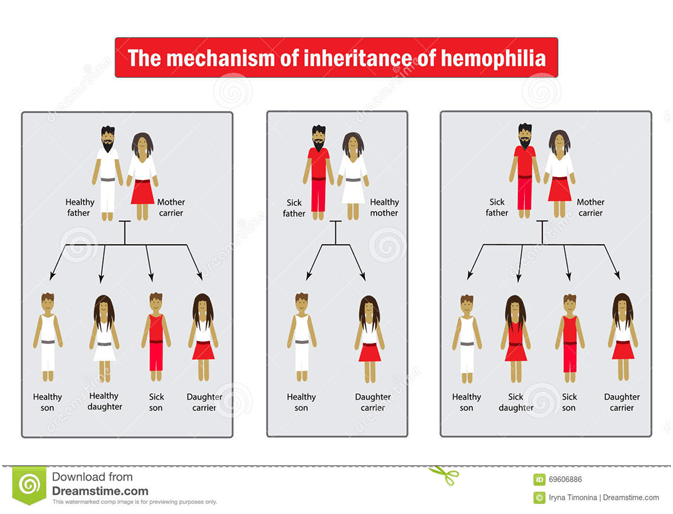
Now, the genes that express these proteins are only found in the X-chromosome. So, by that logic, both men and women would have been affected by the disease. However, that isn’t the case as X chromosome has different distribution levels in males and females. Men have only one copy of X while women have 2 copiesof X.
Thus, even if 1 X chromosome of a female suffering from Haemophilia carries the mutation and doesn’t produce the clotting factors, the other one compensates for it. In such a scenario that female is called a carrier. She doesn’t have the disease but she carries a defetictive gene which she can pass down to her sons and daughter. That’s exactly what happened to Queen Victoria.
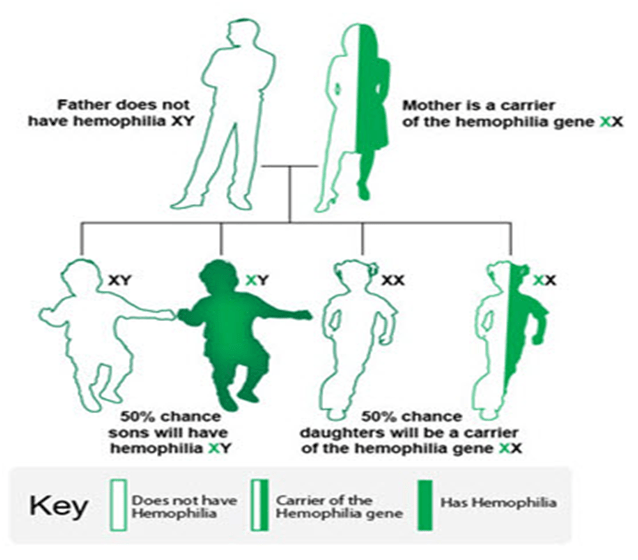
Now, men have only 1 X chromosome which they get from their mother. So, they are heavily affected by the disease.
Since, children get the 1 chromosome from their mother and 1 from their father, and females need 2 X chromosomes while males need 1 X chromosome and 1 Y chromosome to live, the men always gets the disease while the women can either be a carrier of the disease (1 affected X chromosome) or suffer from the disease ( 2 affected X chromosome)
While this is the common nature of Haemophilia genetics, there’s a slight deviation in case of Haemophilia C.
Unlike the other 2 types, this disease can be carried from one affected parent. You can have only 1 copy of the X affected chromosome and still show disease symptoms. Although children with this line of autosomal dominant inheritance of chromosome from an affected parent rarely develop the disease, still possibilities are there.
Symptoms
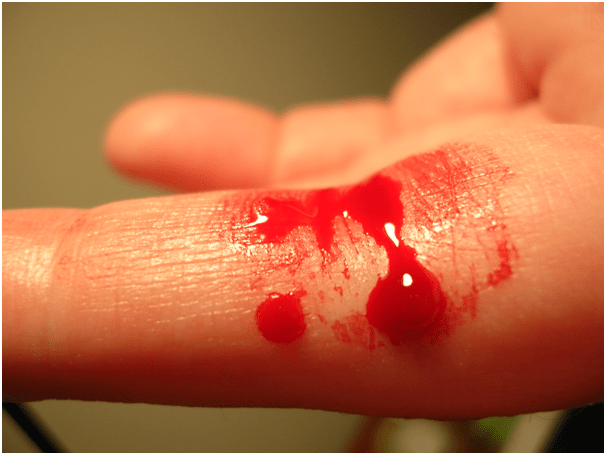
The primary nature of the disease is uncontrolled bleeding both internal and external.
So, people suffering from any kinds of Haemophilia will have bleeding in joints and in the brain leading to joint pains and seizures respectively, even paralysis if unchecked
Other conditions include bleeding under the skin or bruising, blood build up under bruises, bleeding gums, nosebleeds, circumcision bleeding, childbirth bleeding, urine stool bleeding, vaccinations bleeding etc.
In short, nay kind of possible incisions which result in bleeding.
The disease is so much fatal that it can result in death if the bleeding goes unchecked for a prolonged time
Diagnosis & Treatment
Because of the nature of the disease it is crucial you take a physician’s guide at every step and take medications under expert supervisions.
Treatments and diagnosis is quite simple and mainly dwells on blood testing and proper medicine uptake and careful monitoring.
Bleeding time test, platelet test and the specific factor blood tests are the primary process of diagnosis.
Treatment involves replenishing the blood clotting factors with regular infusions which can be done by the patients themselves after proper guidance. Some people can develop antibodies or inhibitors to these clotting factors given as a treatment. For these 15-20% people the treatment is more vigorous involving several clotting factors
So, that’s how you steer clear bleeding disorders like Haemophilia. Awareness and family medical history is key to the survival of a Haemophilia patient. So, remember to get yourself tested for this gene mutation and lead a bleed free life.
References
https://www.cdc.gov/ncbddd/hemophilia/facts.html
https://ghr.nlm.nih.gov/condition/hemophilia
https://www.hemophilia.org/Bleeding-Disorders/Types-of-Bleeding-Disorders/Hemophilia-A
https://www.hemophilia.org/Bleeding-Disorders/History-of-Bleeding-Disorders
https://www.hog.org/handbook/article/1/3/the-history-of-hemophilia
 Agantuk's Desk - Explore, Implore, Reverberate
Leave a reply to 7 Proven Benefits of Multivitamin Supplements – Agantuk, The Stranger's Desk – Explore, Implore, Reverberate Cancel reply