• When Death Came Visiting

    I couldn’t wait for him

    so he crept into my being.

    Together we started walking,

    we passed the baffled crowd sobbing.

    Next, we stopped at the synagogue

    To hear the verse of a grieving mother.

    By the river, we witnessed a rotten carcass,

    A queer being survived by his purpose.

    2 yards down the line

    there were lovers by the moonshine.

    As we passed the river

    we saw a lonely child quiver.

    At the helm of death

    They all bequeath.

    As they refuse to wait for him

    He creeps into them.

    Death is thy name

    Comes to visit without shame.

  • The Resting Place

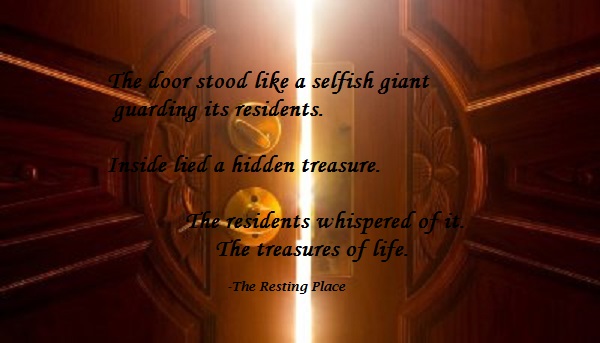
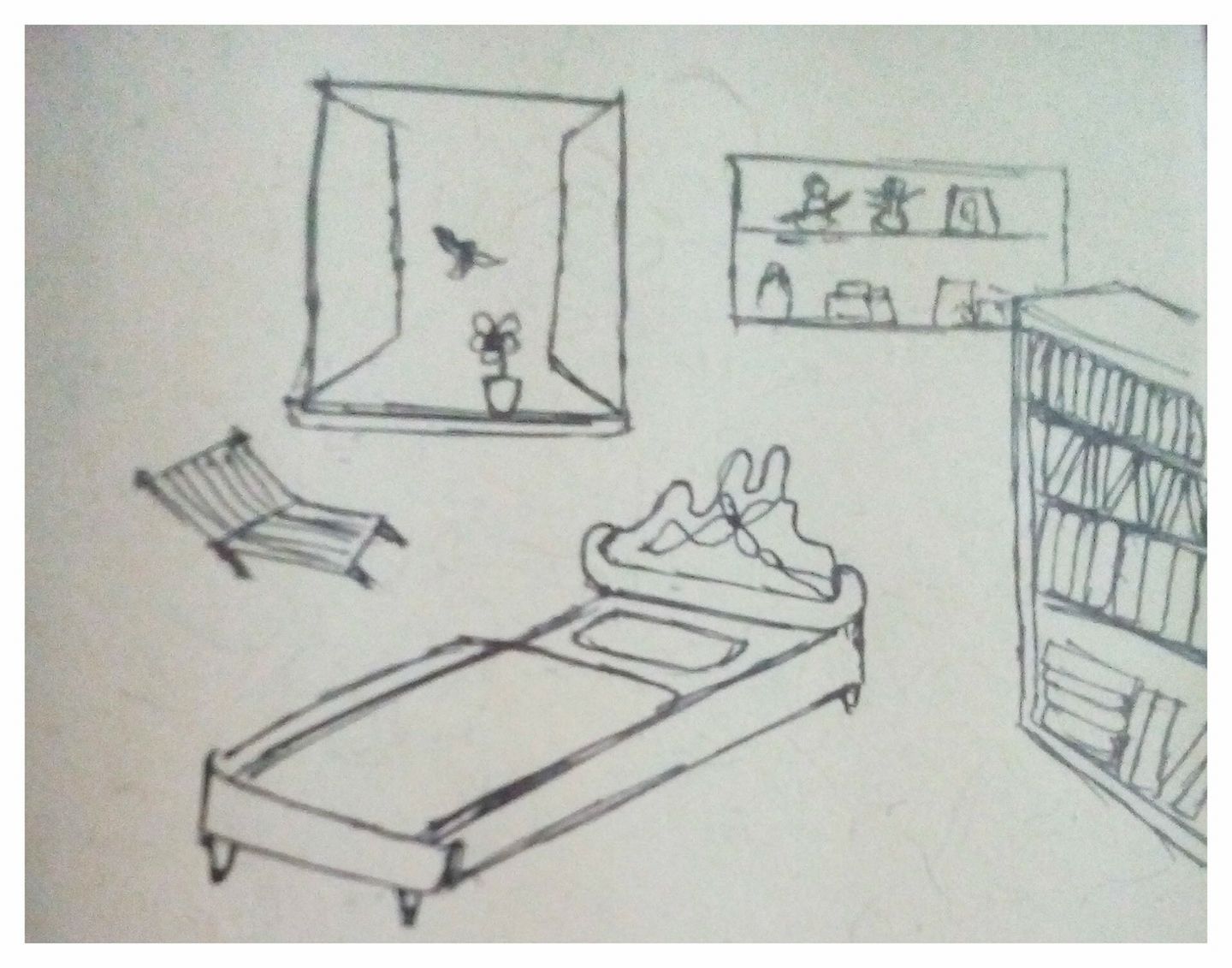
    In a quiet little corner of the house lied a deserted room. Its door stood there like a selfish giant guarding the residents. Inside there were hidden treasures – a worn out bed, an old cracking easy chair by the window, a mantle piece adorned with idols and a rugged bookshelf.

    The resident whispered of their lives. All of them were alive.

    resting place

    While the bookshelf spoke of classics and legends, the easy chair creaked of tired bones and exhausted skin. Blessing them from above was the mantle piece with its set of divine couplets.

    In their midst stood the worn out solitary bed. He sighed like a forlorn lover. His mistresses have left him one by one. They all made their bed here – a widowed lady and a solitary child, a grandmother and her grand-daughter.

    Both lived on the same place. They made their bed here only to leave it for someone else.  While the grandmother left it for her grand-daughter, the grand-daughter left it to seek her.

    Together they completed him. Together they made him alive. Together they served the purpose of the bed – of being a resting place.

    2 decades later, he waits to be dismantled.  He waits to re-unite with his mistresses – waiting to be felt alive once again.

    Today he has found his resting place.  Today he has made his bed.

    Just like his mistresses.

  • Colours Of Light

    An offbeat torrential rain ushered in the vibrant spring and amidst such gaiety affair started the journey of a young couple.

    BLACK and WHITE entered into their new life, through the green door – the door of prosperity. An unchartered territory and an uncertain future beckoned them.

    The slightly tensed voice of WHITE enquired, “what will become of us?” To which the melancholic BLACK replied, “scattering of life amongst our children and absorption of acceptance from them.”

    Nearly 3 decades has passed down since then. Today, BLACK and WHITE are entering a new door. The exited through the green door and entered a yellow one. The transient prism of love beckoned them there.

    7 colours and 7 children later, they have lost their vigour but gained each other. In their negligence, the children united their parents. Today, they proclaim to be with each other far from the colours they loved.

    As they silently trod their way BLACK enquired about their path, “Where to?” It was the time for WHITE to reply. She said, “into the heaven of togetherness, my love.”

    The neglected couple found their home at last. She found her prism in him. He found his mirror in her. Together they went on to make LIGHT.

    BLACK and WHITE went on to live with colours.

    COLOURS OF LIGHT.


  • Writers and Their Readers

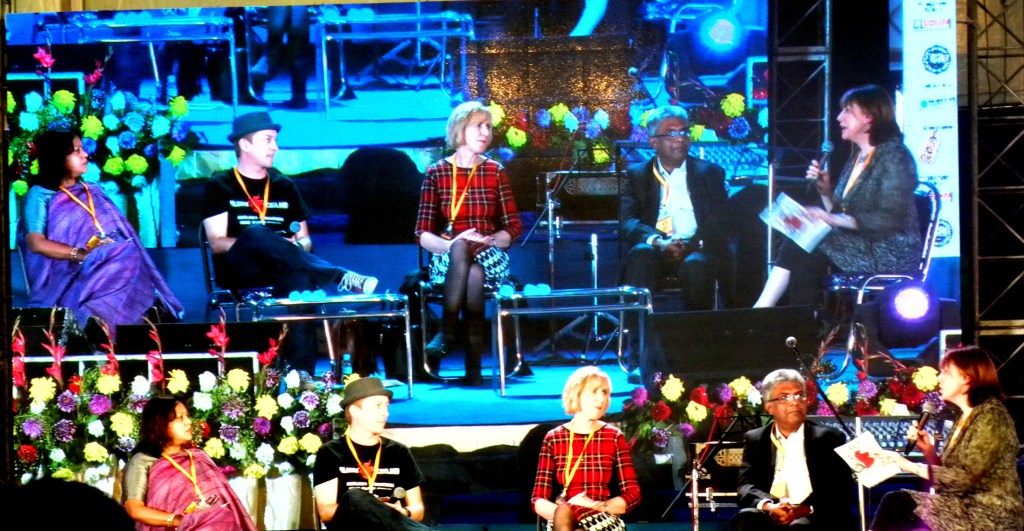
    Writers, those wonderful beings who change our lives and transform our societies. While reading a book it must have occurred to you at some point that a specific thing is specially written for you. You wished you were that character in that place. But have you thought, what writers actually think of readers? Do they have a specific audience in mind while they write or do they create readers along the process? Well the answer to this is both yes and no. It is as transient as the concept of writing and reading – the most dynamic part of literature. The Kolkata Literature Festival session titled “Who are my readers?” sought to explore this aspect.

    The panel was a versatile one, with writers from 5 different regions and languages. There was Khaled AlKhamissi, Egyptian writer and columnist. According to him, they key aspect of writing is to be in time that is to be conversant with the audience. Like Shakespeare who didn’t write for a specific audience but is still relevant after a century. Khaled also believes it has to be a mixture of both the world that is, a writer should write for his readers as well as himself. In his words, “It is selfish to think of yourself and don’t care about your readers” Similarly it is essential to enjoy writing. He also upheld the cyber publishing phenomenon and regards it as a wonderful opportunity for exchange of culture.

    This slideshow requires JavaScript.

    Nishi Chawla, academician and author of the celebrated book “In Search of Sita” put forward an academician perspective as well that of an writer. As an academician she upheld the reader’s review system which provides more interaction with the author and subsequently greater knowledge of readers by writers.  She read out a poem from her book “A Himalayan Poem” and asked the audience to retrospect this journey of the relationship.

    Vivek Shanbhag, playwright and novelist, an acclaimed Kannada writer cited the indian tradition of writer being part of the system. “A lucky privileged member” who had access and knowledge of things that others don’t and thus his role is to make the masses aware of situations. He regards readers on per as the writers whose book they read. According to him, writers aren’t superior to their readers but equal to them. They are as knowledgeable as their readers.

    Lin Anderson, the Scottish crime thriller writer draws inspiration from her childhood and says that she writes about stories she wants to read. That is how she started writing. She acknowledges it is indeed while talking to readers that you gather new insights about your stories. She recollects an incident when a young Spanish lady came upto her and said “Your writings changed my life”. Lin also spoke about the difficulty of articulating things to non-native speakers. For example, when she used some Scottish or Gaelic terms in her novel publishers wanted it to be changed to English words. In order to do so the essence is lost as some expressions are untranslatable.

    Natalie Ann Holborow, the youngest of them all and the winner of the Robin Reeves award says she generally doesn’t have any particular reader groups in mind while writing. Readers select her as they relate and reciprocate to her writings. She also pointed as her writing genre is primarily poetry hence it difficult to set a particular base audience. But, yes she points out as she attends events and interacts with readers it has made her aware of her niche audience.

    Thus, from this discourser we got the idea of who actually are “The Readers”. They are the future writers. Readers make writers and writers make readers. That is the essence of this unique relationship. There are no fixed rules, no guidelines – just characters that relate and stories that speak. Like the French novelist Honoré de Balzac who was asked by his publisher to follow the writing style of a particular author. In the end, after 200 years that best-seller author remains unknown but Balzac is revered throughout the world.

  • Crime Writing in Scotland and India

    Crime writing, it instantly reminds of murder mysteries and detective stories. Growing up we all had a favourite mystery writer and a favourite detective. Lets face it, all of us wanted to be a smart detective one day – be it  Feluda, Sherlock Holmes, Nancy Drew, Byomkesh or Poirot. We swayed between Agatha Christie, Satyajit Ray, Arthur Conan Doyle and others. But how many of us have seriously thought of this genre of literature and what goes in making it the top category. In UK,  Crime writing is the number 1 genre of literature.  The session “Bloody Scotland in Kolkata” deals with this – understanding crime writing genre of literature. Bloody Scotland is a crime writing festival in Scotland aimed at supporting the Scottish crime writers.

    Scotland obviously boasts of the famous Scotland Yard, the most efficient police service in the world. But the session doesn’t involve just detectives, police and murder mysteries  instead it goes deeper – analysing the very basis of crime writing. The panel includes terrific crime writers from Scotland and India. It has Lin Anderson and Doug Johnstone from Scotland, and Monabi Mitra and Krishnendu Mukhopadhay from India.

    This slideshow requires JavaScript.

    The session began by knowing the difference between English and Scottish crime writing. Scottish Crime writers Lin and Doug both agreed that English crime writing mostly deals with detective stories and the police proceedings while that of Scottish crime writing is quite different. It incorporates religion and societal structure. They cited the example of RL Stevenson Treasure Island, Jackyl and Hyde. Like Doug Johnstone says, “Most people think of crime writing is about detective stories, police procedures but there are more to it.” Like he writes about psychological aspects, domestic stories which deals with the dark side of human nature. Lin Anderson, also spoke about how having a father from the forensic department helped her inclination towards crime writing.

    Monabi Mitra talks about the police force and resurgence of urban areas in crime fiction. She says “there has been a resurgence of crime fiction based on urban centres like Kolkata”. Her stories are based in Kolkata and it mainly deals with the working of the police force. Being a daughter of a policemen she has first understanding of the problems they face while guarding the society. The society in turns ridicules them as inefficient and yet they are interested in the working procedure of the police. Thus, she gets inspired by them and hence started crime writing based on them.

    Krishnendu Mukhopadhay on the other hand speaks about the crime writing genre being a relatively new one in India – just about 100 years old. He speaks of his stories where he dwells more on the psychological aspects of his characters. He admired Dan Brown’s “The Da Vinci Code” and went looking for secret societies. Surprisingly, he found about Emperor Ashoka’s Secret society “Nine Wise Men” which the emperor formed to get information about  public views about the healthcare, education and other facilities of his kingdom. This influenced his crime writing.

    Coming to cities and their set up as a favourable place for Crime Stories, the panelists gave out some diverse views. While Doug and Lin highlighted their characters are based in Scottish cities like Edinburgh, Glasgow etc. they sometime make them travel to the outskirts. Doug explains that each cities have certain intricacies which helps in certain types of crimes and crime writing. Like Doug said, “Edinburgh is a relatively small city with an affluent based surrounded by poor areas”. So these divide helps in crime writing. Lin believes we have to true to characters as people generally hail them. They readily accepts a change in story pattern but not in the leading characters. This is the reason why crime television series are so successful.

    Krishnendu Mukhopadhay says “Calcutta isn’t an ideal place for crime writing”. Apart from certain stories like the “Stone Man” which occurred 15 years ago nothing unique happens. The stone man is a case involving a man who killed people by hitting them with a stone. Monabi, agrees that Calcutta is generally regarded as a friendly peaceful place. But in every city there is a rivalry between governance and criminals (the underworld etc), and that can be used as crime writing.

    The session ultimately concluded by showcasing the latest books of each of the writers. The take home point from this session is this – there is a huge potential for crime writing. It doesn’t necessarily stick to mystery or detective writing. It deals with the larger psychological nature behind the crime and the societal structure creating it. In the end, it is the characters which makes these stories. The characters make it a thrilling crime story.

    It can happen in any set up, any place. It is in our daily surroundings. Being observant is the elementary criteria for crime writing. Crime is everywhere, so does crime stories.

    So be observant and look for stories around you. Keep alive the Feluda in you.

  • Kolkata Literature Festival, A Confluence Of Ideas

    Literature Festival, the phenomenon instantly reminds of an event dealing with authors and readers. Isn’t it? So when you hear about yet another literature festival happening in the City of Joy, Calcutta – you will probably shrug it off. But Wait! There is a catch. It isn’t just another literature festival. It is a confluence of many paths and many ideas.

    As the festival director Sujata Sen pointed out in her inaugural address

    “Kolkata has 3 different literary festivals but The Kolkata Literature Festival is one of a kind as it happens in one of the largest international book fairs”.

    A literature festival in a book fair and that one of the best book fair. It can’t get any better than that.

    The Diversity

    The International Kolkata Book Fair as we know it is a confluence ground of people. Much like the sangam of rivers, it is the sangam of people. People of all kinds, from different strata of lives – the artisans showcasing their colourful works, the local small scale bookshops, big merchandise, independent little magazines, painters, sculptors, potters and of course authors and readers. Thus, it is natural when such a place is chosen as the venue for a literature festival it got to be a confluence of diverged paths. The Kolkata Literature Festival is just that.

    This slideshow requires JavaScript.

     The Inauguration

    In its 4th year, this year, the Kolkata Literature Festival started with a bang. The inaugural session was graced by luminaries like the renowned Bengali poet Shankha Ghosh, Scotland writer Jenny Hall, Egyptian author Khaled AlKhamissi and many others. The session was followed by an ethereal performance by the Calcutta Chamber Orchestra, playing a plethora of western classics and also an instrumental rendition of a Tagore song.

    The panelists further stressed the importance of watching different films and resort to any kind of films which speaks to them. Like Nitya Mehra said, one of her most favorite films was “Jane Bhi Do Yaaro” and how it depicts the frustration of the general public with regard to corruption, in the most comical yet sensitive way. The panelists stressed the need for films being realistic as well as aesthetic. In the end, there are no good films or bad films it is the films which speaks to us, those are the good films. As the moderator of the session, Shubhra Gupta said that she has included many popular films like Sultan as well as critically acclaimed films like The Bandit Queen in her book “50 Films that changed Bollywood”.

    Thus we see, “there are no good films or bad films. There are only good stories”. Quite similar to books, right? There are indeed no good books or bad books. There are only good stories. Stories that speak. So that, my friend is the connecting link between films and books. The Author is the director of his book and the director is the writer of his film. In the end, both are storytellers. Both are creators and that is what performing arts all about.

    The Future Ahead

    In the next 2 days, we are going to witness many such ideas which bridge the gap in our thought process and unite all of us. So hurry up and don’t miss  The Sangam Of Ideas and while you are at it take a peek at the confluence of people, the people at the Book Fairgrounds. Don’t miss the most awaited session of the Kolkata Literature Festival, “The Valley, The City and The Village” a unique project where writers of Scotland and Bengal will be land each other’s land.

  • The Santa With A Black Rose

    “Krinnggggggg!!!”, rang the old cracking doorbell, forcing Miss Donerly out of her bed. She had a sleepless night. It was Christmas Eve and the town was all decked up filled with exuberant beaming faces. Her neighbours had an eventful night.

    “Ah! It’s Christ’s birthday”, it suddenly dawned on her as she rushed downstairs to open the door. The Sprightlys are here after the morning mass. Every christmas they went door to door greeting all the townsmen. It is an annual ritual of the family. MERRY CHRISTMAS!!!!, wished the jubilant family.

    “Merry Christmas  Mrs.Sprightly”, said the sleepy old day. “And Merry Christmas to your family”, she added hastily all the while cringing under the skin. “For Christ’s sake let HIM rest”, thought the old lady.

    Ms Donerly loved Christmas and hated Christmas.

    CHRISTMAS, CHRISTMAS everywhere,

    Nuanced people here and there.

    Putting up appearances in the mid night choir,

    Losing sleep over a pretentious affair.

    “Damn, Damn, Damn…grrrh!”, she muttered while slamming the door.

    The loud noise displaced the holly from its reclusive place on the door. It made a little hash sound in protest of the onslaught. This cured Ms. Donerly of her morning grumpiness. She went upstairs and quickly dressed herself in a bright red trench coat –  put on her worn out overused chappals and a red bindi. She was all set for the day.

    The next stop was a roadside flower shop. ” Good Morning Rahel. How are you today?”, enquired the old lady. Rahel, a middle-aged man was the owner of the shop. He was one of the companions of Ms Donerly. They became friends when Ms Donerly helped him in setting up this shop. Rahel was a teenager then, a runaway child from a far away land.

    “Good Morning Ms Donerly. How are you? I am feeling much better now”, said Rahel. “Great! Here is some medicine for you, take them with lukewarm water twice a day. Now, Can you give me my package, dear?” asked the old lady. ” Thank you for the medicine. There you go Ms Donerly”, said the lad handing over a bunch of black roses. The lady stealthily moved towards the cemetery.

    Rahel remembered the beautiful mistress of his dream. Ms Donerly was the kindest of all people. It was because of her that he had a life and many more Rahels like him. Yet, her own existence was that of a solitary reaper. Every christmas Ms Donerly went to the cemetery with a bunch of roses and a book tucked under hands. On reaching there, she would lay a rose in front of every tomb and then finally reaching her own she would rest.

    It was the grave of her lifelong friend. The resting place of the gravedigger. Their’s was a friendship of happenstance. She, an affluent lonesome bibliophile made friendship with an illiterate outcast gravedigger. Together they would read books. Their love for the cemetery was another connecting link. They made life out of this. Every christmas they used to light up their lives – the ones who couldn’t survive that is. The gravedigger knew each one of them and through him Ms. Donerly knew them. It was a family she never had yet it was the only family she ever had. Every christmas the cemetery lit up with bright colours and the secret santa visited them with black roses. This was the annual ritual. Ms Donerly loved this Christmas.

    It was on one such misty christmas morning Ms Donerly had first met the gravedigger. It was her father’s funeral. Several years later on the same day, Ms Donerly found her friend missing. After much coaxing, the authorities told her about his whereabouts. The gravedigger lay buried in his cemetery. Similar to his buried friends, he succumbed to his fate and died of tuberculosis. But Ms Donerly kept him alive. Every thursday she would read in their reading spot – now his resting place. They still read together. Every christmas, they still celebrated. She loved Christmas.

    They all loved CHRISTMAS!!!!

    But she made a lifelong friend out of it.

    AUGUSTINE CHRISTMAS (1825-1880 A.D.) read the epitaph.


  • FRIENDS

    Roshmon came down from the tree. A curious looking crowd has gathered around the tombstone.

    “It is another famous funeral”, thought Roshmon. She went closer and saw a broken epitaph. The words have started to fade. The letters seem to roam about in an unruly fashion, so much so that, the poem has turned into stand-up comedian’s speech.

    It read,

    Here rests the candid witch

    Who flies without a broomstick,

    She traveled to the farthest corners

    Only to unearth her mis-encounters.

    Roshmon gradualy recollected the original poem. She had written it, a fortnight ago. It went like this,

    Here rests the candid bitch

    Who beats without a broomstick,

    She traveled to the farthest corners

    Only to unearth her mis-encounters.

    Apparently the poem wasn’t engraved properly. It was a hush-hush affair. The funeral of that lonesome lady. Few of her neighbours and some locals ventured out to bury the deceased. In that rush the paper got misplaced. Somehow, a handful of them remembered the verse and that came to be the epitaph.

    It was the funeral of her choice. Her vital organs were donated to the hospital. Then she was buried in her favourite spot. As per her wishes a banyan tree was planted beside it. The afternoon showers brought the blessing of the Rain God and the Goddess of music & knowledge. Nature danced along the tunes of Raag Desh Malhar. Her neighbours were thoughtful enough to beckon a local santoor player to grace the occasion.  Only the epitaph wasn’t correct.

    “Or was it correct?”she wonders now. Her misplaced epitaph makes more sense than the original poem. Even in death she has given some sarcasm to laugh about. Hearing her thoughts, she couldn’t control herself and burst out laughing. The crowd startled by this, dispersed hastily. Roshmon went back to the tree once again.

    Since that day no one ventured around the tombstone- only children sometimes played hide and seek around it. Every thursday they found some chocolates beneath the banyan tree. They wondered who had kept them. Whoever it was sure knew their preferences- for it content 2 chocolates for each one of them according  to their liking.

    One day , the children lamented their adventures to their parents. Hearing their narration the grown-ups understood who it was. Henceforth the children were forbidden to play near the tombstone.

    Children as they were, innocent and playful missed their playground. Every other day, they secretly played in their favourite playground – only this time they had a new playmate.

    The witch from the banyan tree with a broomstick in hand, cleaning the playground.

    Roshmon finally found her F R I E N D S. The one that she longed in her life and death.


  • Nothing Arrived Yet

    It was a cold dewy morning. It had drizzled throughout the night. The roads were laden with humus. The buildings wore a grayish dull overcoat. Shops remained shuttered down and the houses deserted. A worn out old grocery shop stands at the downtown corner. Like all days, a bald gentleman sat brooding over the newspaper.

    “Good morning, do you have razor blades?” enquired a young lad.

    “NOTHING has arrived yet”, said the shopkeeper with an apparent disgusted look on his face.

    “But I do see a bunch of razors stacked beside those toothpastes”, said the lad.

    “Everything revolves around nothing. Until nothing arrives everything is non-existent”, said the shopkeeper with a philosophical air.

    “So what do I have to do get a razor?” hastily enquired the puzzled lad.

    “Purchase something which beckons nothing and you’ll get everything you desire”, answered the shopkeeper.

    After much introspection the lad decided to take a shot with this mad gentleman. As it is he was new in town and all other shops were closed.

    “Then, I’ll have the philosophical research journal”, said the lad with a poker face.

    “Philosophical journal? This isn’t a book shop”, replied the startled shopkeeper.

    “Well, how about the newspaper you’re reading? Judging by your sermons, it appears to be a philosophical one”, said the lad.


    Just then a 12 year old kid entered the shop.

    “You’re 3hours late”, glared the shopkeeper.

    “My mother has taken ill, sir”, said the kid.

    “You see what I have to put up with every day”, said the shopkeeper looking at the young lad.

    “Now hurry up and get going NOTHING. What are you waiting for?”


    Hearing this the young lad burst out laughing. It was indeed NOTHING.

    Finally, he got the razor to embark upon the day.

  • I am the crippled fingers clinched as a fist to pray.

    I am the frailing hand that never betray.

    I am the voice chanting at a grave.

    I am the tomorrow that never came.

    I am the moon of a planet.

    I am the hymn from your clarinet.

    I am the night in you slept.

    I am the darkness that left.

    I am the gap between seconds.

    I am the coffin that beckons.

    I am the memory you forget.

    I am the remembrance that you regret.

    I am the love unloved.

    I am the friendship that you forged.

    I am the river bed underneath

    I am the undying death.