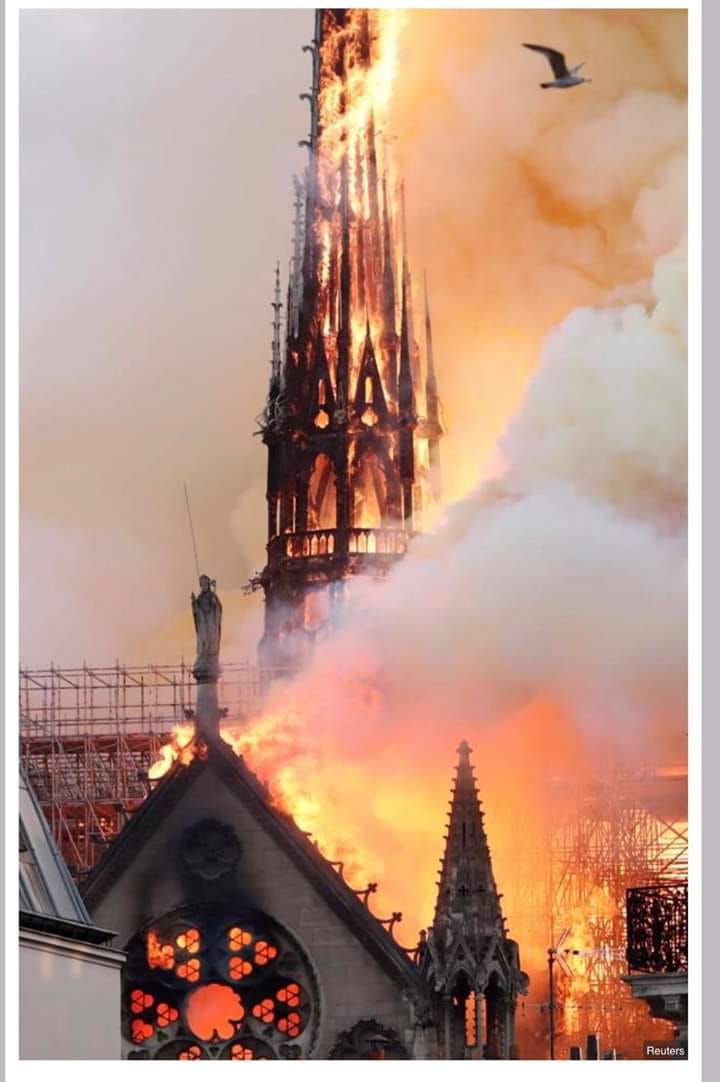
As Notre Dame burns and Paris mourns, I couldn’t sit still. Neither could I watch and let it go nor could I sleep. So, I resorted to paint the beauty on fire and write. For, if there’s one thing that the city has taught us, it is to live in art and literature.
For Paris is the thing that heals, that resurrects you. Even at the cost of burning itself.
I hope this time it gets the time to heal.
Here’s my bid to you. My tribute.
Notre Dame
A spendthrift night toils hour by hour.
A time that spells of a kingdom of doom,
Where the gargoyles chime one by one.
First, they rhyme then they cry,
For a crime has unfolded in the dome.
A rage of decent,
An agony of the crescent,
The air goes wild with the melody of dissent.
The spire fumes and the bell towers wonder,
Of a place that’s no longer.
As they pass one by one,
The colours assimilate giving a hope,
For hunchback of Notre Dame takes recluse,
In a chasm of “Au Revoir”.
To all Parisians…
Hope you all heal…let the fire of agony burn the canvas. Let us be a Paris tomorrow.
In the quiet sunny wintery January if you find yourself oddly parked in the city of gardens, Bangalore, don’t fret. For there, waits for you a unique opportunity. Bangalore indeed is a city of gardens with huge trees and gardens at regular intervals. Of them, the mightiest one is the Lal-Bagh Botanical Garden.
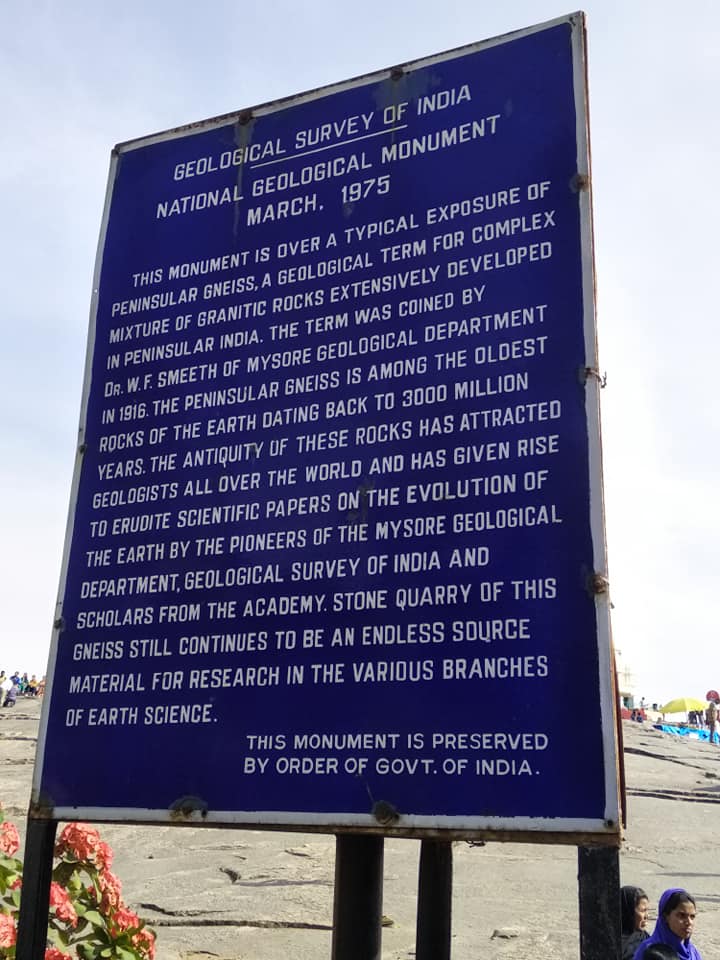
Perched in a 3000 million years old granite rock, this garden is both historically and geologically significant and added to this is its reach horticulture and local fauna aspect. Such is the significance that it regularly features amongst topmost attractions list for a Bangalore trip. Not only is it ideal for tourists and naturalists but it is equally important for photographers and culture-seeking people
For here is a locality where the general public of the state and the city regularly visits. Local craftsmen and music performers throng the place. So, it is considered one of the best place to get the local feel. So here is what you can expect once you enter the sprawling 240 acres park.
1. The Flora and Fauna, The Biodiversity That Charms
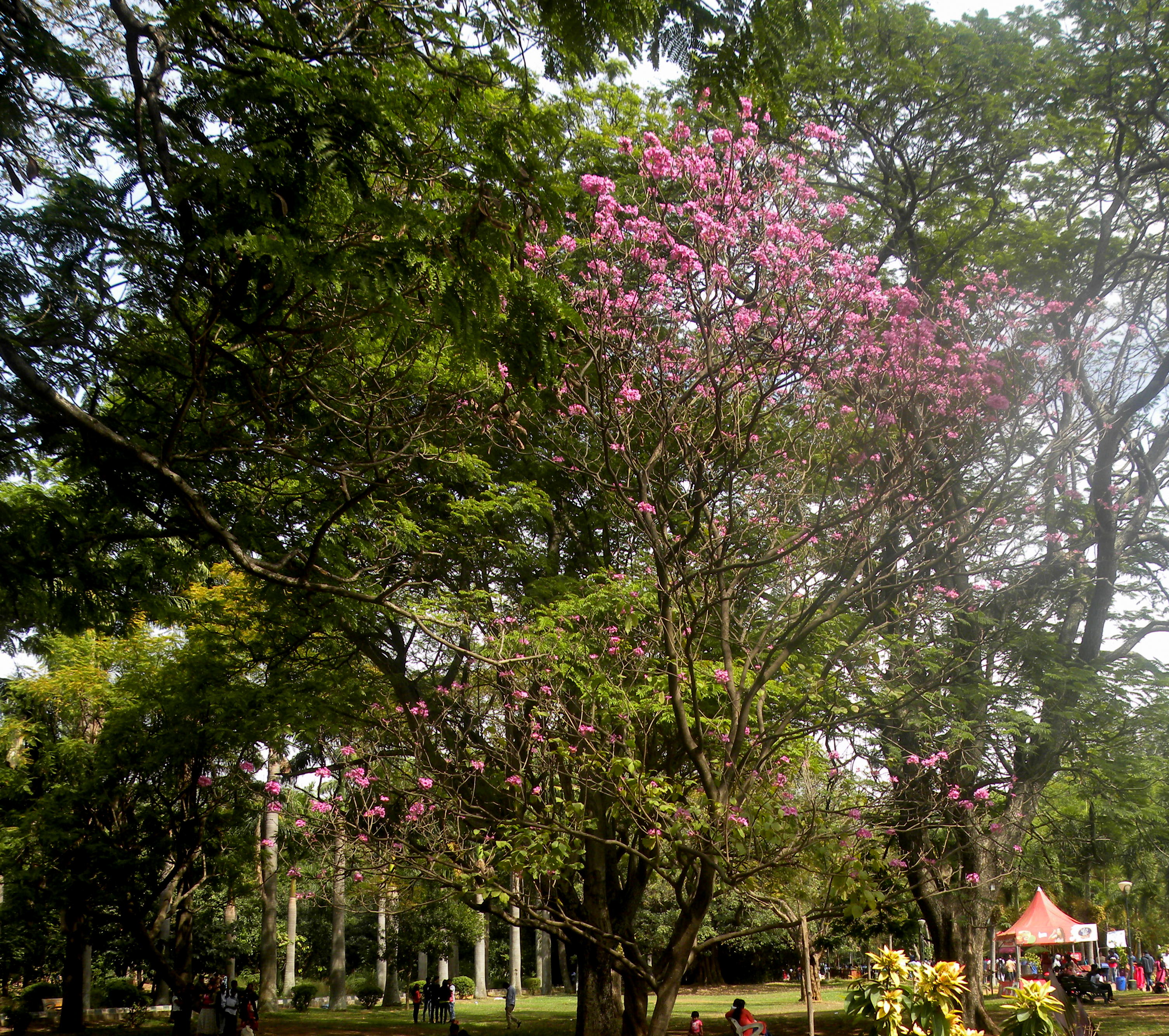
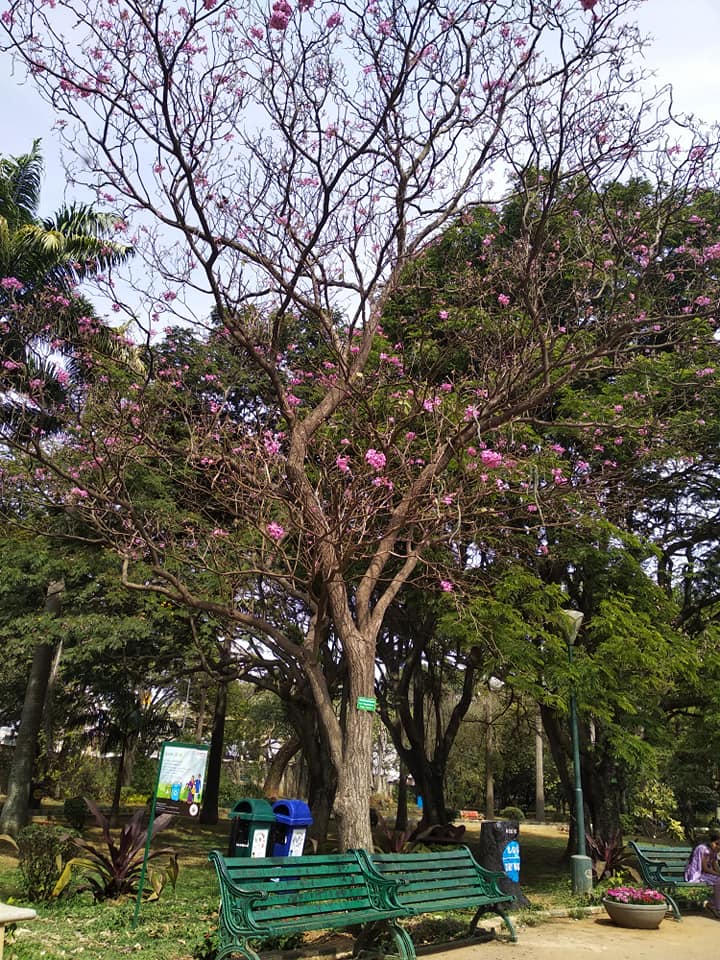
The garden has more than 1800 species of plants and decorated by various centers. That considerable research and hard work go into maintaining and making these plants is easily recognized by the area. In fact, if you want to see the best natural and horticulture exhibitions in Bangalore this is the place to visit. Apple blossoms are the predominant tree in this city and here too it’s found in many places, especially near the west gate, Gate no. 4. The pinkish hued apple blossoms almost remind of cherry blossoms, only this is more vibrant.
An Apple Blossoms in full bloom
The largest rose garden in the city is found here with a variety of colorful roses for show.
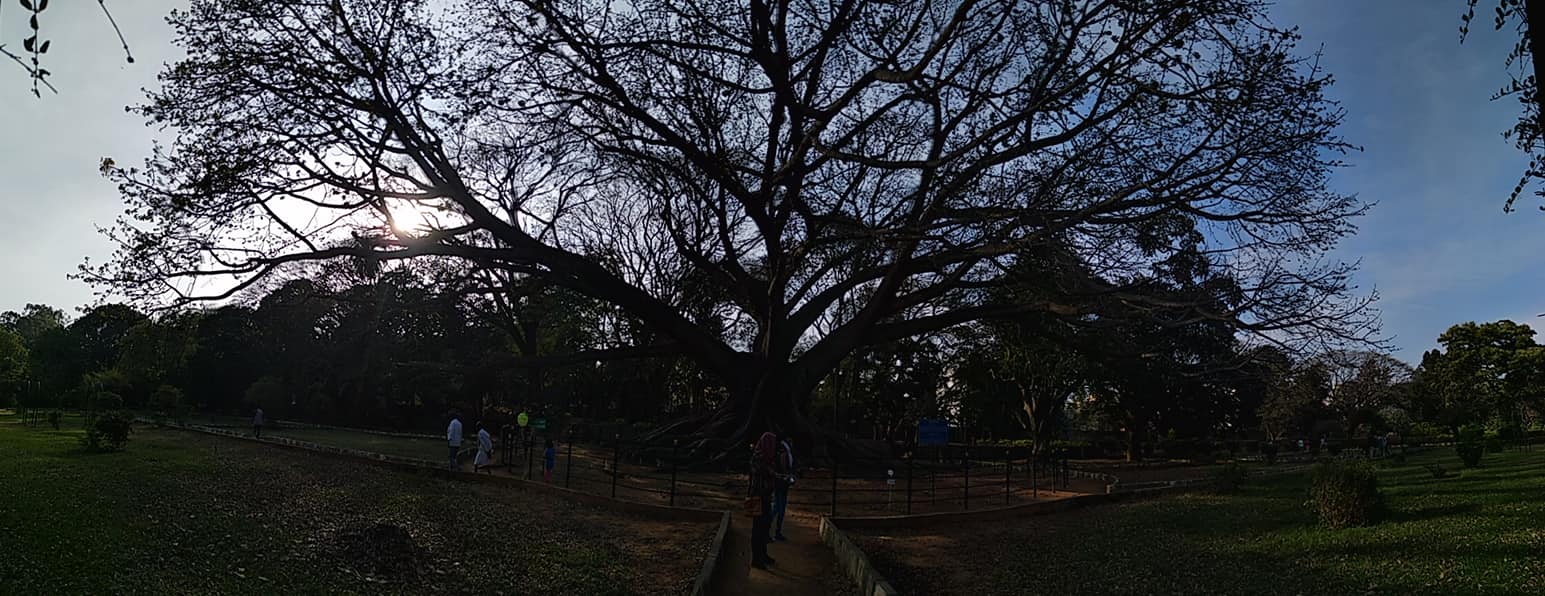
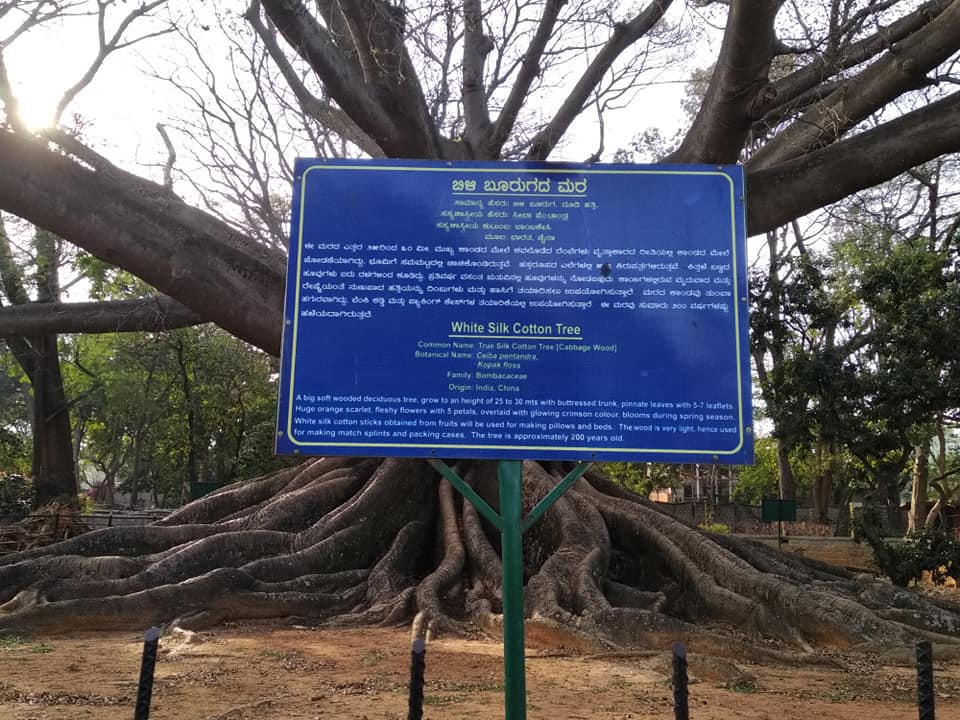
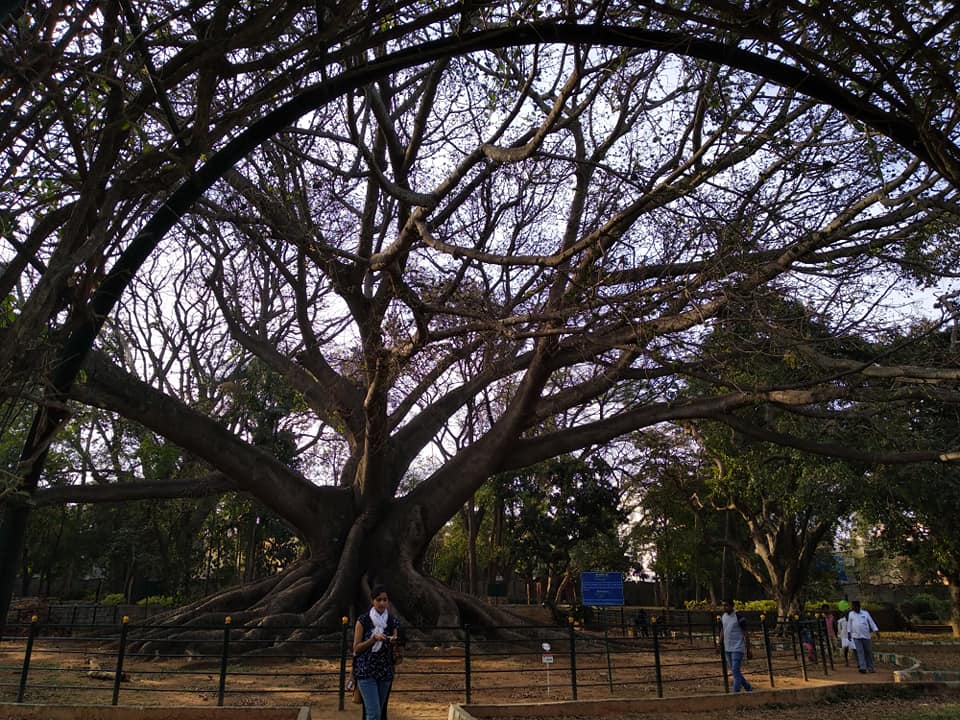
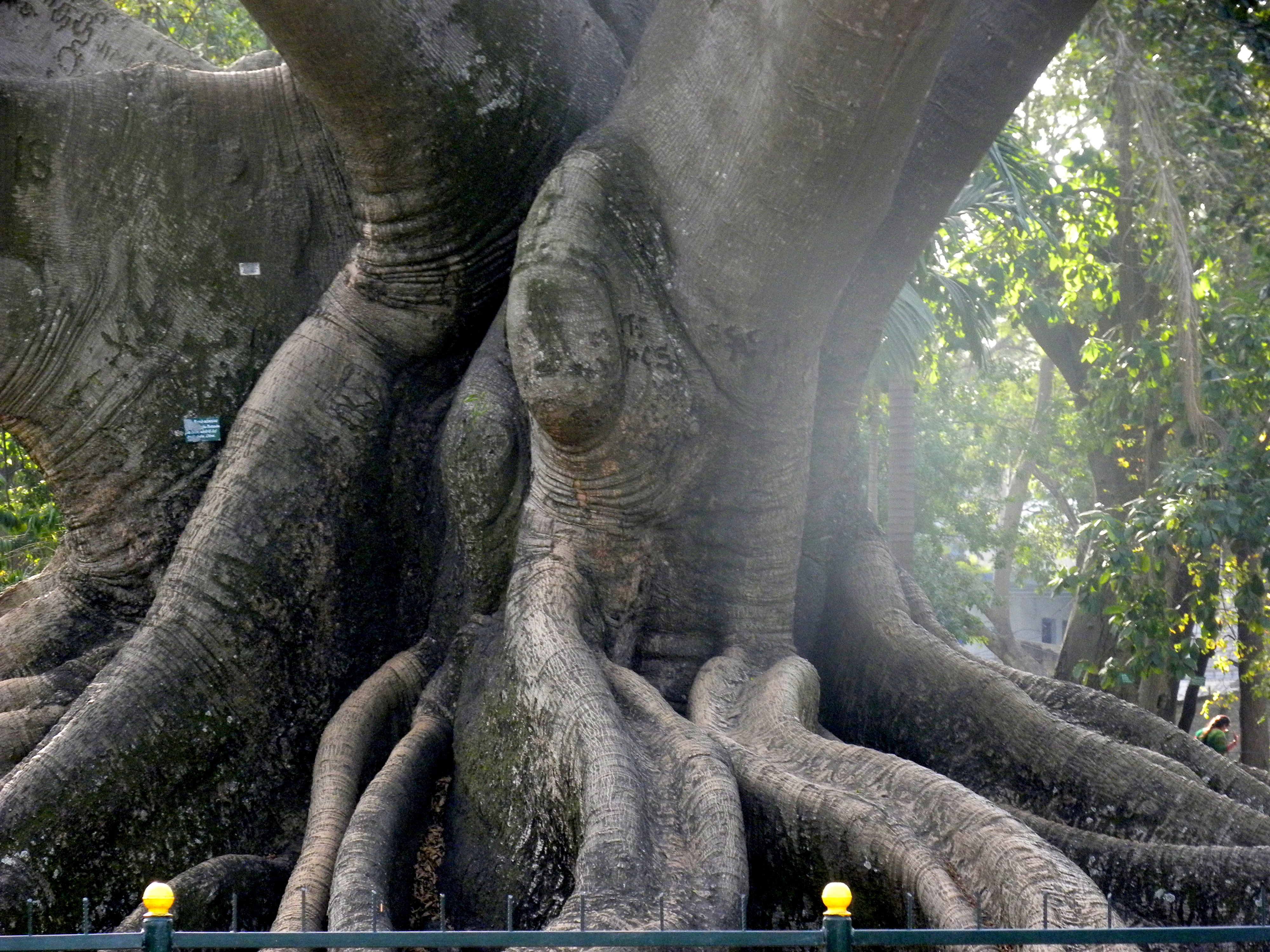
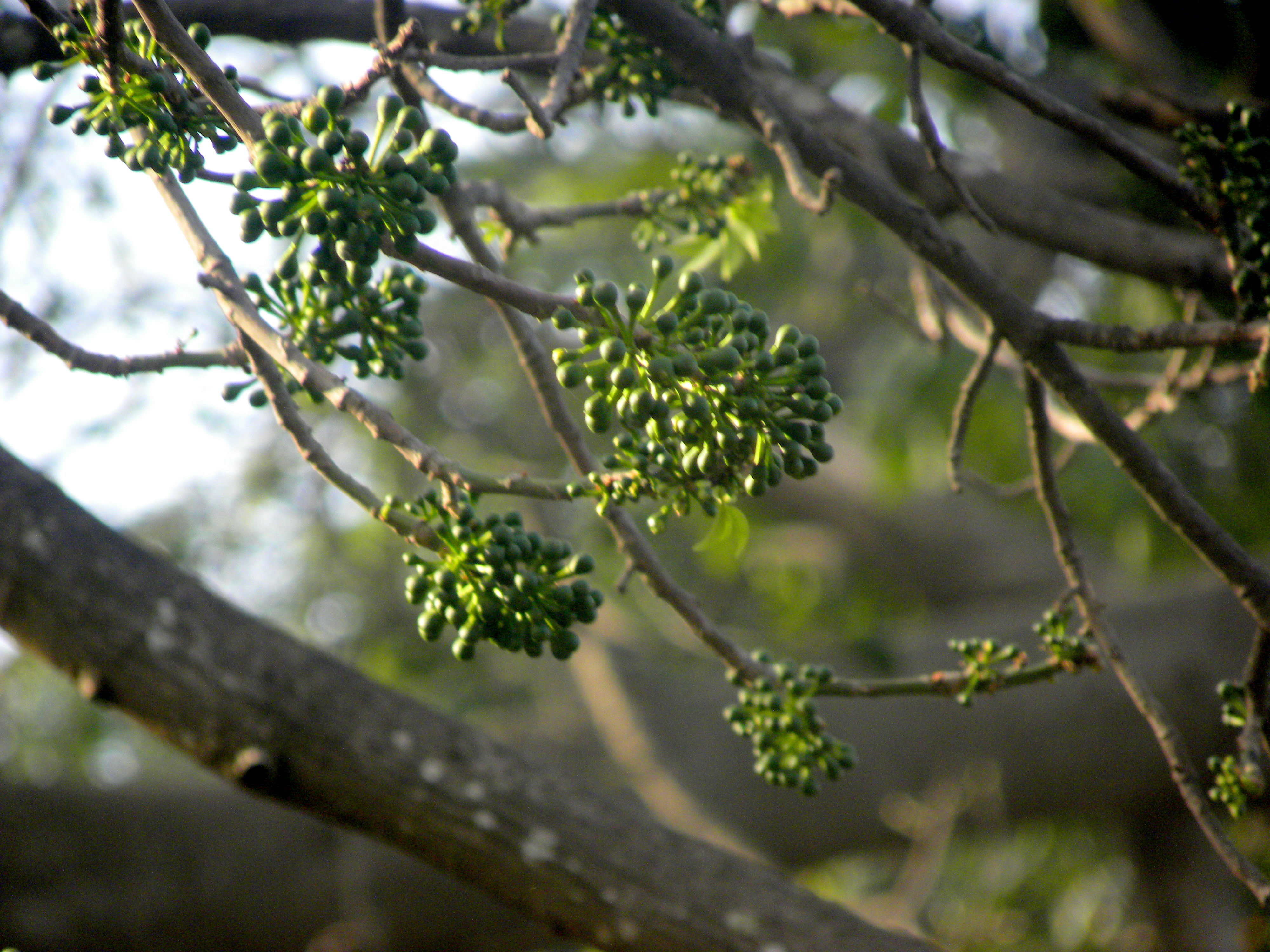
The 200-year-old White Silk Cotton TreeA sign describing the treeThe extension of the treeThe elephant trunk like curvature of the treeThe Buds of Cotton
Apart from all this, the most stunning aspect of the garden is the presence of a 200-year-old cotton tree, the buds of which blossom in spring making it a delight to savor.
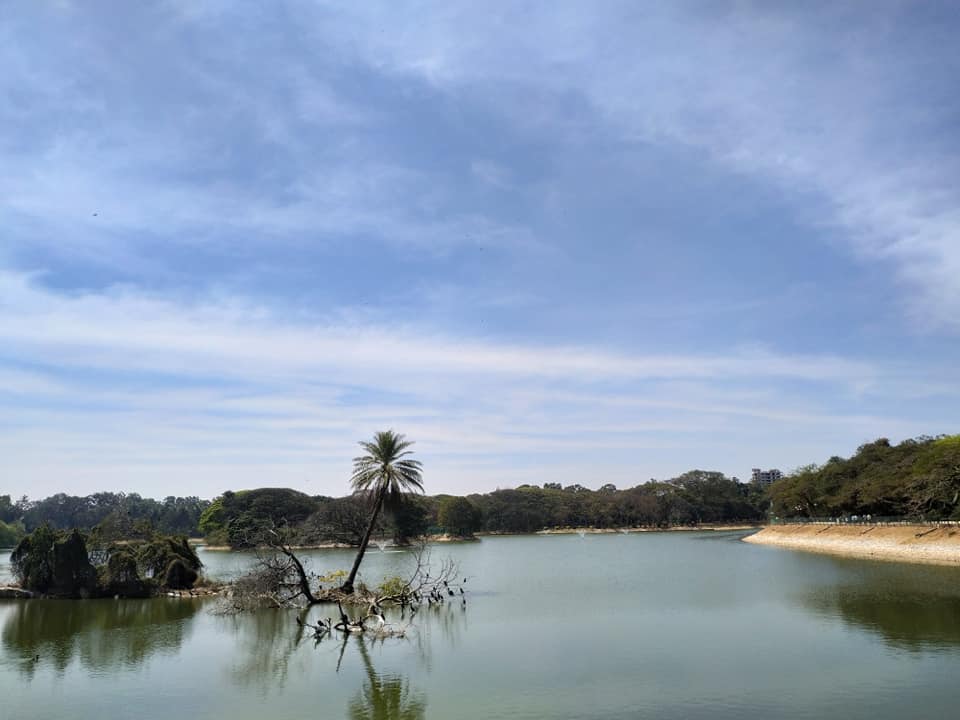
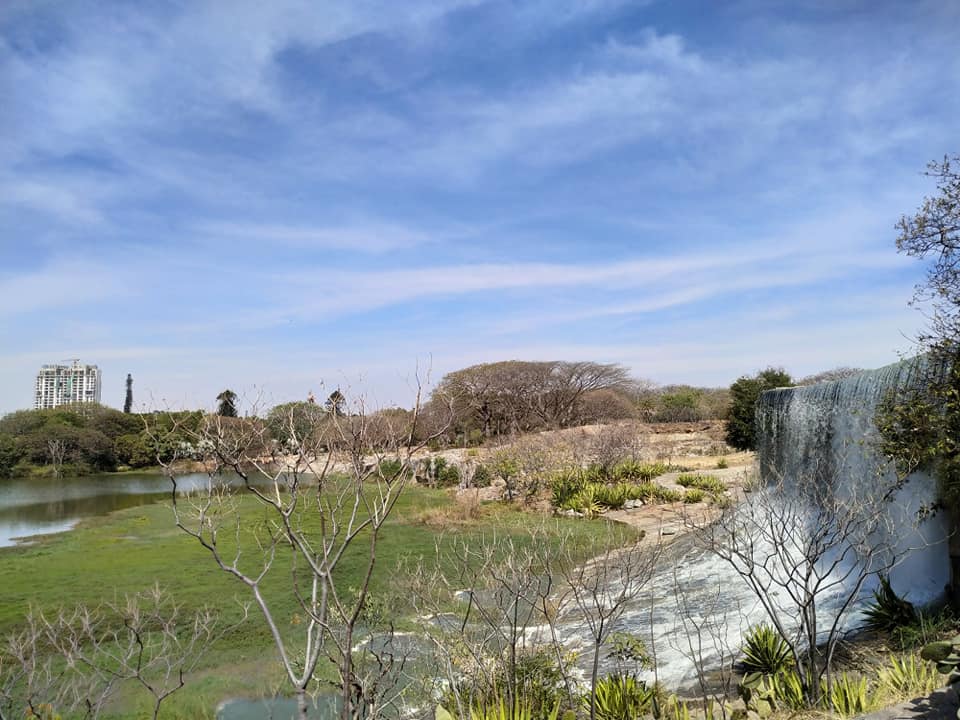
At the Lake – Pictured by Rituparna NathBeside the Lake – Pictured by Rituparna Nath
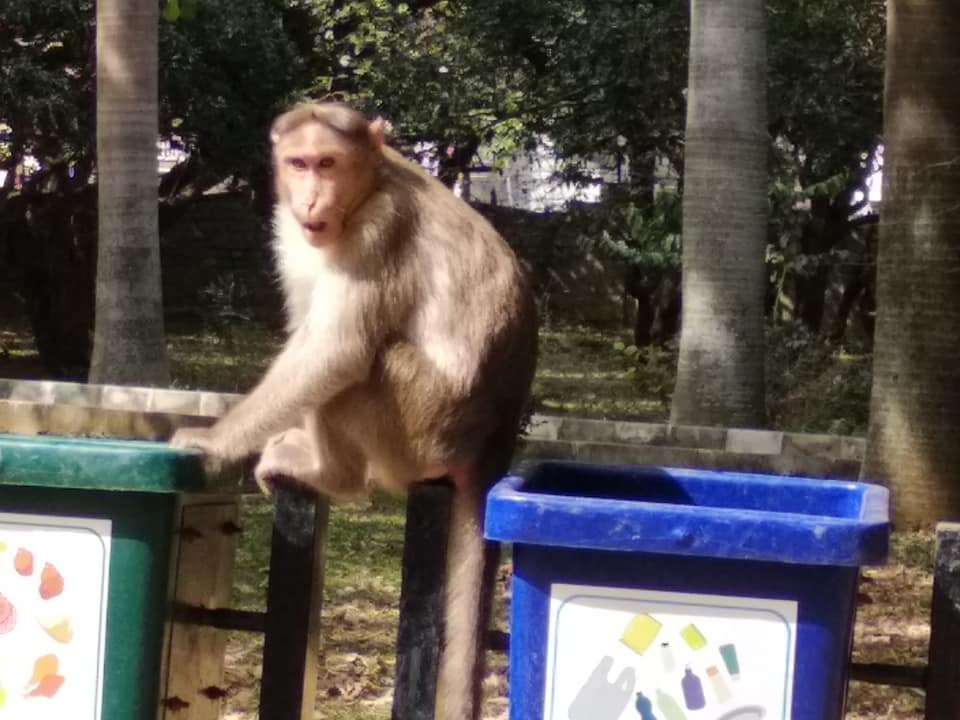
Further around as you go, you will find a large lake inhabited by herons, parakeets, myna etc.
Horticulturists make way for beautiful flower breeds here which gives rise to the flower show held in January.
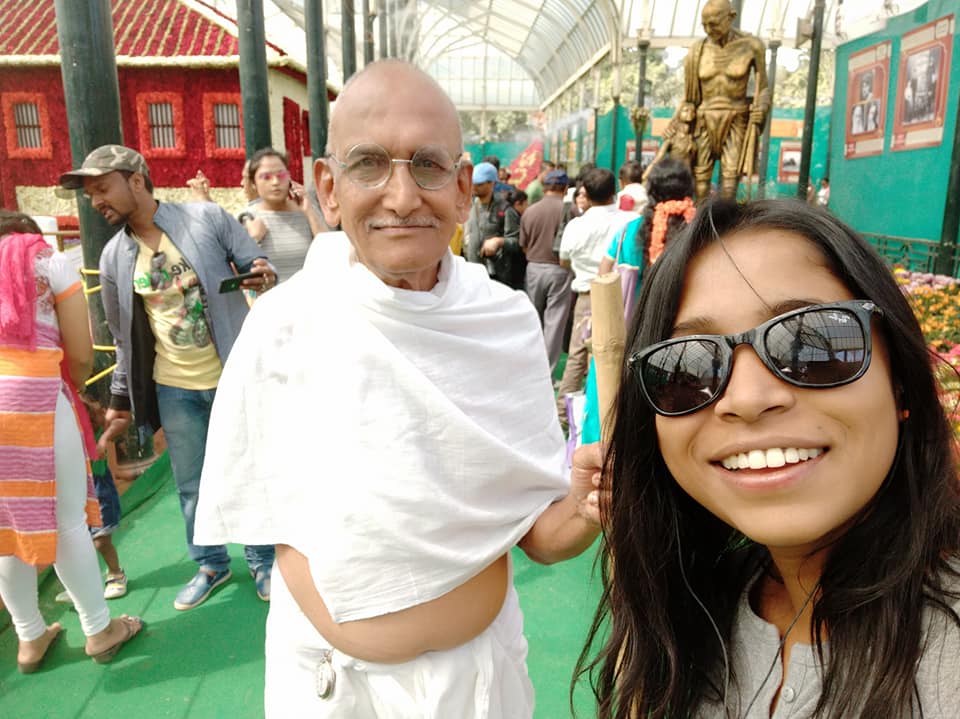
My Sister Clicking a Selfie at the Flower Show
2.The History and the Heritage of The Mysore King
While people may think a botanical garden is a boring place to be other than nature-lovers but that’s not the case here. The garden is one of the topmost attractions for history and heritage lovers. In fact, it is often considered one of the best place to start of a heritage trail in Bangalore.
Much like many things in Bangalore, the garden owes it allegiance to the Mysore king, Tipu Sultan and his father Hyder Ali.
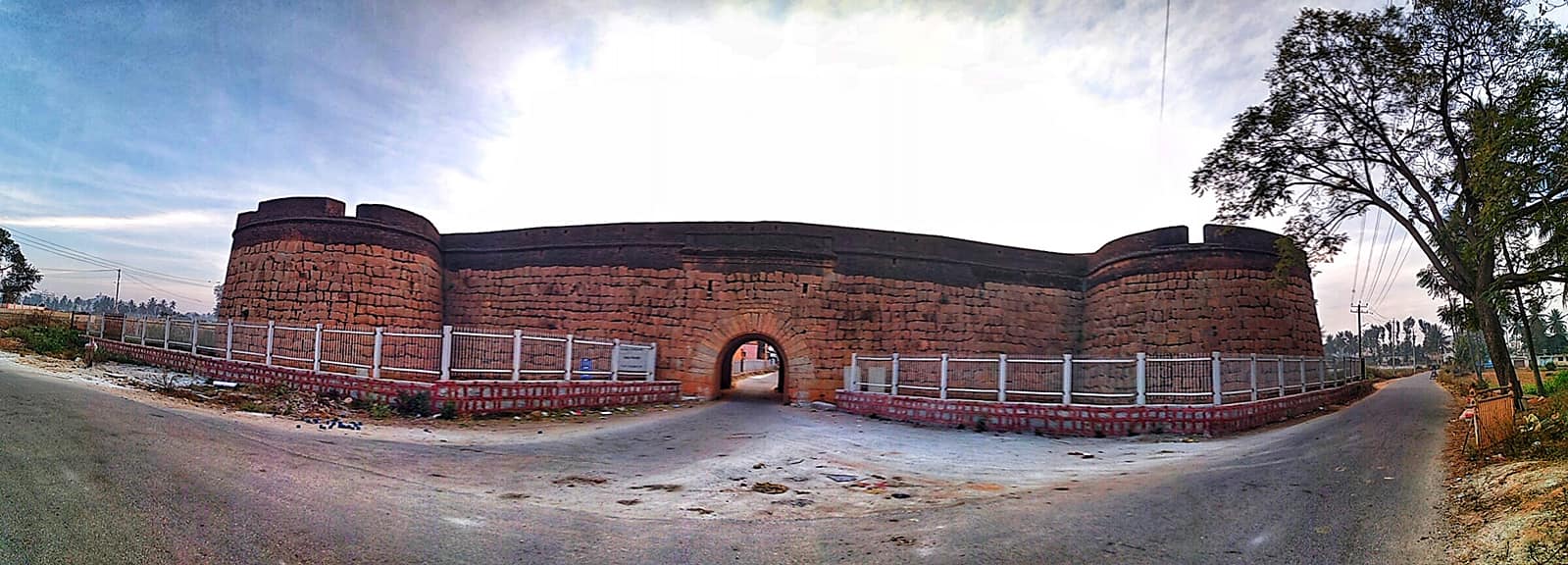
Devanahalli Fort
Hyder Ali who lived in the vicinity of Bangalore a few kilometers north of the city in a fort area called Devanahalli, created this garden in 1760. His son built it up and transformed into the opulent green that you see today.
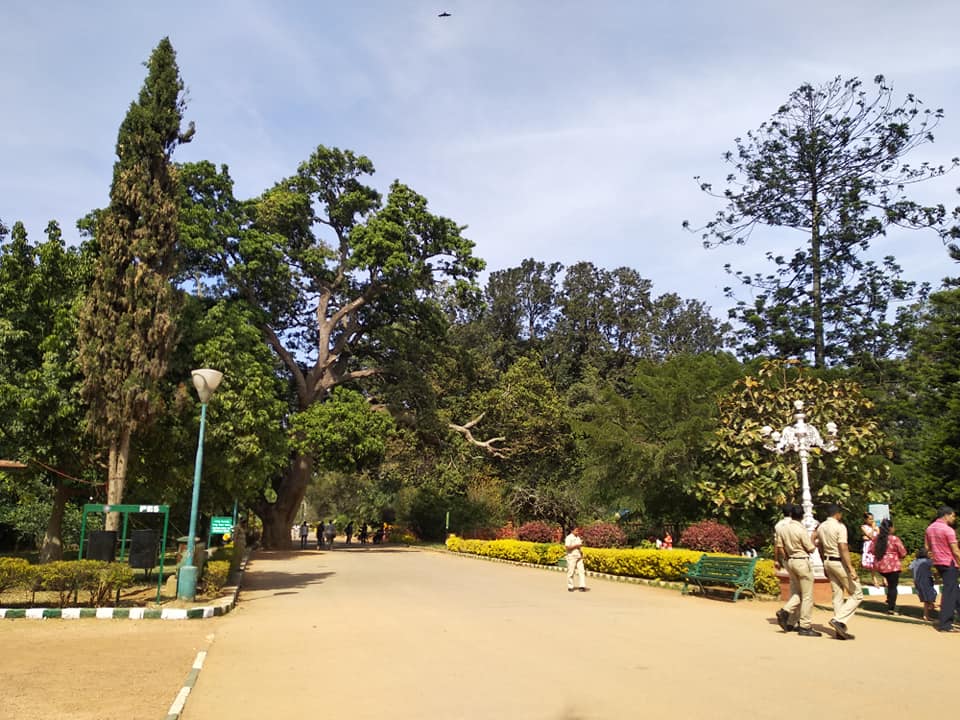
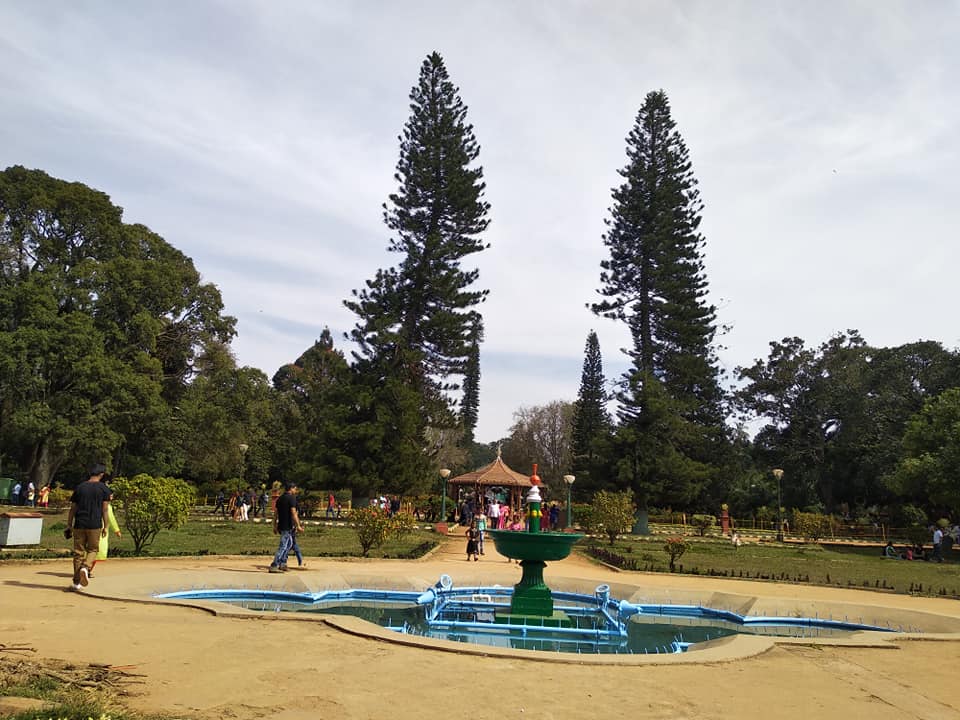
A part of the garden
The process of collecting rare trees and plants from all over the world and featuring here was started by Tipu. Now, it houses rare species of Persian, Afghani, and French trees and plants.
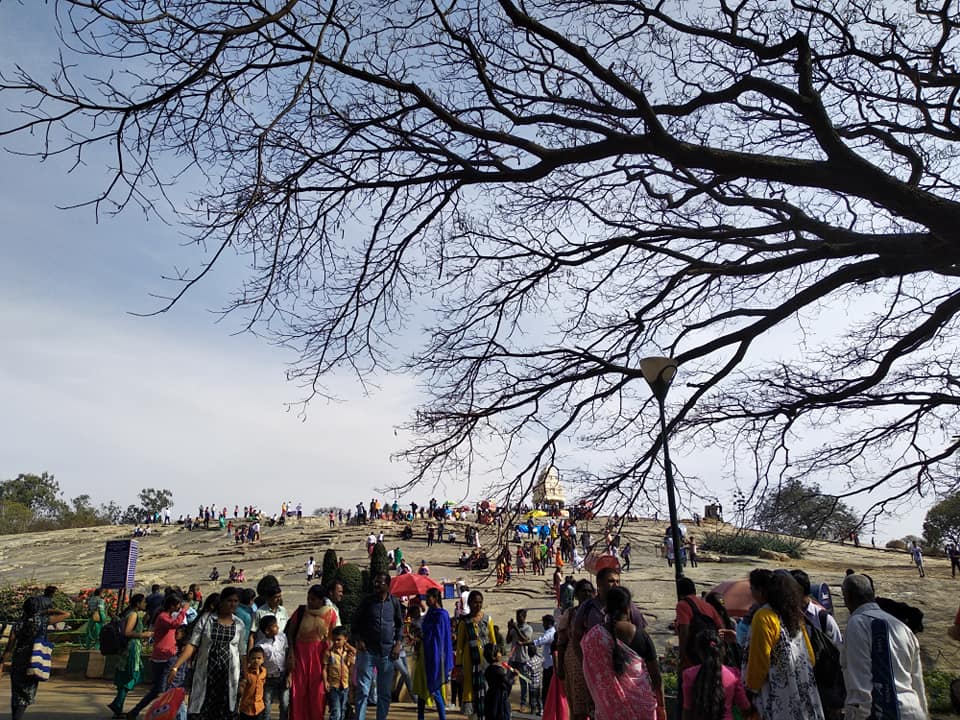
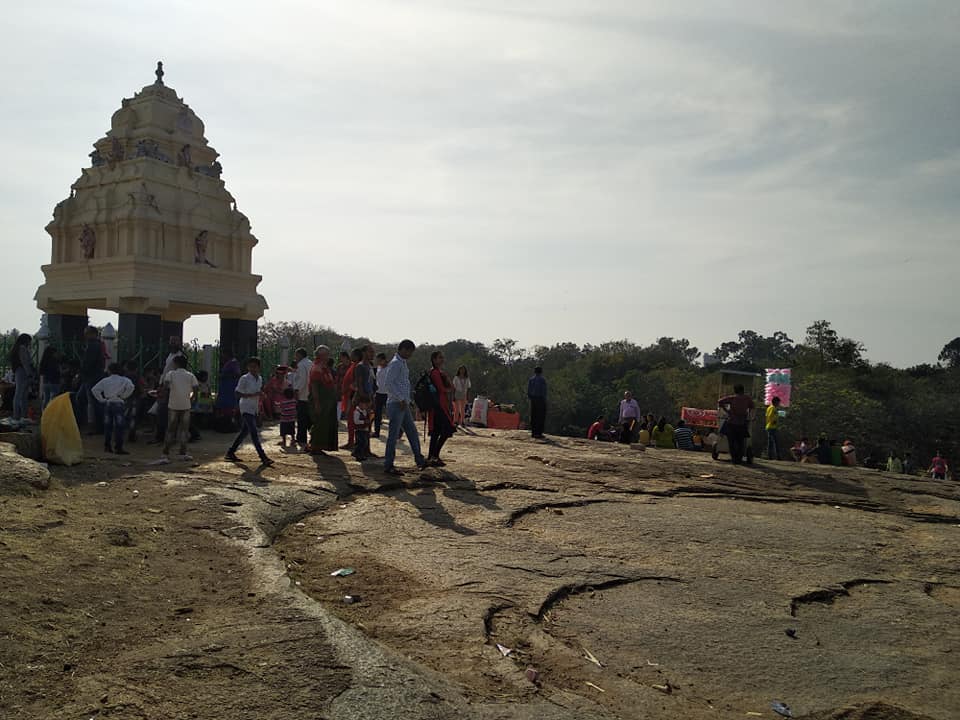
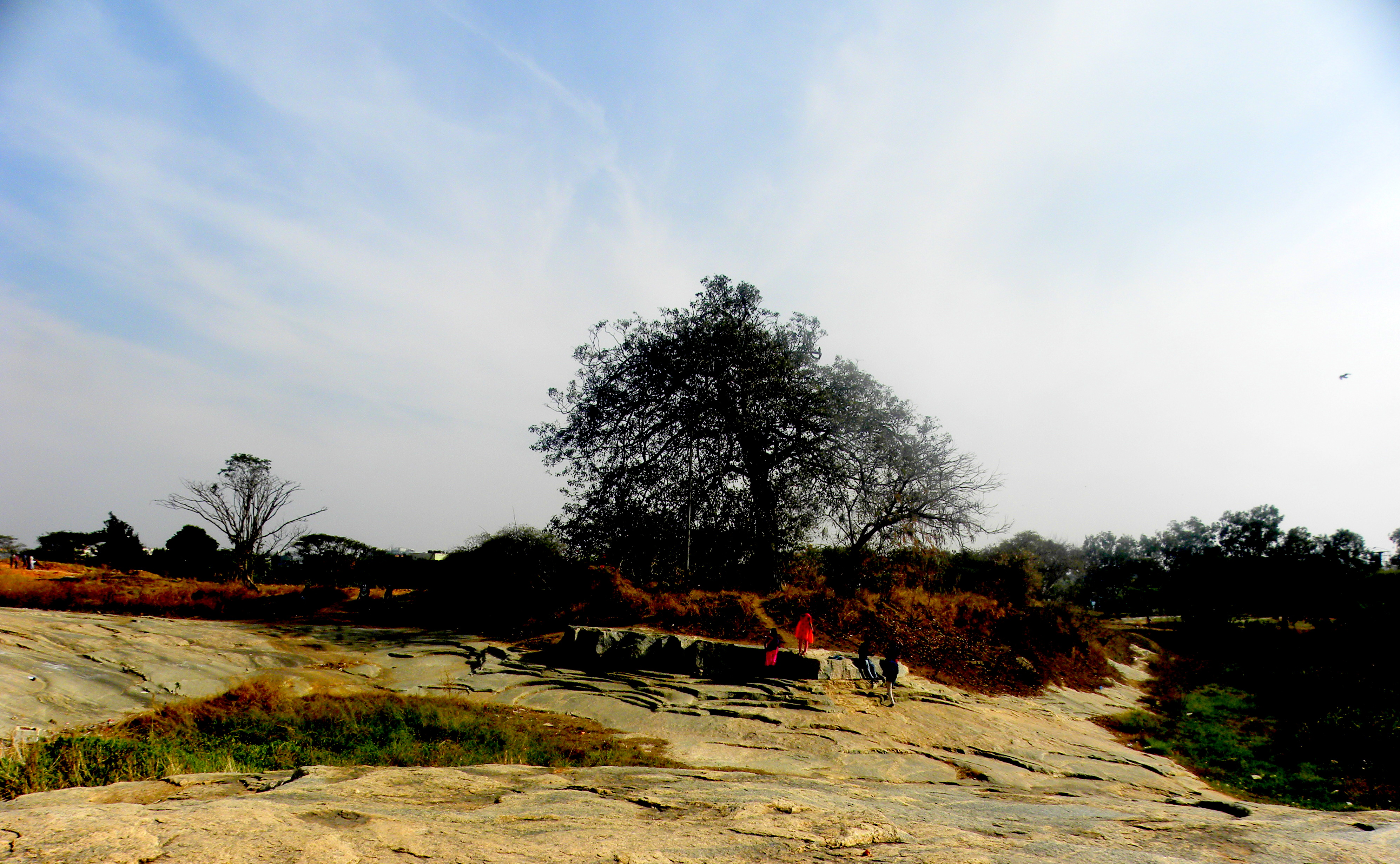
Lalbagh Rock – The site of 3000 million-year-old granite rock and Kempegowda’s perimeter
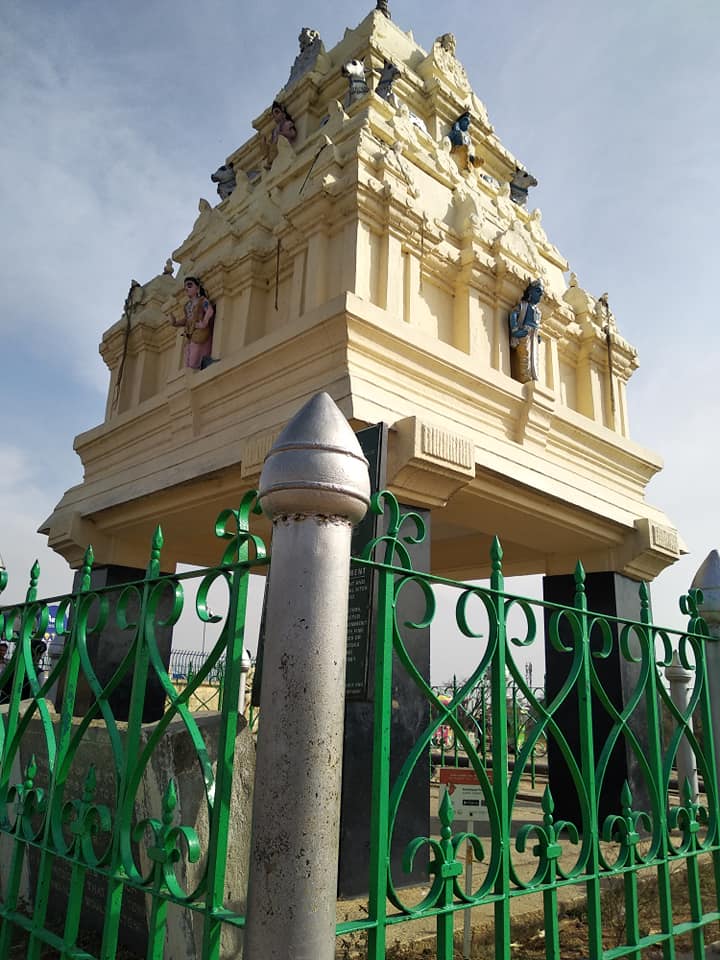
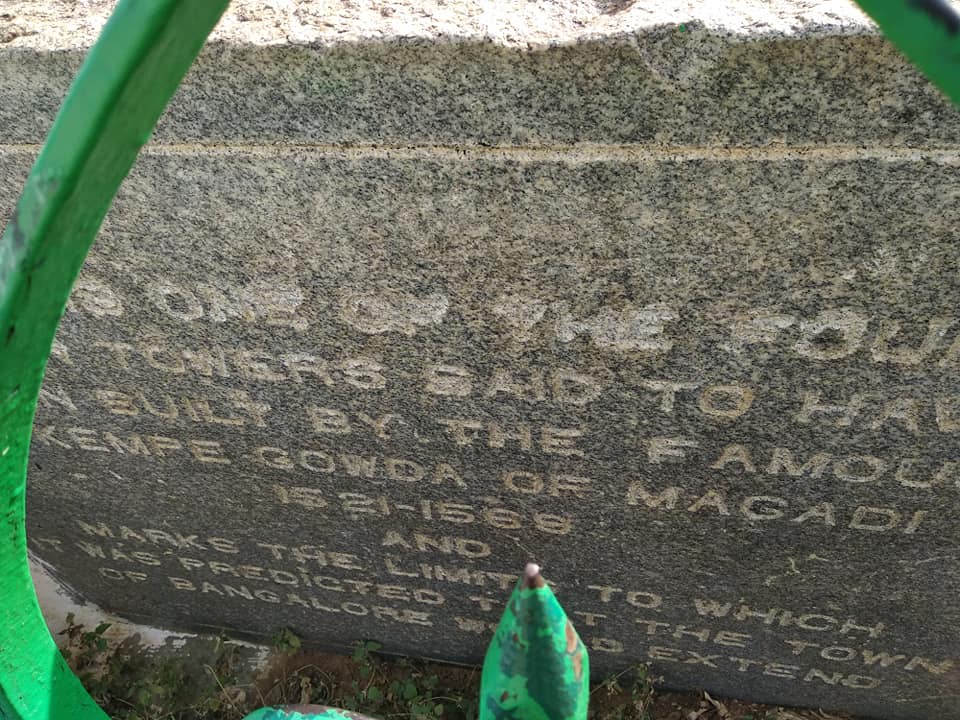
The tryst with history doesn’t end here because Lalbagh is a piece of prime evidence of how the city of Bangalore was planned. When Kempegowda planned the city, he allocated 4 pillars as perimeters demarcating the farthest extensions of the city. One of those pillars is found in the Lalbagh Rock, the 3000 million years old granite rock bearing testimonial to both historical and geological origin of the city.
Kempegowda’s Perimeter marking PillarA stone plaque showing the making of the perimeter – 1521 to 1569
3.The Unique Architectures and Topographies Around
A botanical garden is definitely not the place to look for architecture but Lalbagh is an exception here. Many an architect and urban planner will find this garden as one of the best places for a Mughal style garden in Bangalore. It’s a spitting image of its inspiration, the Sira Mughal Garden in Tumkur, an area near Bangalore.
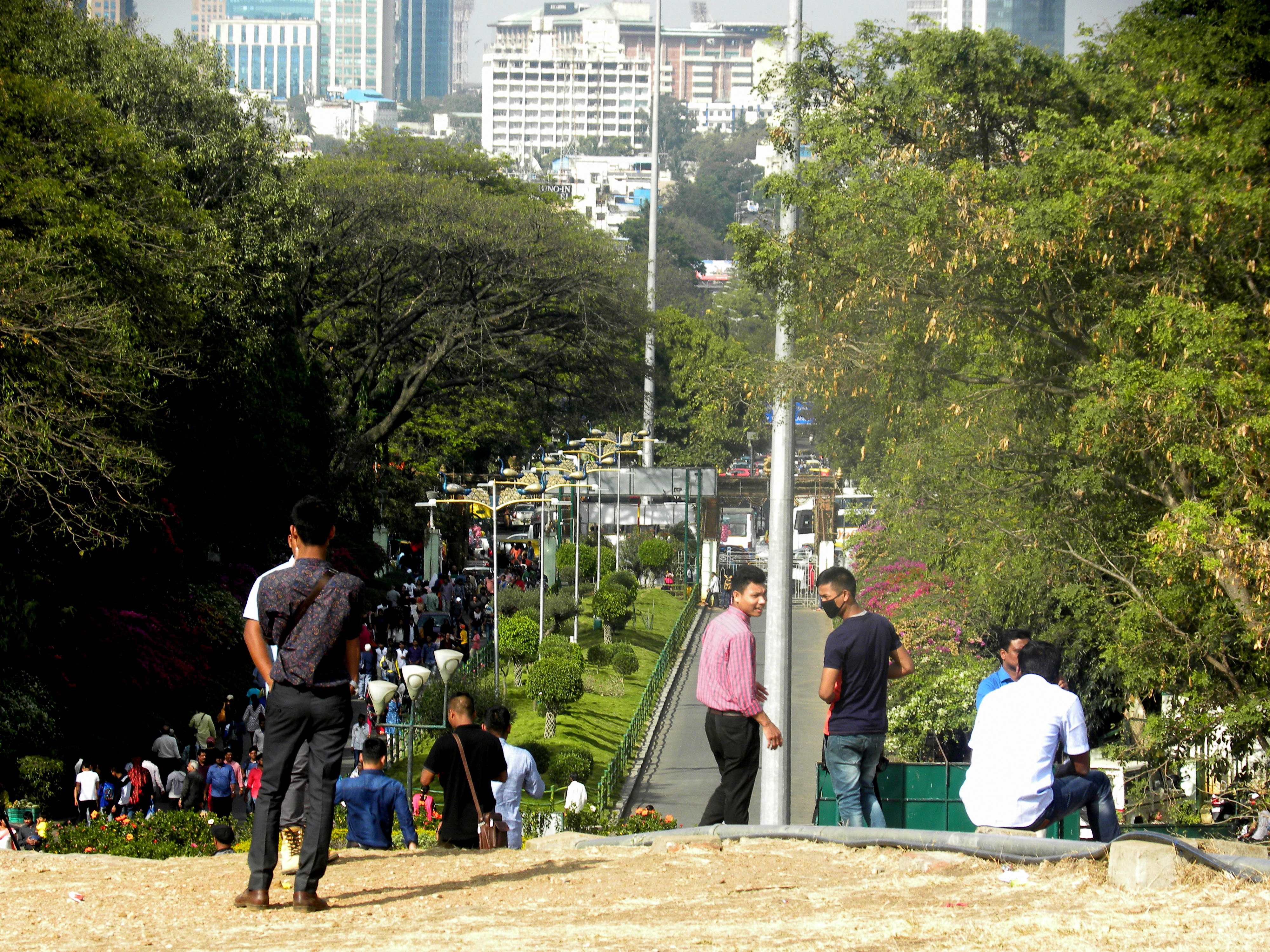
A view of the garden from the Lalbagh Rock
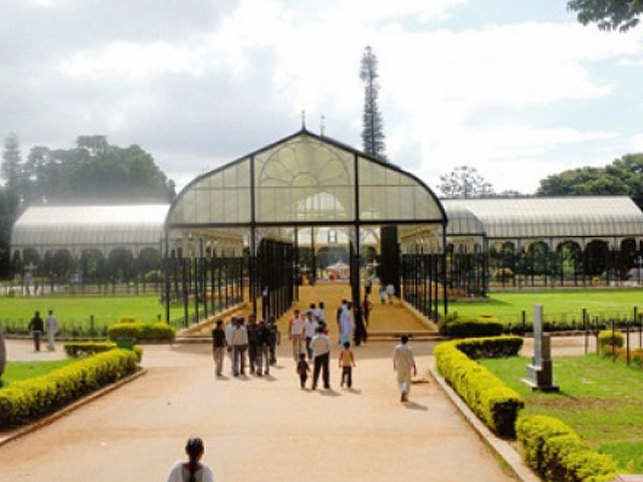
However, it doesn’t end there. As like any other part of the country, here too there’s a British imprint and that bears a presence in the architectural structures in the garden. Owing to a royal visit by Queen Victoria’s son Prince Albert Victor, a sprawling rectangular glass house was created emulating the Crystal Palace of Hyde Park in London.
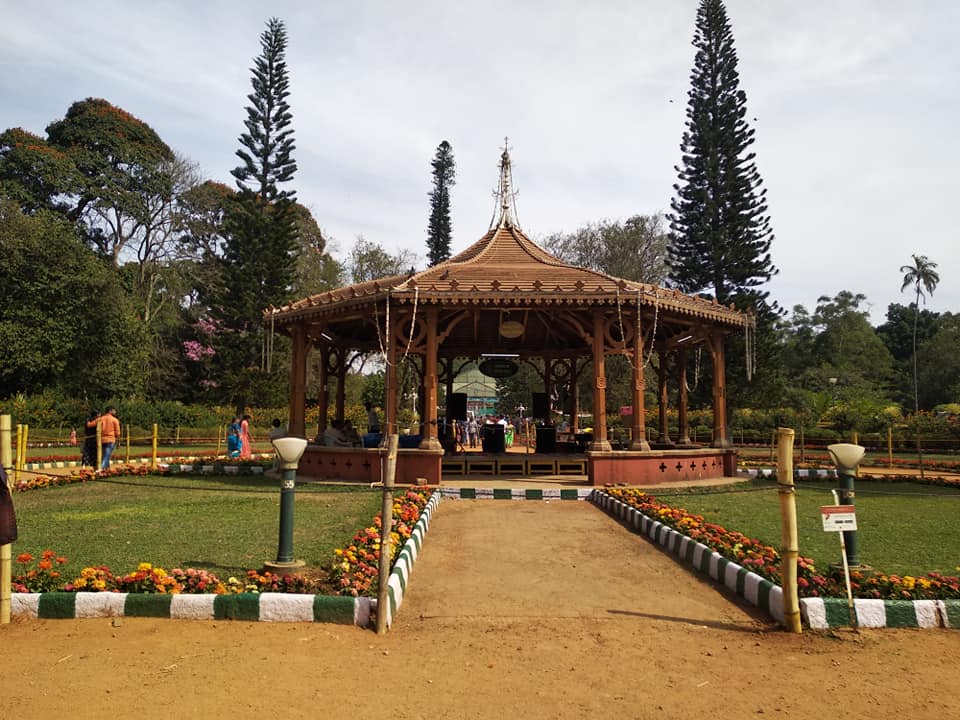
The Band StandSome more parts of the gardenA representative image of Lalbagh Glass House Source: Economic Times
This is the eye of the garden and takes the center stage. This 1889 built glass house was restored in 2004 and houses flower shows and other events. A few meters back of the Glass House lies the Band Stand, a newly added feature to hold performances.
4.The Innate Objects of Amusement and Pleasures
The reason for being the best place in Bangalore is its inclusiveness. It has everything for everyone. If you are looking for some pleasure and amusement for kids and a peaceful place for yourself, then this is the place to be.
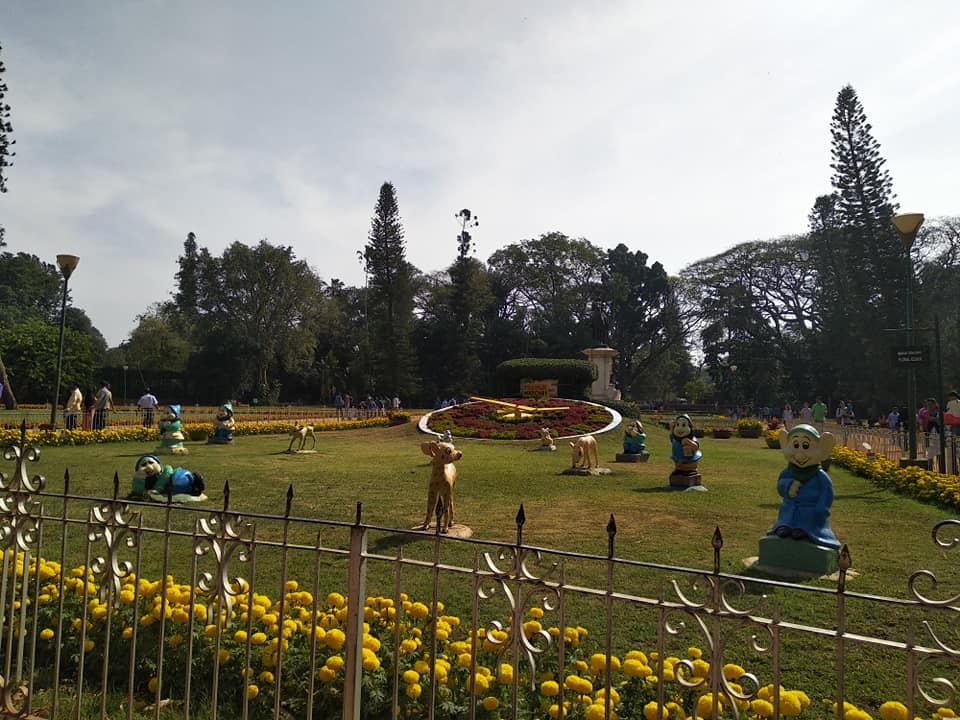
The Floral Clock
The garden has a beautiful floral clock completely with animals statues and it tells the time. Around it lies the fairy tale houses like the Snow White house lined with characters from different fairy tales.
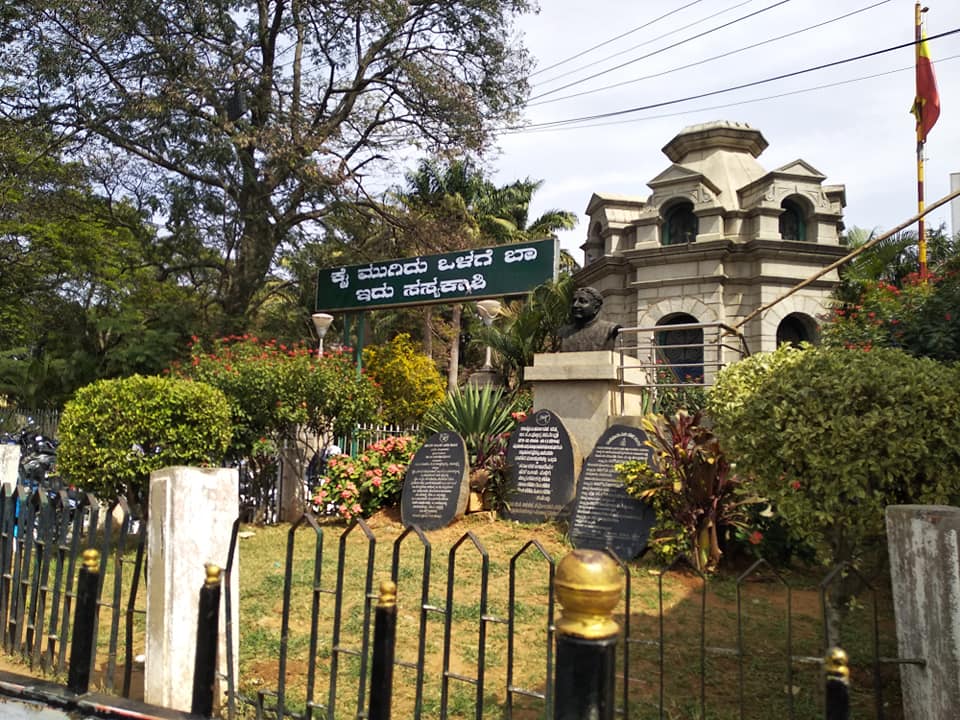
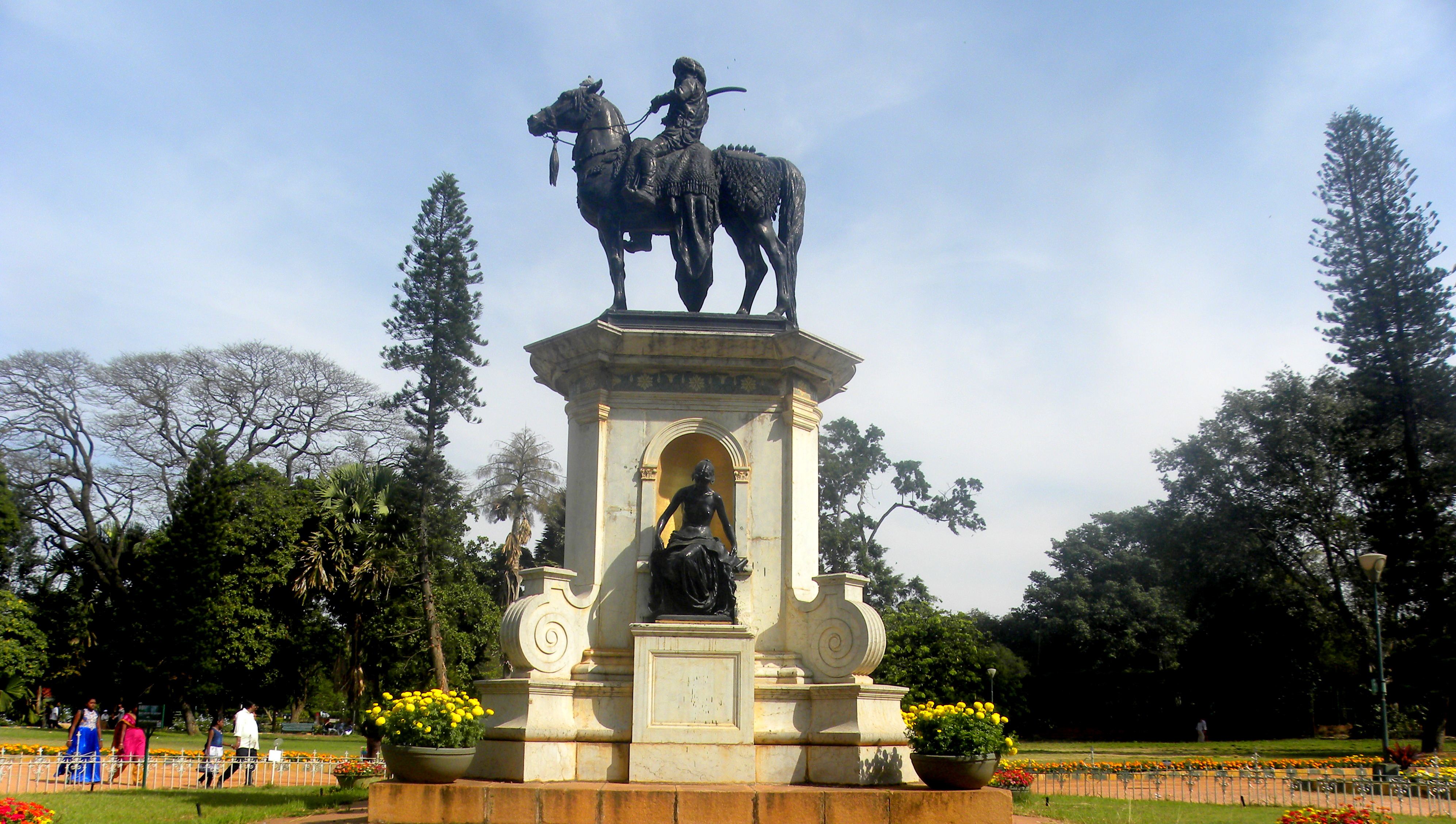
The Maharaja Statue (Behind the Floral Clock)
The Maharaja Statue is a good point of interest for photography enthusiasts and tourists.
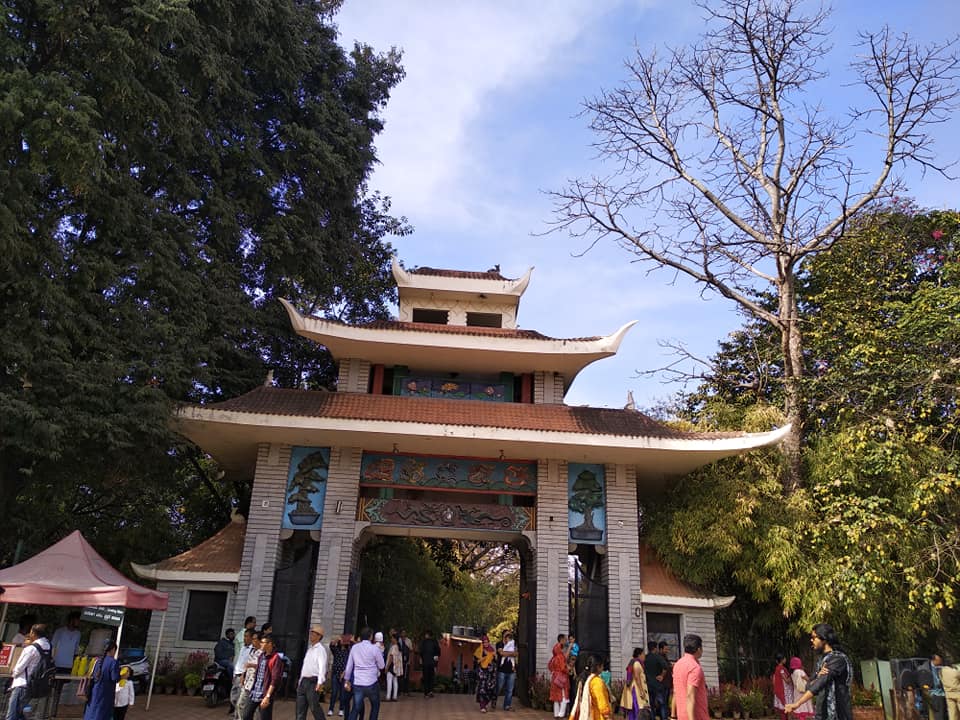
The Japanese styled section is another area to visit if you want to see something different and enjoy and calm and quiet of the place. This area is modulated in Japanese style with little Japanese huts, arches, and water bodies with bridges
Near, the glass house lies a Statue of Gandhi and a model of Charkha which adds to the beauty of the park.
Topiary Garden View from the Lal Bagh RockThe Topiary Garden Entrance
A topiary garden is there opposite the Lalbagh Rock showcasing beautiful and varied topiaries.
5.The Splendor of the People, the Craft, and the Food
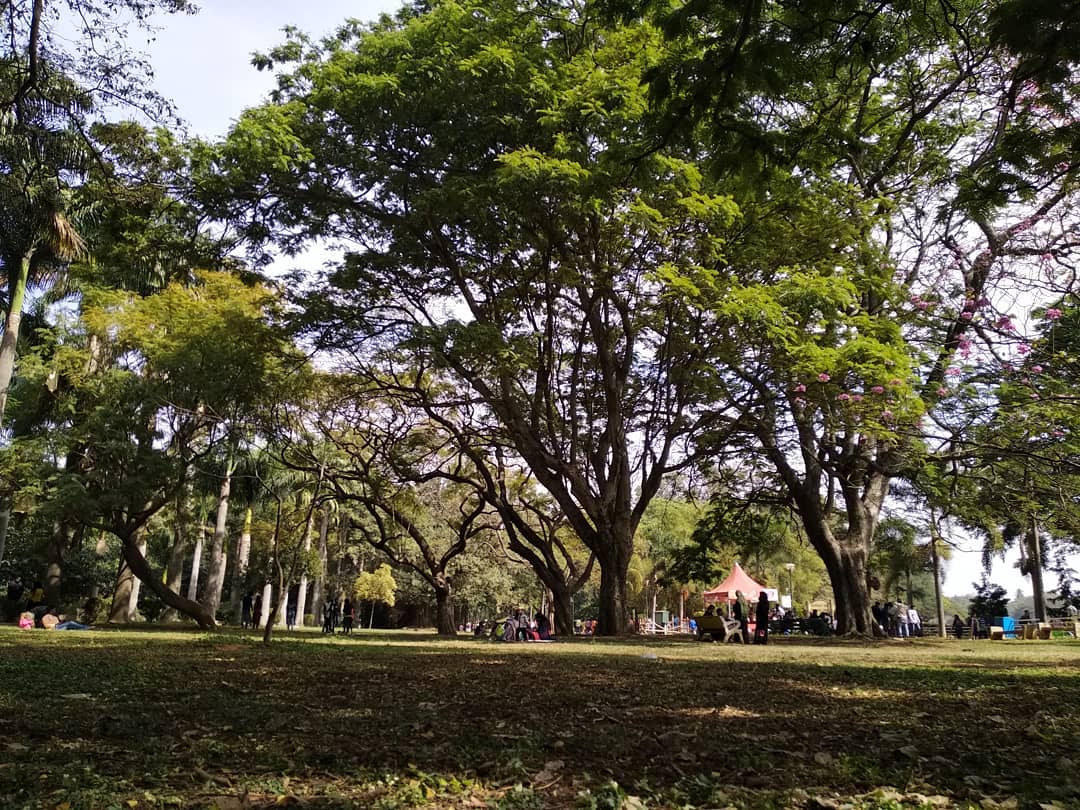
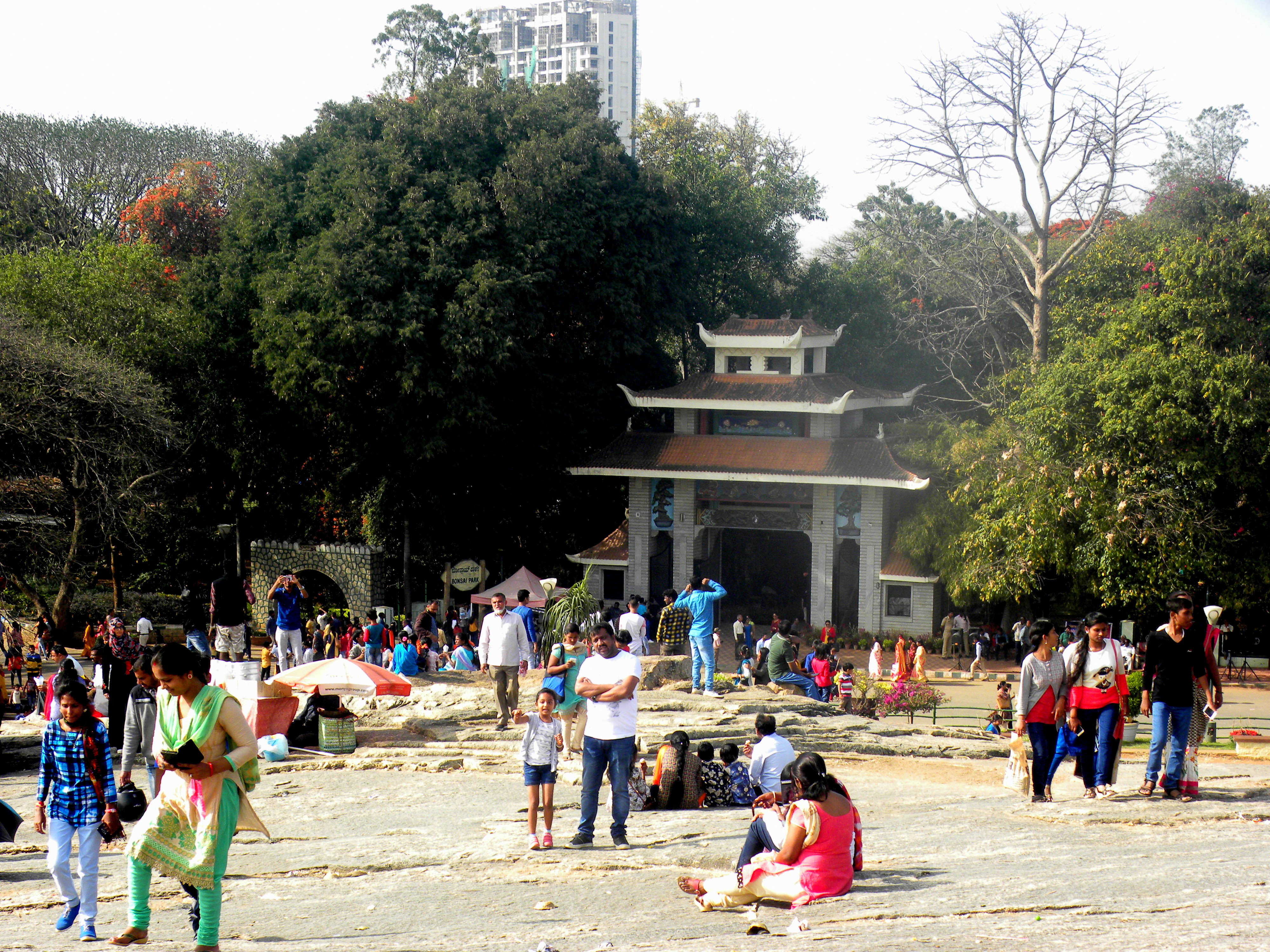
Much can be known of place through its people and their ways. The garden doesn’t disappoint in this respect as well. A good number of local people visit this place including joggers, photographers, naturalists, and families with their children. So you get to know the city folk and their ways of art and music.
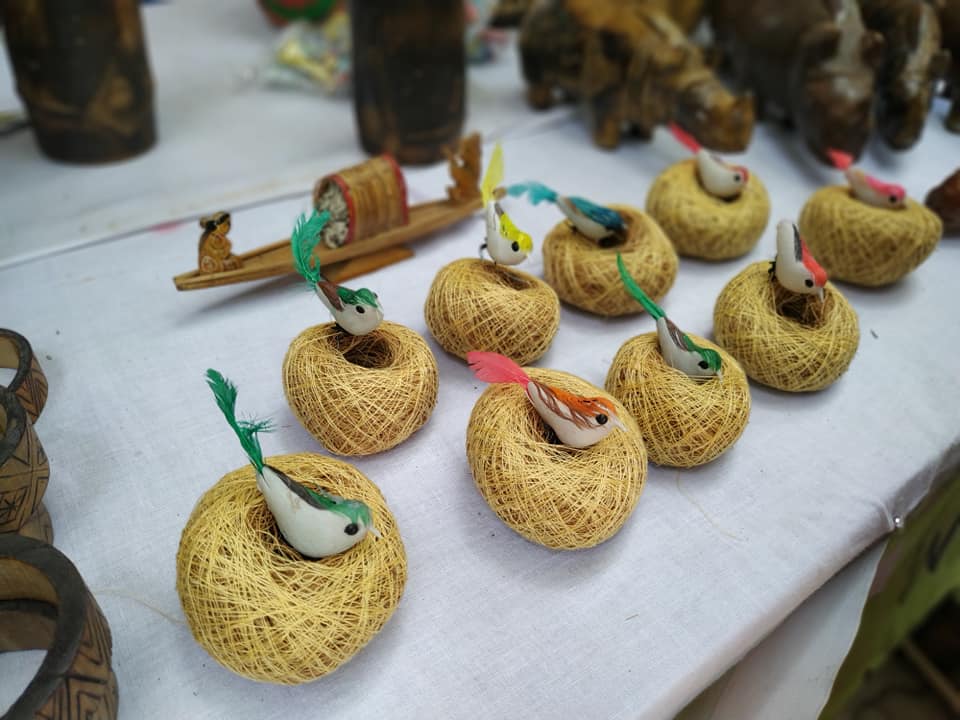
People at the Lalbagh RockA Show of Craft at the Park Picture by Rituparna Nath
During the winter season, local artisans and craftsmen display their work here, especially during the flower show time. As usual, food finds its place with a spread of variant delicacies from chats to coconut water to filter coffee.
Hence, knowing and visiting Lalbagh is like visiting Bangalore all by itself.
So, if you happen to visit the place for a one day trip don’t forget to pay a visit. And while you are there don’t miss the cart ride that goes around the park. A 2-3 hours tour is all it takes to explore them and know the garden and Bangalore.
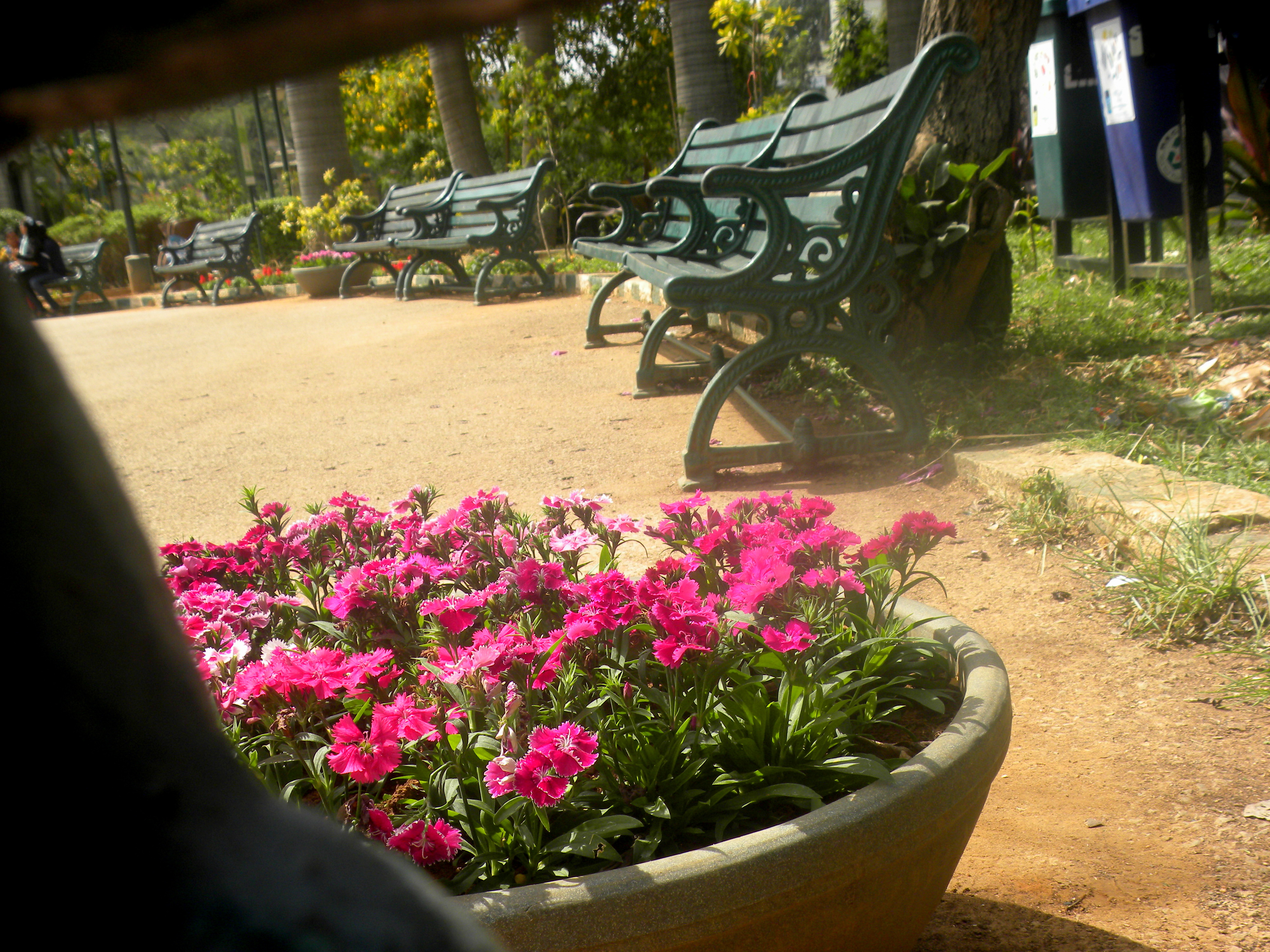
Your bench awaits…..
Note of Gratitude
I especially thank my younger sister and an old friend residing in Bangalore, Utpal Chattopadhayay who accompanied and guided me.
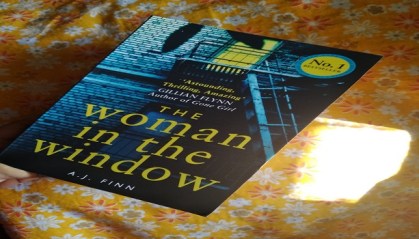
On a quiet wintery afternoon, I received a warm gift from a Secret Santa – a psychological thriller by A.J. Finn. The writer and the book both were new to me.
A thriller is a genre which isn’t much traversed by me. A quick look at the foreword and back cover got me interested. This is a supposedly new york times bestseller and chronicles the day to day activities of a PTSD patient. This got me all the more interested.
So, on the pleasantly warm wintery evening, I started reading a thriller! A rather gripping and television series like novel if I may say so. This could easily become a hit television series like “The Desperate Housewives”
Author A. J. Finn
Before I begin reviewing the book, here’s a short introduction to the writer, A. J. Finn
Source : A. J. Finn Books (Twitter)
This is the pseudonym or pen name of Daniel Mallory, a former book critic, and an Oxford graduate. This 1988 born novelist is 39 years old and resides in New York. Hence, his novel is based in New York City. A journalist with an excellent work profile, Finn has worked for the Washington Post, LA Times among many others. He is critically acclaimed as the thriller novelist which shows in various award nominations. He had spent considerable years in England as seen in his Oxford degree and his repertoire for the language. Hence, you will find the novel well written with references to French and British English phrases and ways of life. Much of the setting of the novel and its preferences are recognizable if you take a look at Finn’s life and living.
About the Book
The novel is set in a normal New York City neighborhood in late October and chronicles the life of lonely child psychiatrist Anna Fox. It’s spanned out for 3 weeks but each day is filled with intrinsic turn of events and mild psychological overdoses.
Anna suffers from Agoraphobia (fear of open spaces) and spends most of her time inside a 4-storeyed house watching her neighbors and helping other people over the social media platform “Agora”
Anna’s life changes when a kid visits her with a present.
Valuable Insights on PTSD and Agoraphobia
The novel goes on to describe the day to day hardship and troubles of PTSD and agoraphobic person. Anna oscillates between her loneliness, depression and feel good feelings. Her only window to the world is the internet and the neighbors she watches across the streets.
The novel written entirely in first person opens with Anna snooping on the illicit affair of her neighbor Sue Miller. She doesn’t know her original name and gives her the name Rita as she proceeds to inspect Sue’s personal life with her Nikon camera.
She’s lovely, a genuine redhead, with grass-green eyes and an archipelago of tiny moles trailing across her back.
That’s how Anna describes Sue Miller. She goes on to introduce and snoop on each of her neighbor across the street. You get a good intro to the characters and get to know their eccentricities. The Grays, the Millers, the Russells – everyone intrigues her, especially the Russells.
About the Protagonist
Here as Anna goes onto live each day of her life as it comes, you gradually get to know the protagonist and identify her as the writer. Anna is similar to Finn in 2 aspects – she is also 39 years old as the writer and she also lives in New York.
You see Anna in the story but you don’t see her at all. You will know her but in bits and pieces and never fully. She is fond of black and white Hollywood classics and merlot. She survives on this two. Hitchcock’s thrillers and Ingrid Bergman’s voices are her only solaces. Along with this, she reads books and helps people suffering from Agoraphobia.
You can’t picture her properly from the writing, as the writer dwells more on what she does and why she does along with her perspective of the world. You get a closer look at the disease, on the syndrome, on the person. You will get into Anna’s head as you go on reading and think as she is thinking.
The Connection and The Conflicts
Anna misses her family dearly reflects that as she witnesses the happy family of the Russells moving in across the street. She is Agoraphobic still she connects with people – Granny Lizzie on the Agora Platform and Ethan, the Russell’s 16-year-old son in real life.
She compares her daughter Olivia to Ethan and becomes quite fond of him. Such is her fondness with the family that she ventures out to protect Ethan’s mother when she sees her in trouble and that’s when the tragedy strikes. Anna’s life is turned upside down by this event. She takes a lonely stride in solving the mystery when nobody believes here, unaware that her own life might be in jeopardy.
Utilizes the Hazards of Technology
The novel charters almost every aspect of our modern life. The hazard of knowing and revealing to an unknown stranger on a digital platform. The convenience of connecting and helping people and across the world. The reliability of online services for our daily activities. The prospect of finding and knowing all about a person online. The breach of personal privacy in the age of the internet.
Anna benefits from all of these but they soon become her cause of tension. Her agoraphobia prevents her from getting out of the house so she takes the help of the online services and does all the household chores including food delivery with it.
She utilizes her time and learns French online, counsels people online etc. However, tragedy soon strikes as these technologies soon reveal its dark side. The things that seem reliable to her isn’t. Her own house isn’t safe anymore. Her computer pass code s changed and she doesn’t seem to remember if she has done it.
She gathers information about others online and snoops on them and find out by technological means. The same thing boomerangs when she is outsmarted by an unscrupulous person who lies nearby.
She witnesses a murder and reports it to police who don’t believe her. Everyone thinks she’s making up things. Her own psychiatrist thinks it might be due to the side effects of the drugs
Highlights the effects of self-treatment and drug overdose
Throughout the novel, we see tremendous ill-effects of self-diagnosis and self-treatment.
Anna, a trained and performing psychiatrist knows well the effects of self-treatment and the problem of overdosing. Yet she mixes and matches her medicines. Heavily drinks and then uses psychotic drugs which further escalates her problem. The writer chronicles each and every aspect of this as the novel paces.
Plenty of well-placed twists and turns
Lastly, the merit of this novel lies in its well-placed twists and turns – which ties it in a tight knot. It’s not your characteristic who-done-it novel where an agoraphobic person solves the case. The fast half might seem little uneventful and slow in pace but it builds up the tension and goes well in understanding the psyche of the characters.
The novel is based on a single incident and a happens in a very short span of time. Hence, there’s not very much scope to be descriptive about nature and the entire.
It’s a constrained space view where you see the world at large from a small timid claustrophobic space.
Hence, the inner settings and alignments are greatly enhanced.
Conclusion
The characters are largely narrow and one-dimensional and remain in the space of crime which helps in creating the story. This makes it important to highlight the time and activity of each and every person. It’s greatly time and place dependent much like any thriller.
The writer has well articulated the mood and the perspective of the character by the use of iconic Hollywood thriller movies as props. This makes it easier for the reader to stay with the flow of the story even when the pace is slow. And especially helps in articulating the intangible ways of thinking of the protagonist.
Overall, the plot and the characters suit a thriller of this kind
“Durga is an ancient deity of Hinduism, according to archeological and textual evidence available. However, the origins of Durga Puja are unclear and undocumented. Surviving manuscripts from the 14th century provide guidelines for Durga Puja, while historical records suggest royalty and wealthy families were sponsoring major Durga Puja public festivities since at least the 16th century. The 11th or 12th century Jainism text Yasatilaka by Somadeva mentions a festival and annual dates dedicated to a warrior goddess, celebrated by the king and his armed forces, and the description mirrors attributes of a Durga Puja. The word Durga, and related terms appear in the Vedic literature, such as in the Rigveda hymns 4.28, 5.34, 8.27, 8.47, 8.93 and 10.127, and in sections 10.1 and 12.4 of the Atharvaveda. A deity named Durgi appears in section 10.1.7 of the Taittiriya Aranyaka.[31] While the Vedic literature uses the word Durga, the description therein lacks the legendary details about her or about Durga Puja that is found in later Hindu literature”, says an entry about Durga Puja in Wikipedia.
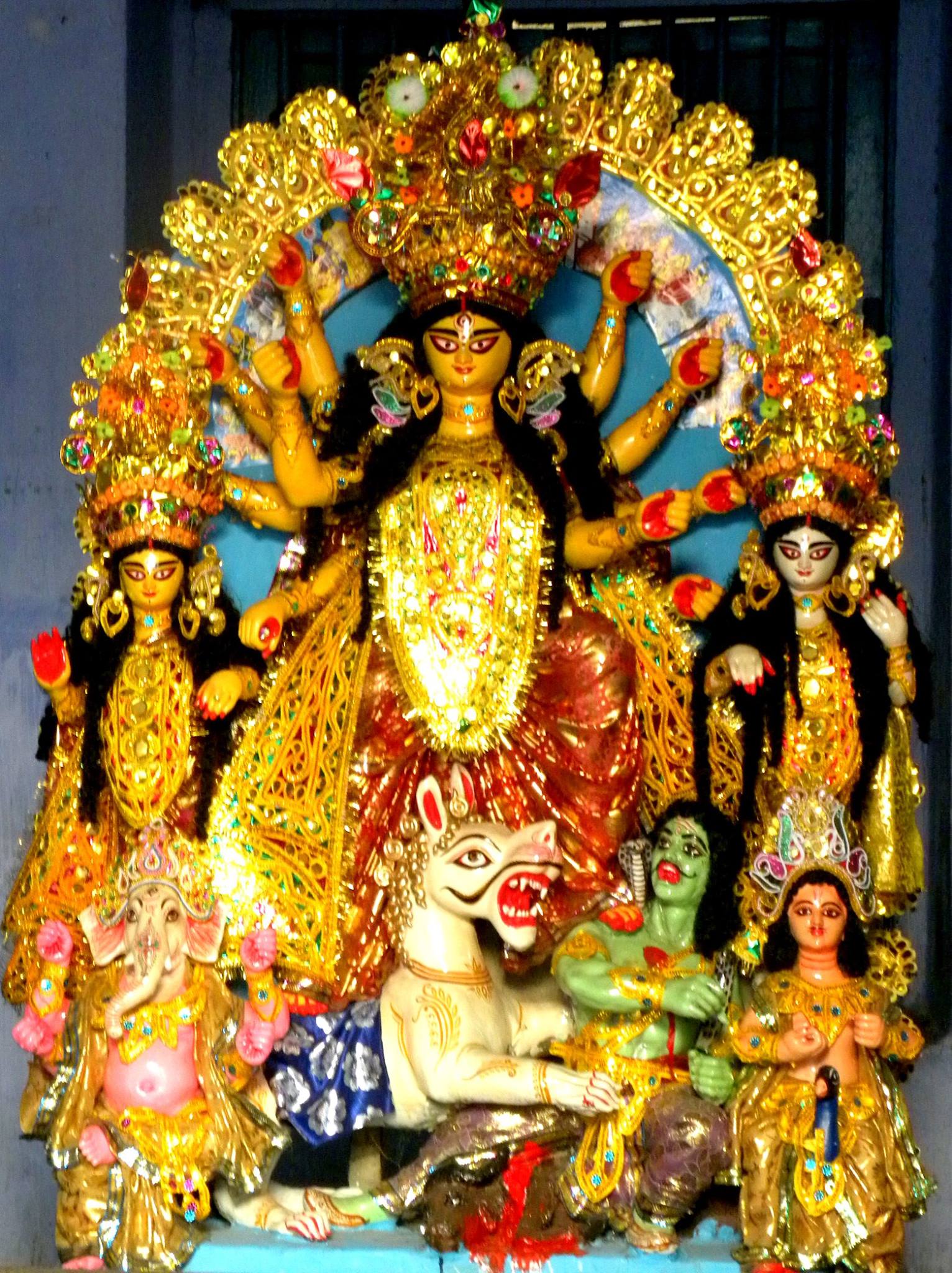
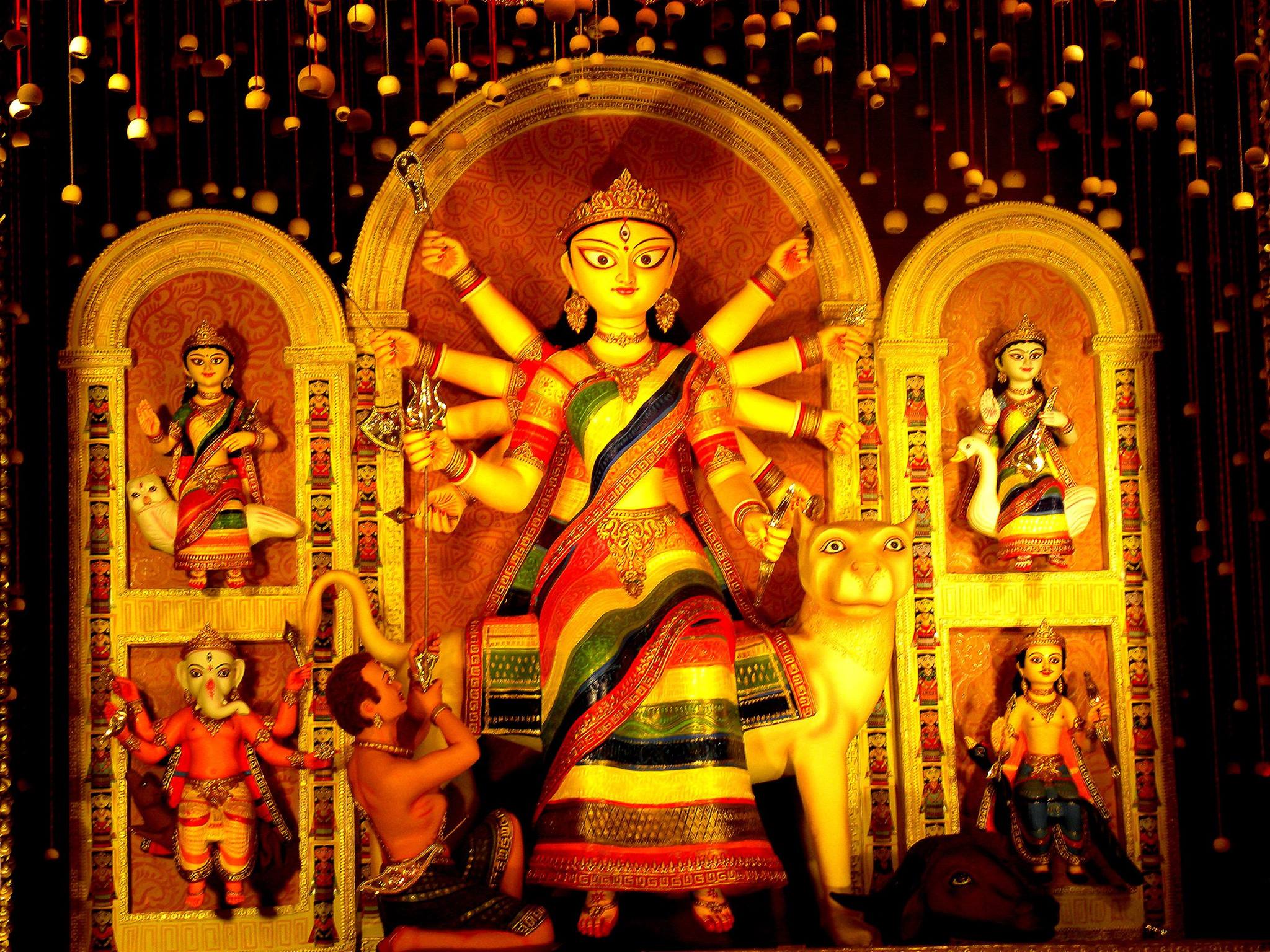
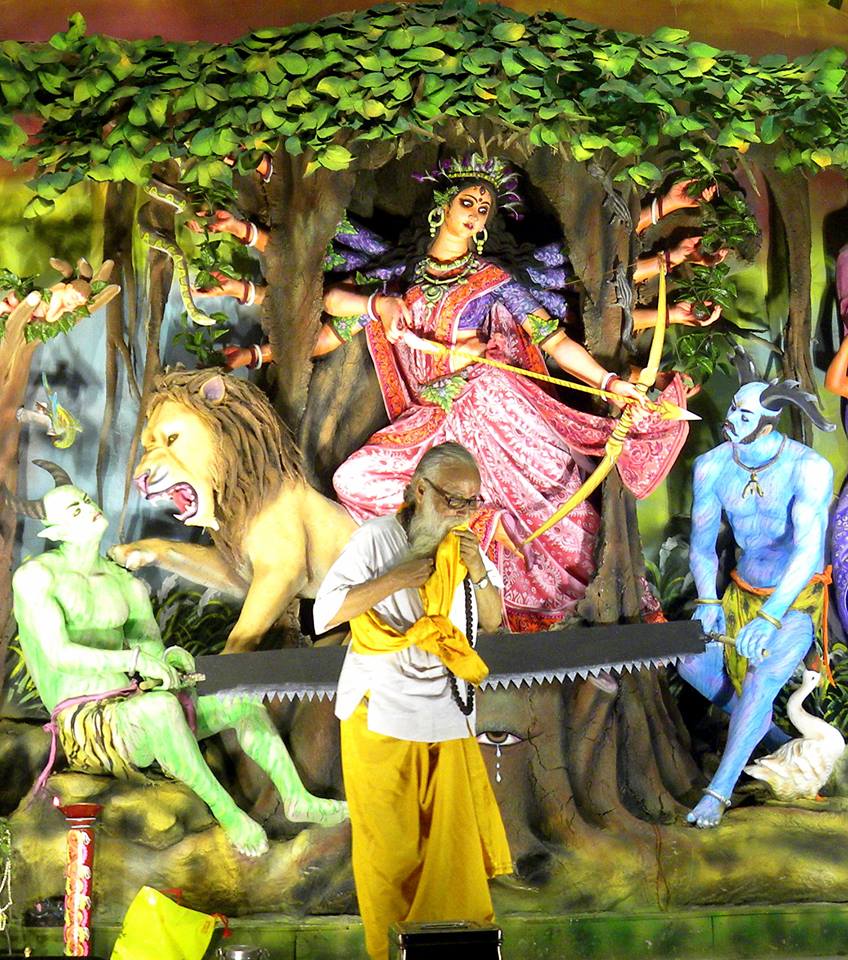
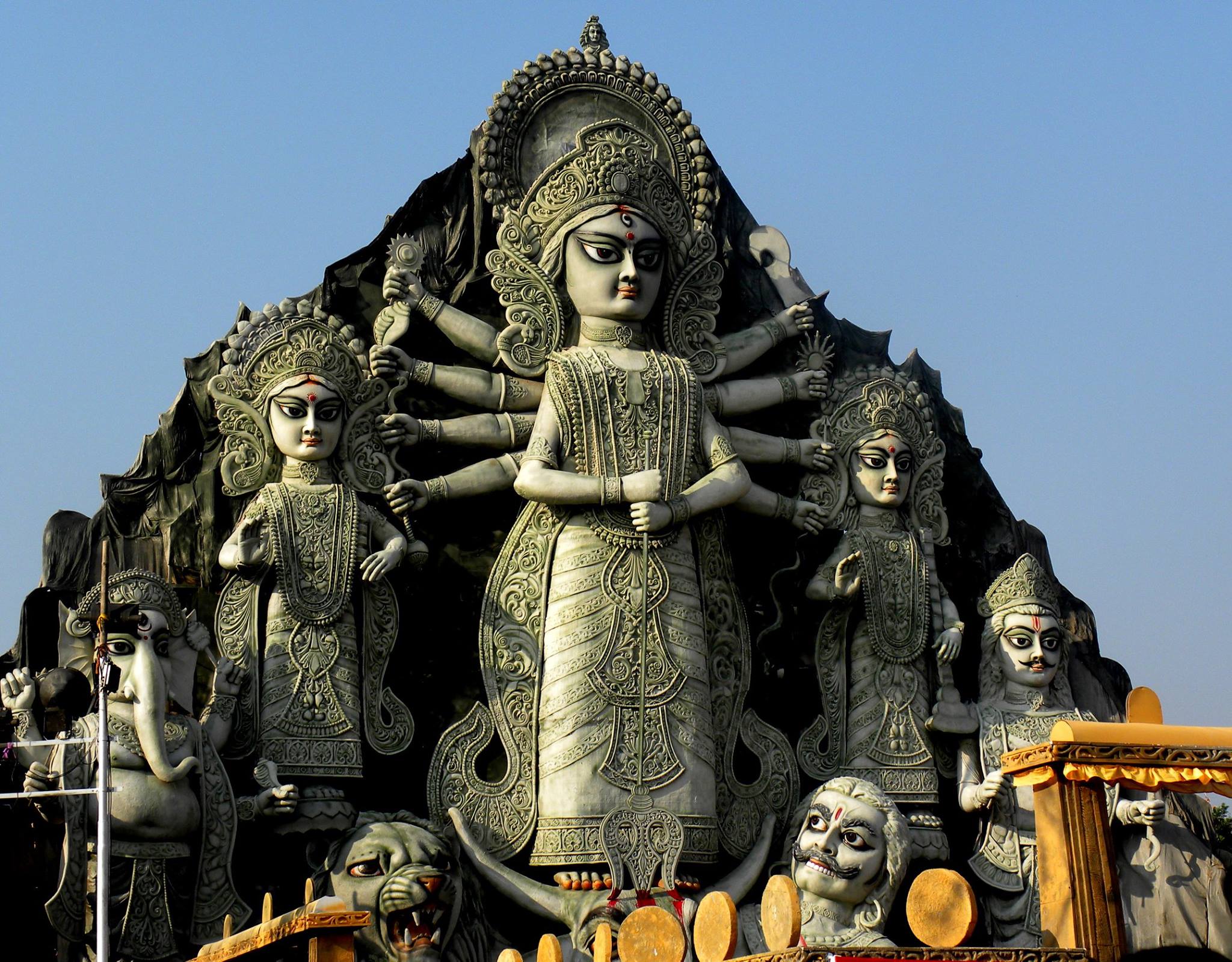
A Durga Idol in a Pandal
While the goddess and it’s worshipping clan goes onto proclaim many theories and controversies regarding its origin and mythological acceptance, one cannot deny the kind of occupations and livelihoods it fervors.
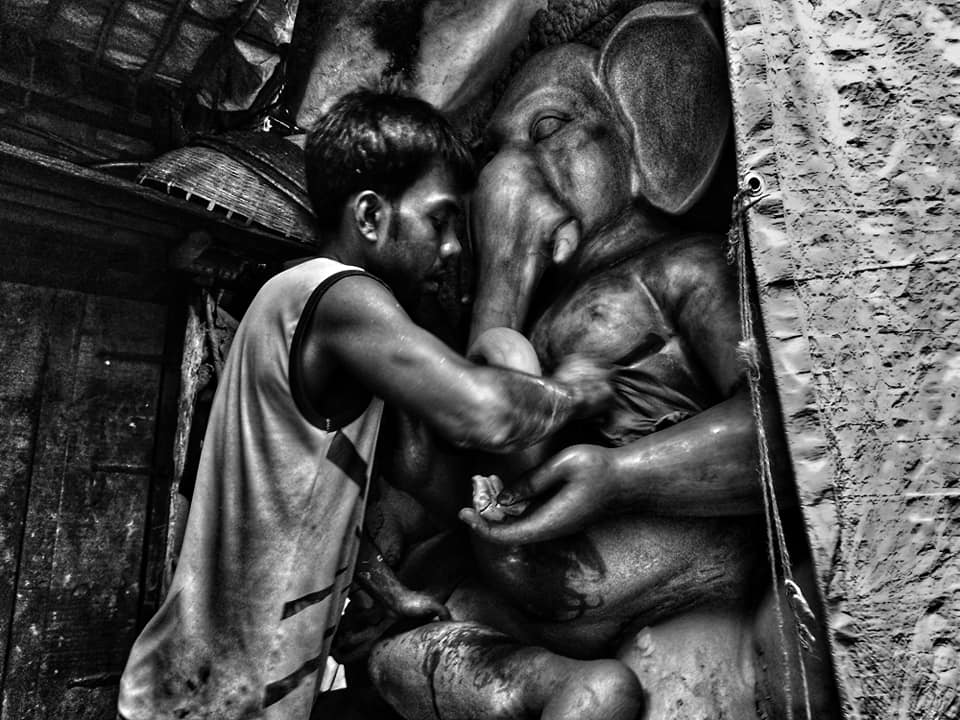
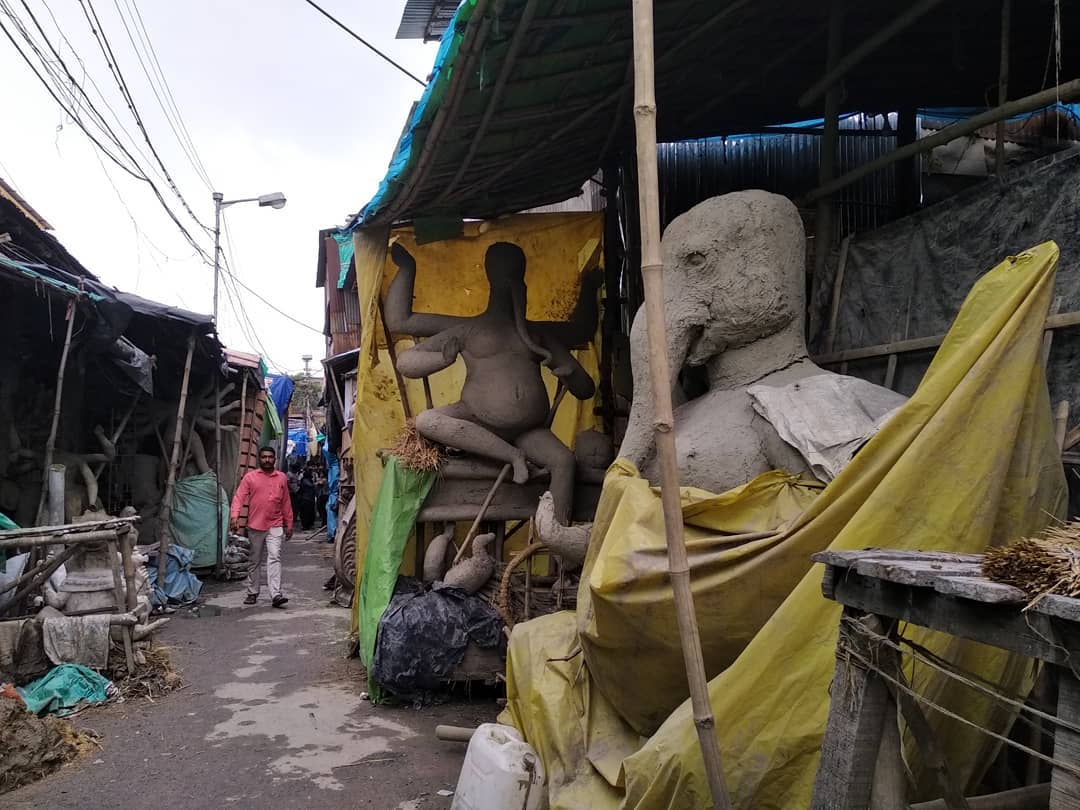
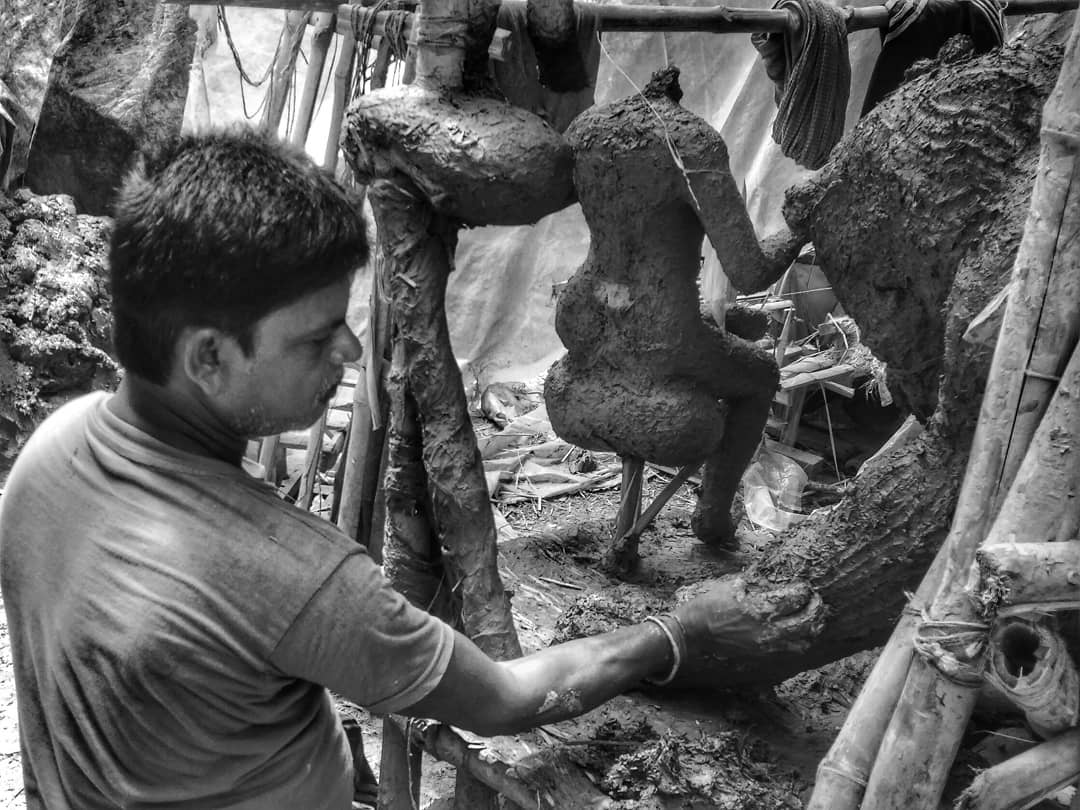
Before Durga comes his Eldest Son – The Elephant Headed, Lord GaneshaAn idol in making
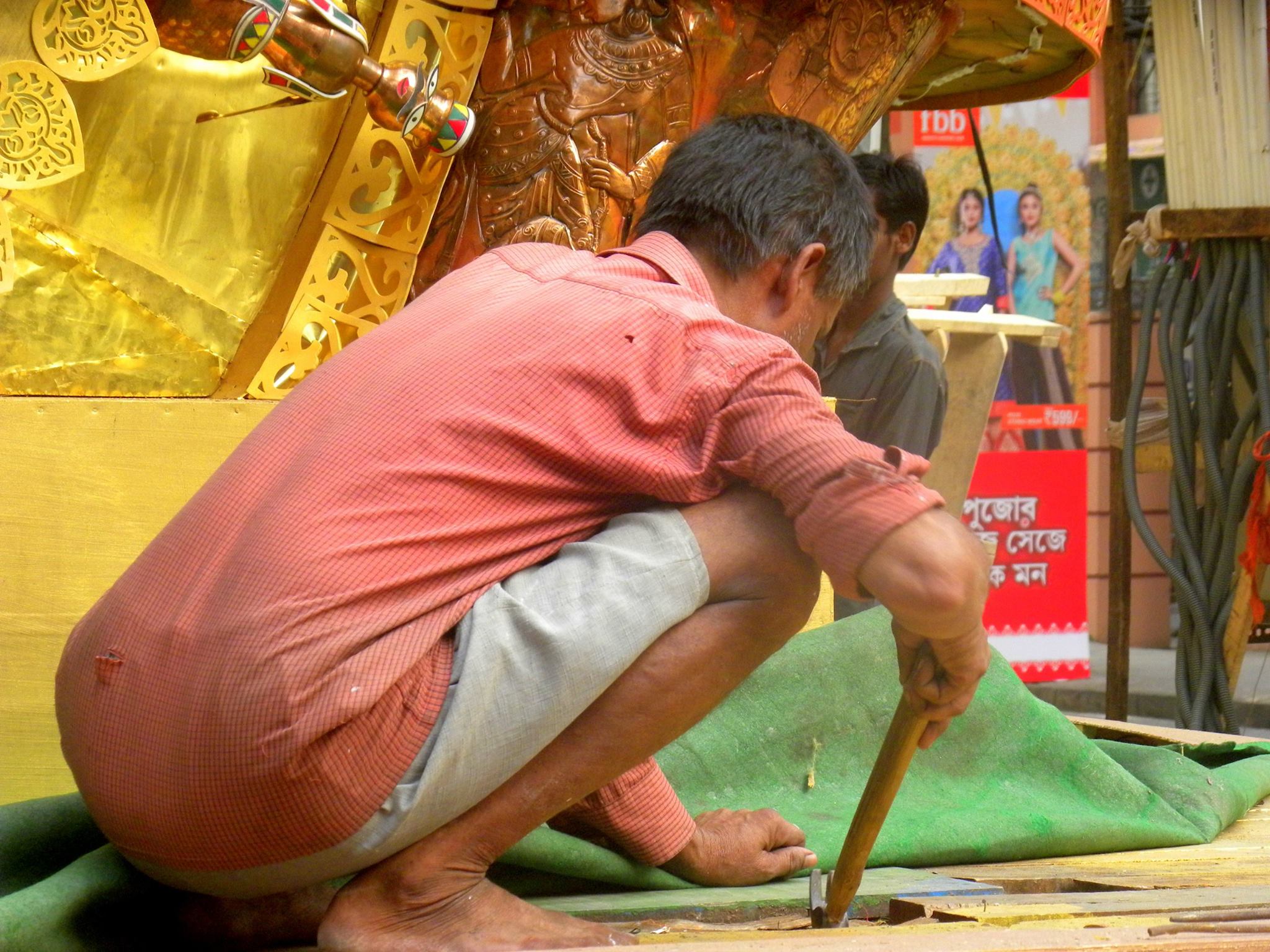
The festive fervor and the bonhomie we witness around the festival owes it allegiance to the hard work of many a craftsman and their vision.
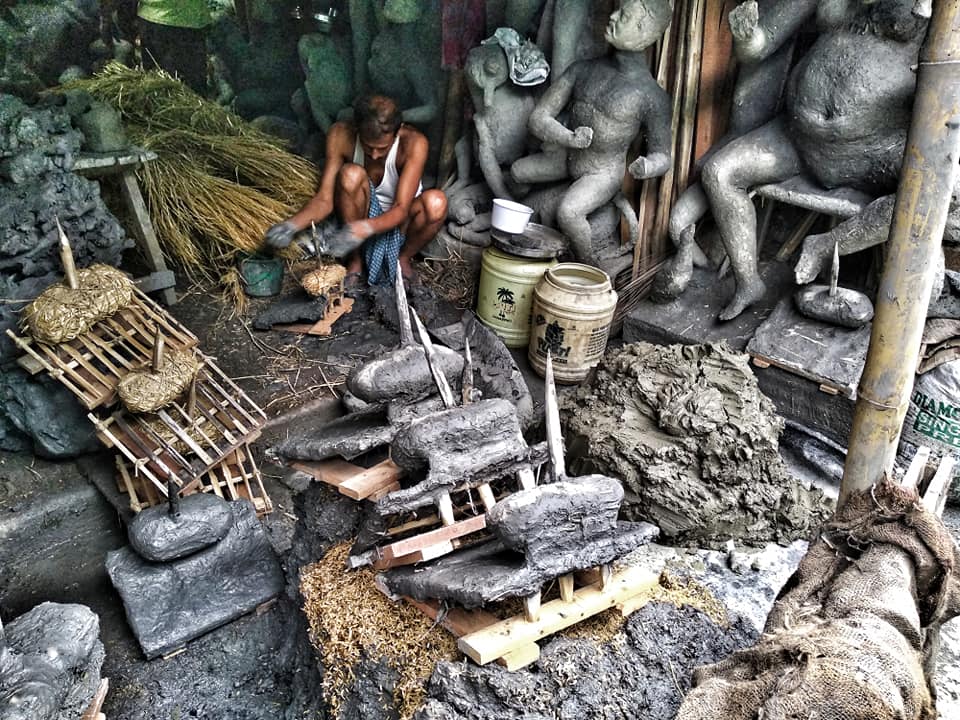
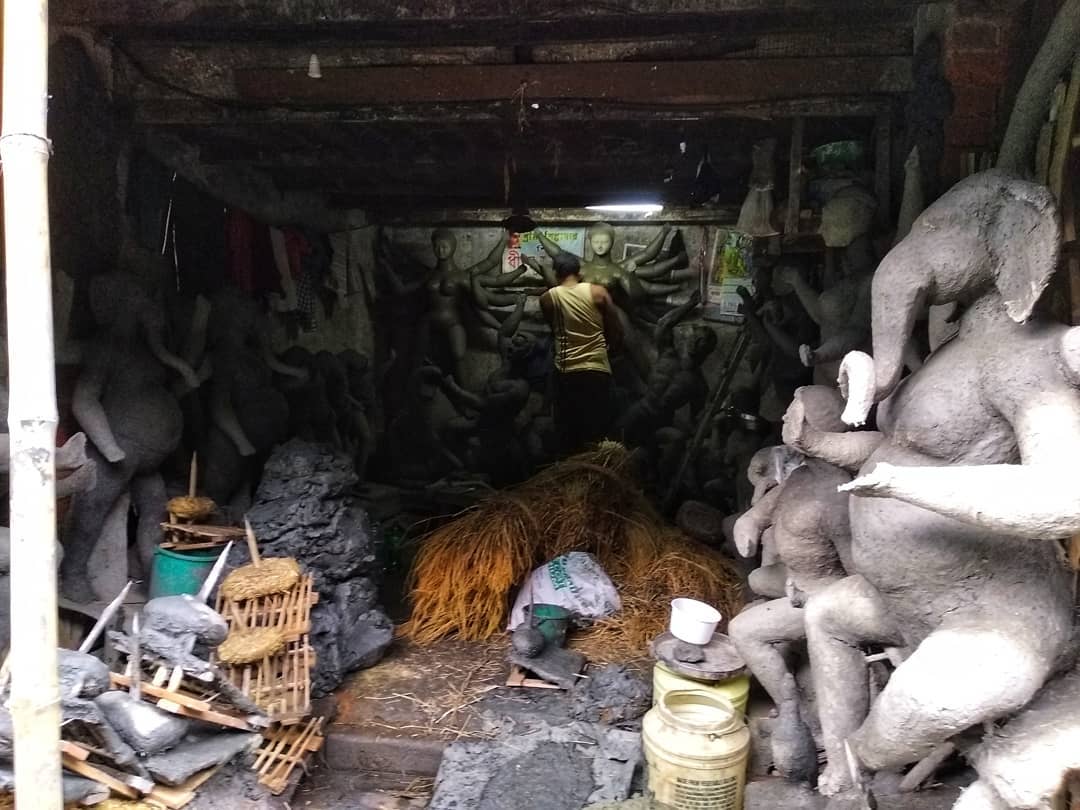
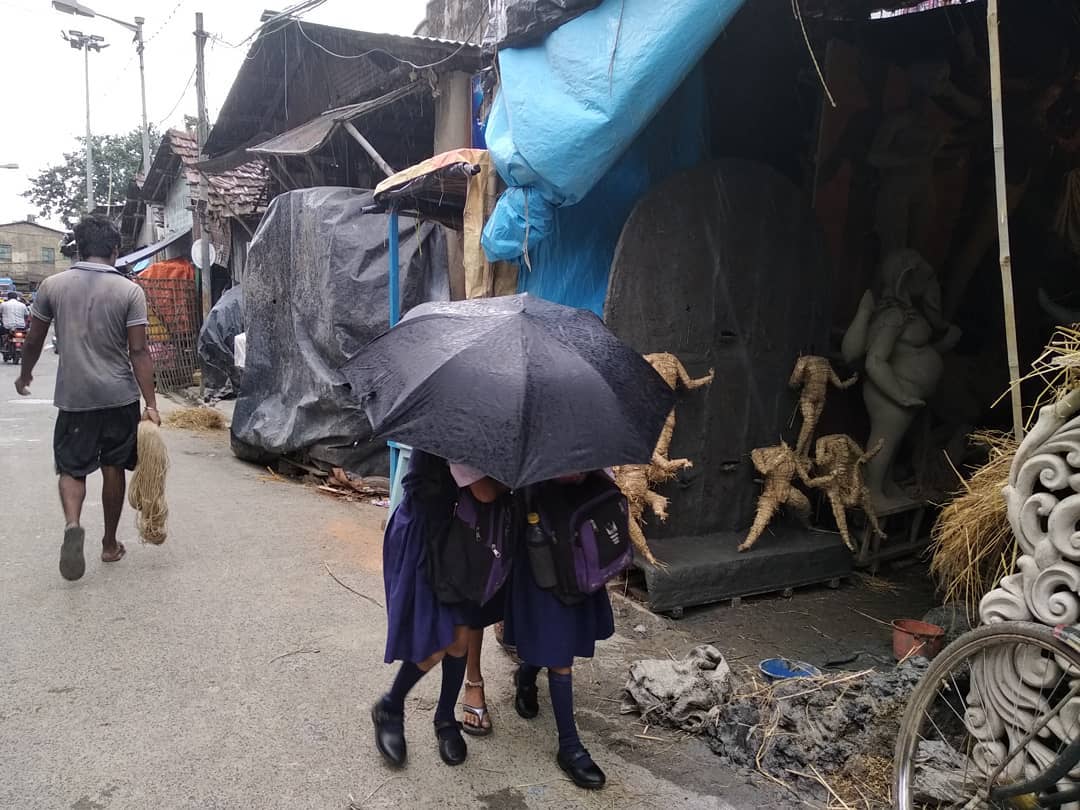
We often tend to think that Durga Puja is the time for that annual visit to the potter’s den, Kumartuli the largest potter area in Calcutta and many such small and morbid potter areas.
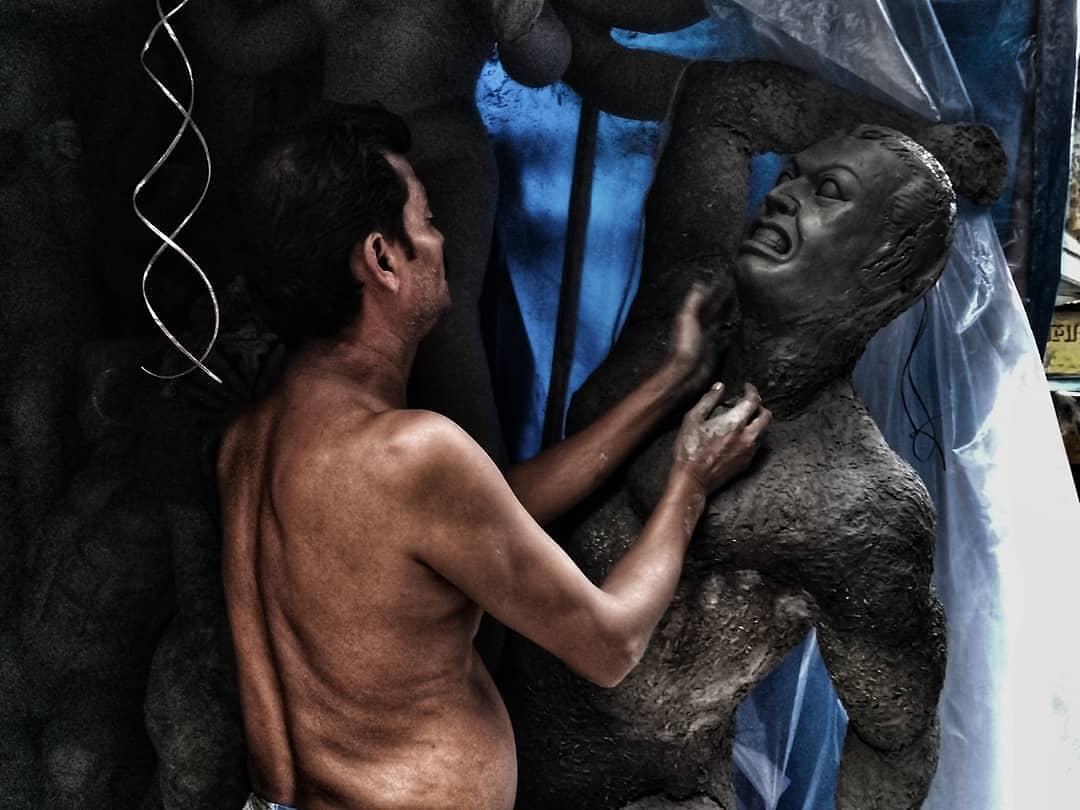
A Potter in ActionThe Making of the Demon
However, that isn’t entirely the case here. Much like the festivity which doesn’t live only in the culture of food and tradition but goes back to much more, the livelihoods too vary.
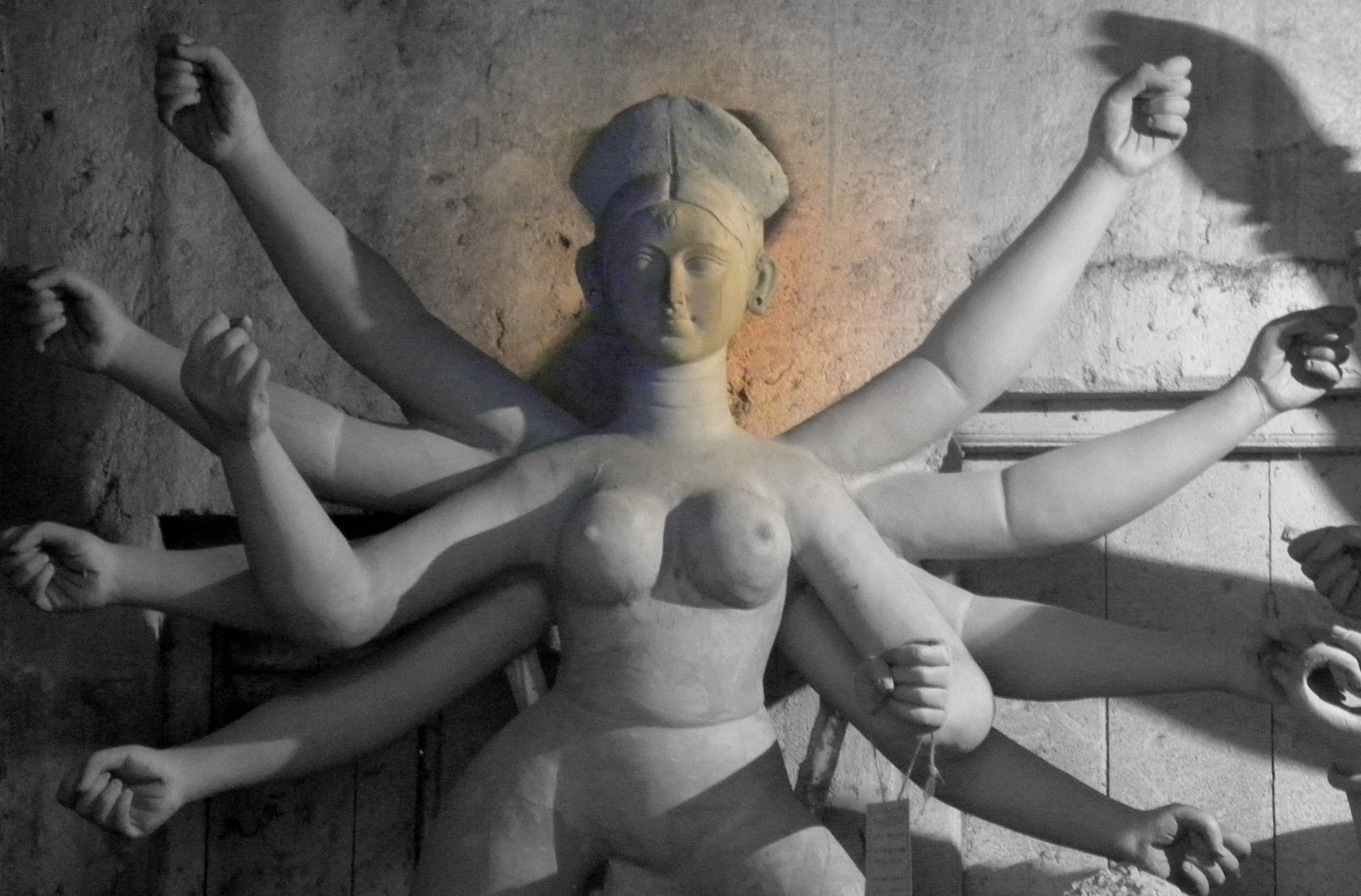
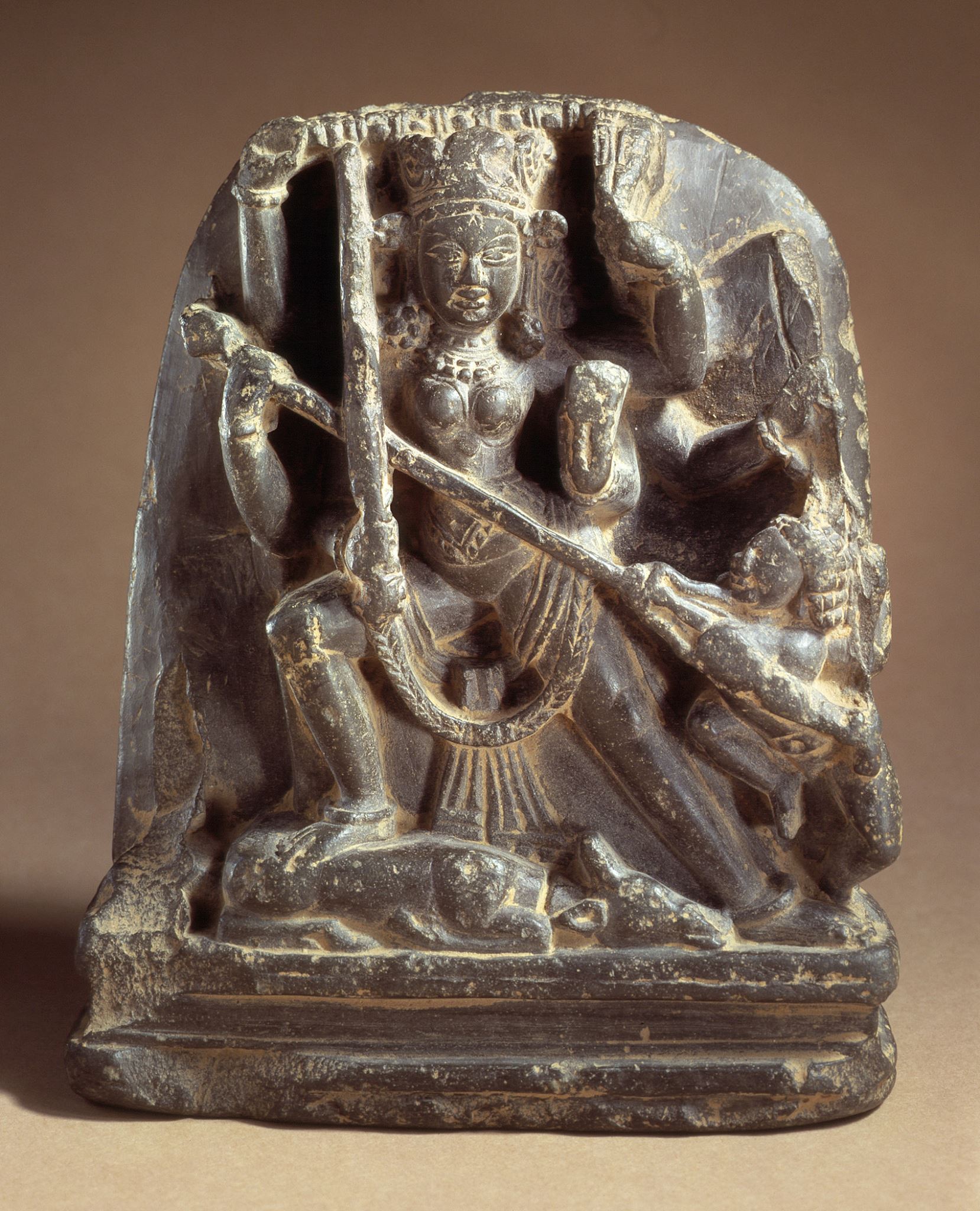
An old sculpture of the Goddess
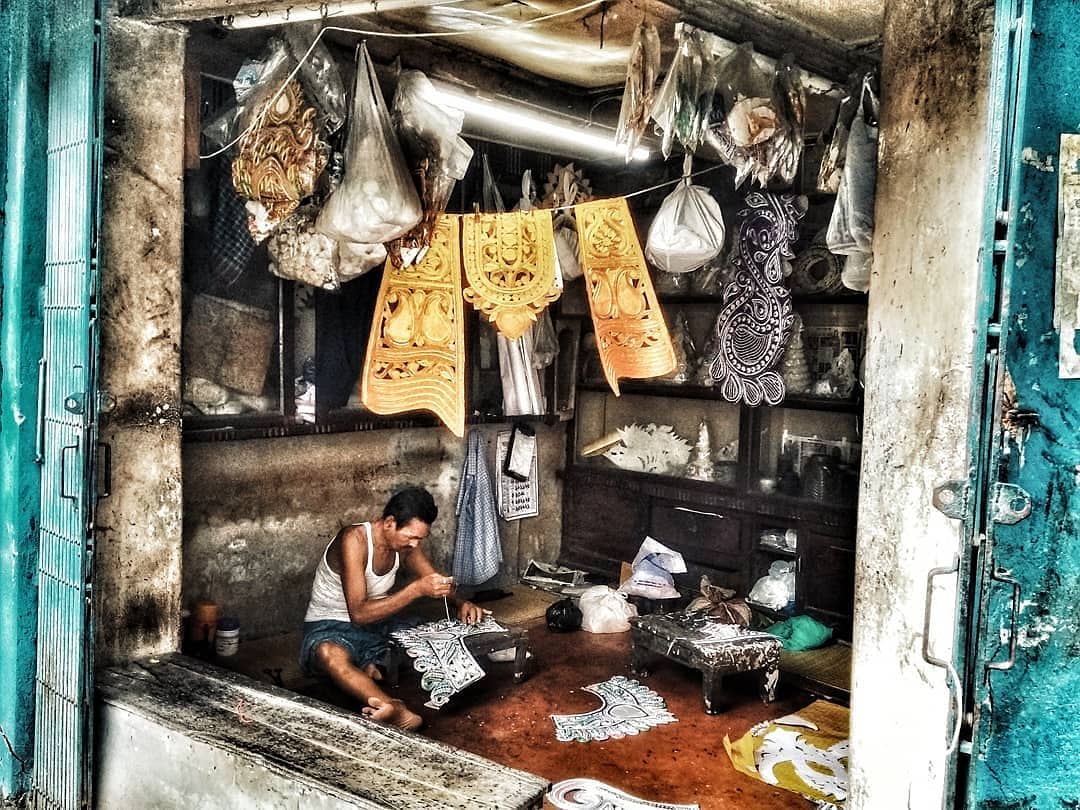
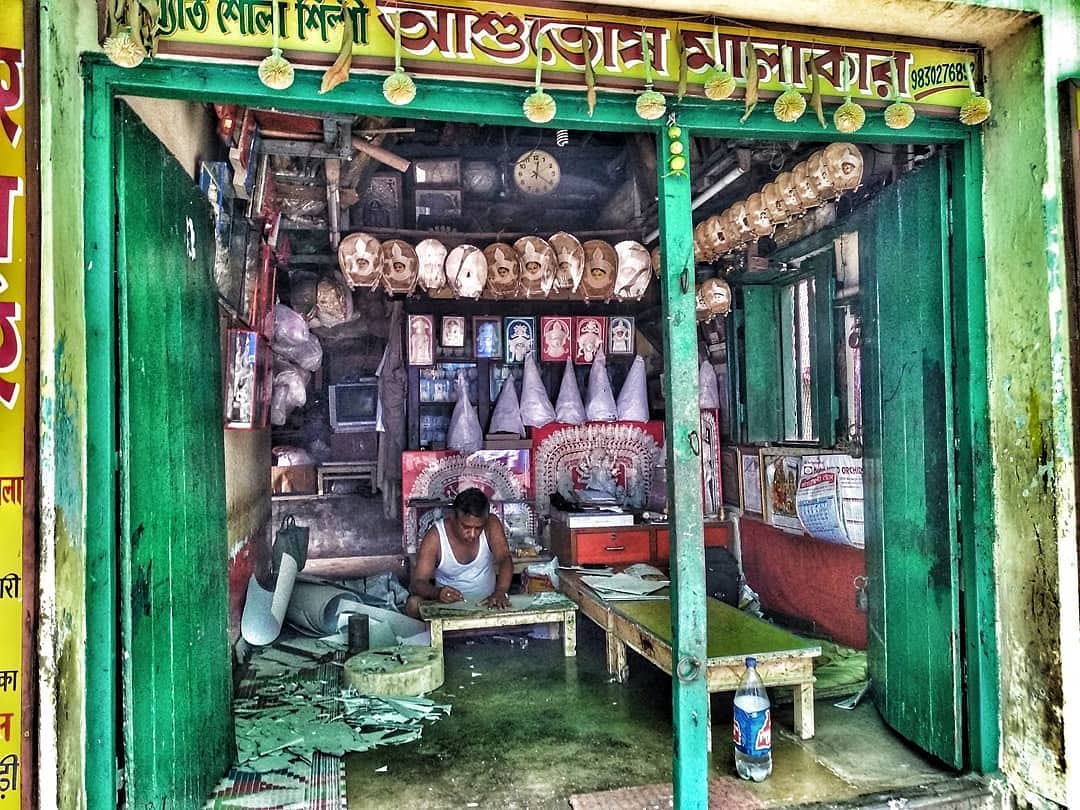
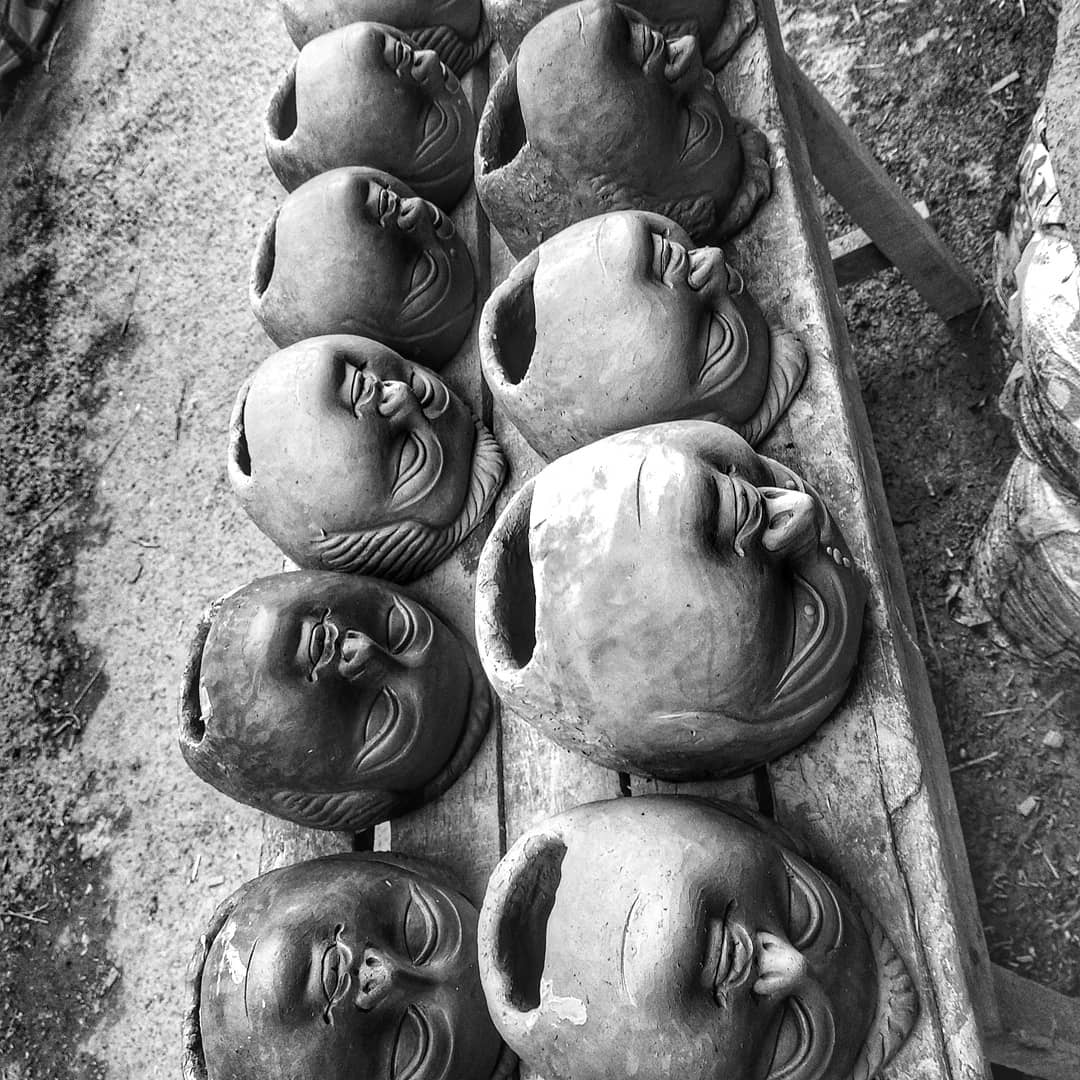
A quick visit in any potter’s area will reveal various nature of artists and artworks. This includes the potters making the idols, the paper and other accessory makers making the decorative items and accessories of the goddess and her children.
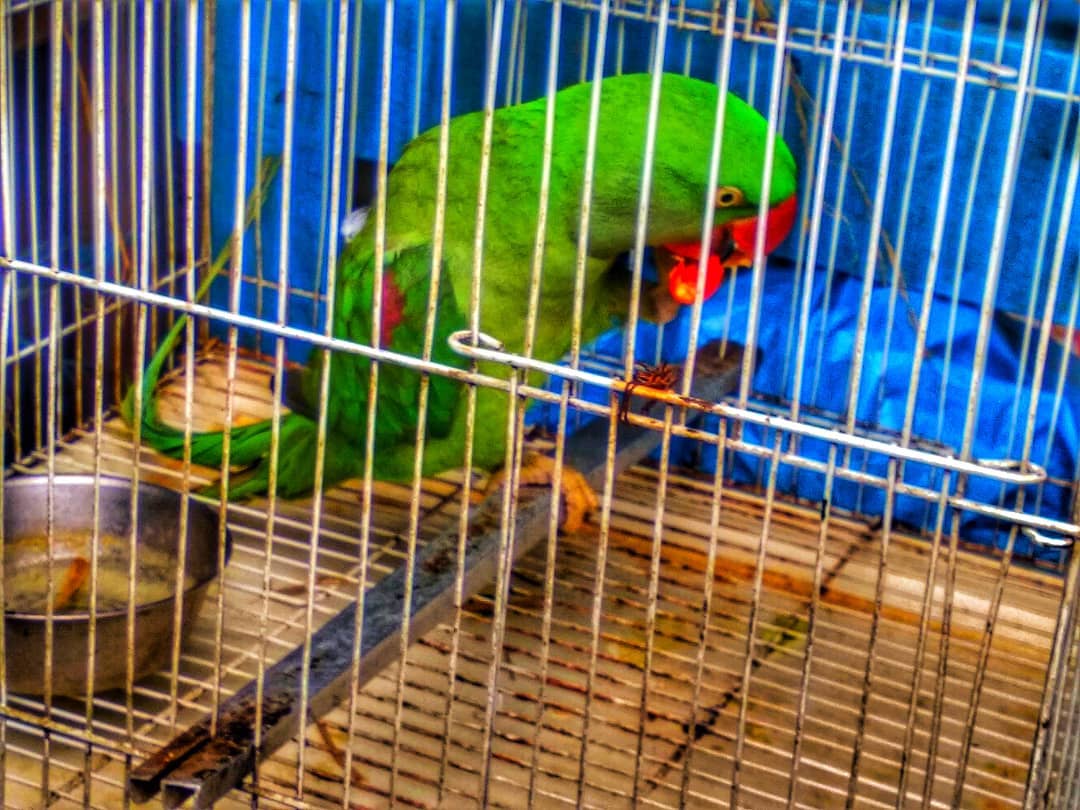
An artisan in his studioA paper artisan in his studioAn idol-maker at workThe adjoining areaA Kali Temple in KumartuliChildren returning home from school in KumartuliThe Streets of KumartuliA pet in KumartuliThe Goddesses Head in the MakingThe hard work of making the idol
Artisans at work
While we may think that it’s the time to depict the age-old traditions and beliefs, that’s entirely not the case. It’s that time of the year when artists challenge the very thinking and beliefs of society and make it something better. While some of it might steer a controversy, it largely remains acceptable to the people of the Calcutta. It’s a type of festivity were festivity and world thinking merges.
Artworks on Durga
So, true its nature, several people use it to draw attention to some social causes. Like The Missing Durga campaign, last year which showed some of the walls in the city decked up in beautiful graffitis highlighting the cause of child trafficking. Various puja pandals and artisans depict such social causes through Durga puja theme.
Missing Durga Graffiti
Down to the common people, the very essence of the festival enshrines a cultural activity which favors different kinds of profession. There’s a robust community of writers and magazine owners who look forward to this season to get their hard earned labor published. The readers too wait with bated breath for puja special magazines called “Pujo Sonkha”.
Pujo Sonkha of “Anandmela” and “Sandesh” – 2 popular Bengali literature magazines
The musicians, on the other hand, wait for this time to release a puja special album. These days, due to the round the clock album release phenomenon this thing has become redundant. Yet the Puja special music continues.
Every bengali household waits for the radio and television series depicting the goddess’s arrival this time. The early morning trapan to the ancestors and the hearing of Birendra Krishna Bhadra voice every mahalaya on radio calls for a different form of art. So, the television industry is much awake at this festival as anyone else.
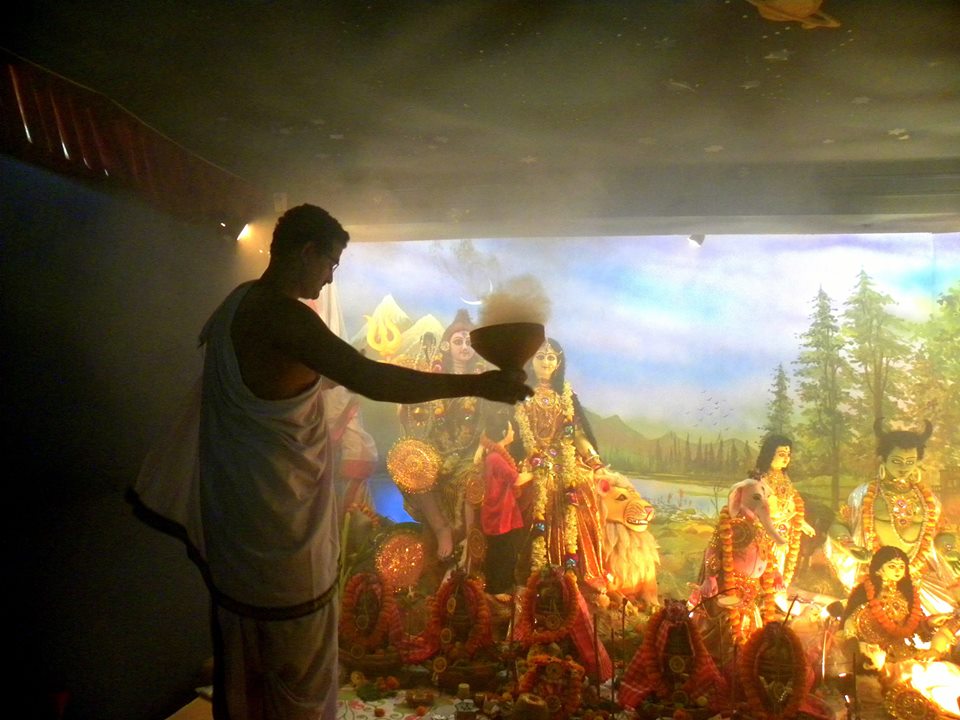
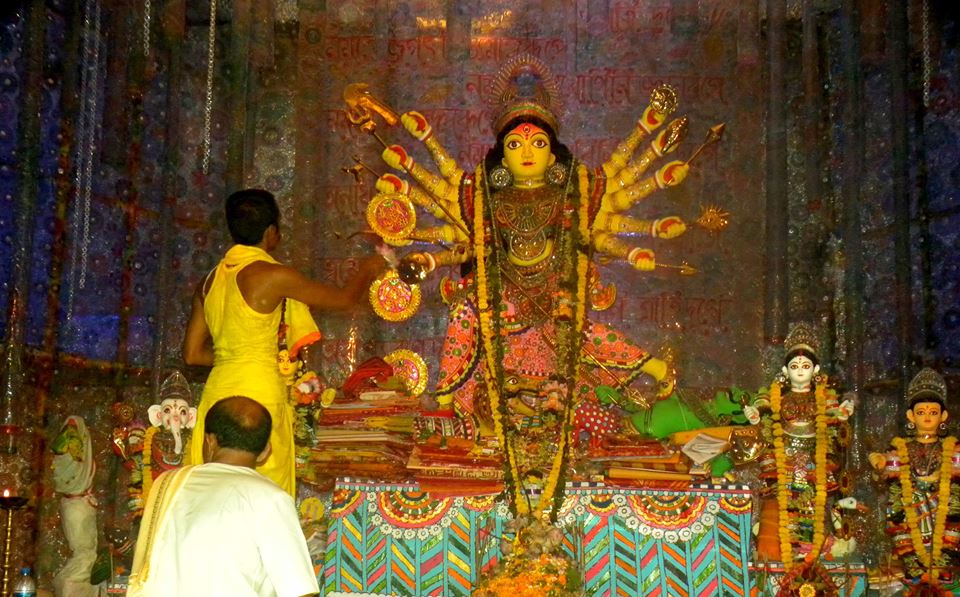
The Priest who conducts the pujaAn evening puja ritual- Sandhi Pujo
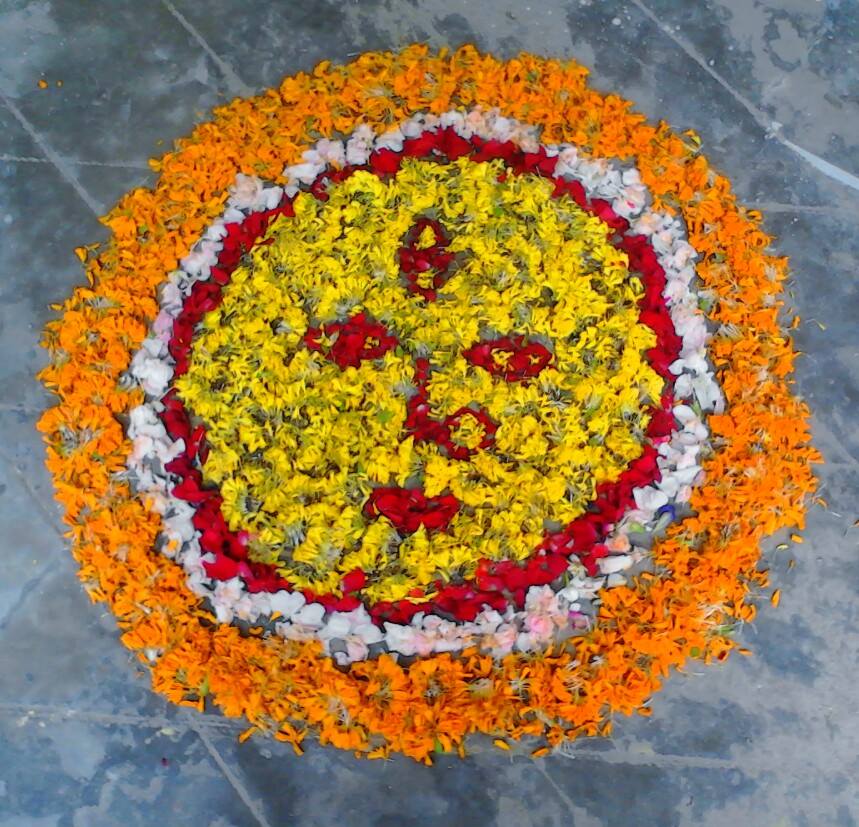
From there, as you slowly venture onto the actual days of the festival, you witness all sorts of artisan activities and the city donning up the clours. Apart from the usual pandal makers, there’s a string of artists decking up the pandals and the streets. You will have artwork all over the place, alponas (a type of graffiti) on the roads, streamline decorations and many such things.
Pandal Making in Progress
A pandal maker in action
The Graffitis and the Graffiti-makers (Art College Students)
Decorations in a local shopping complex
A floral Rangoli at my house
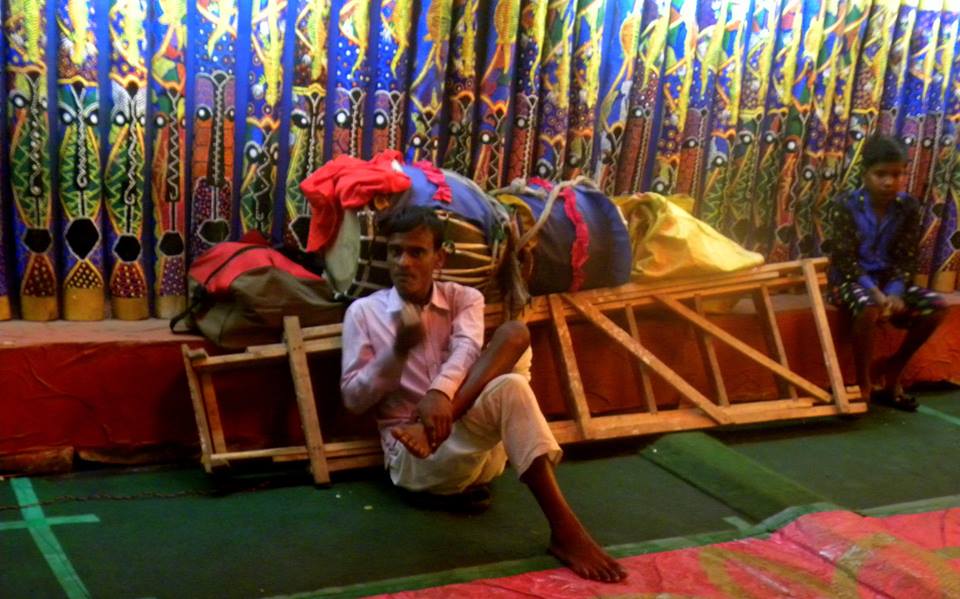
Finally, when you come to the actual days of the festivity, you will hear a strange drumming in the horizon. That’s the music for Durga Puja. The village drummers called “Dhakkis” coming to the cities to earn a livelihood here. That’s another form of art.
A drummer with his large drum resting
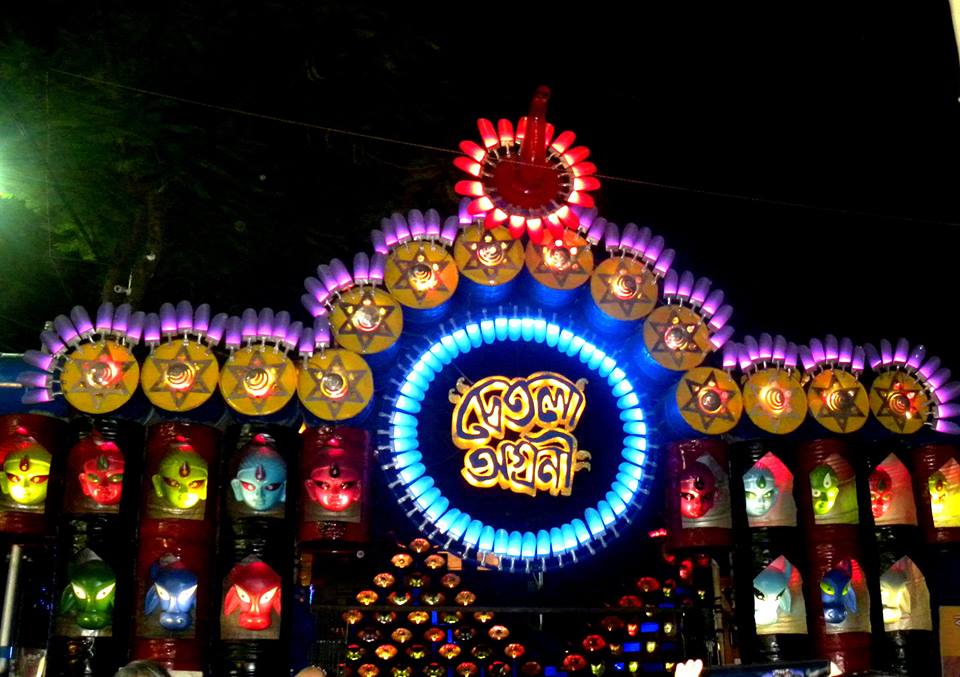
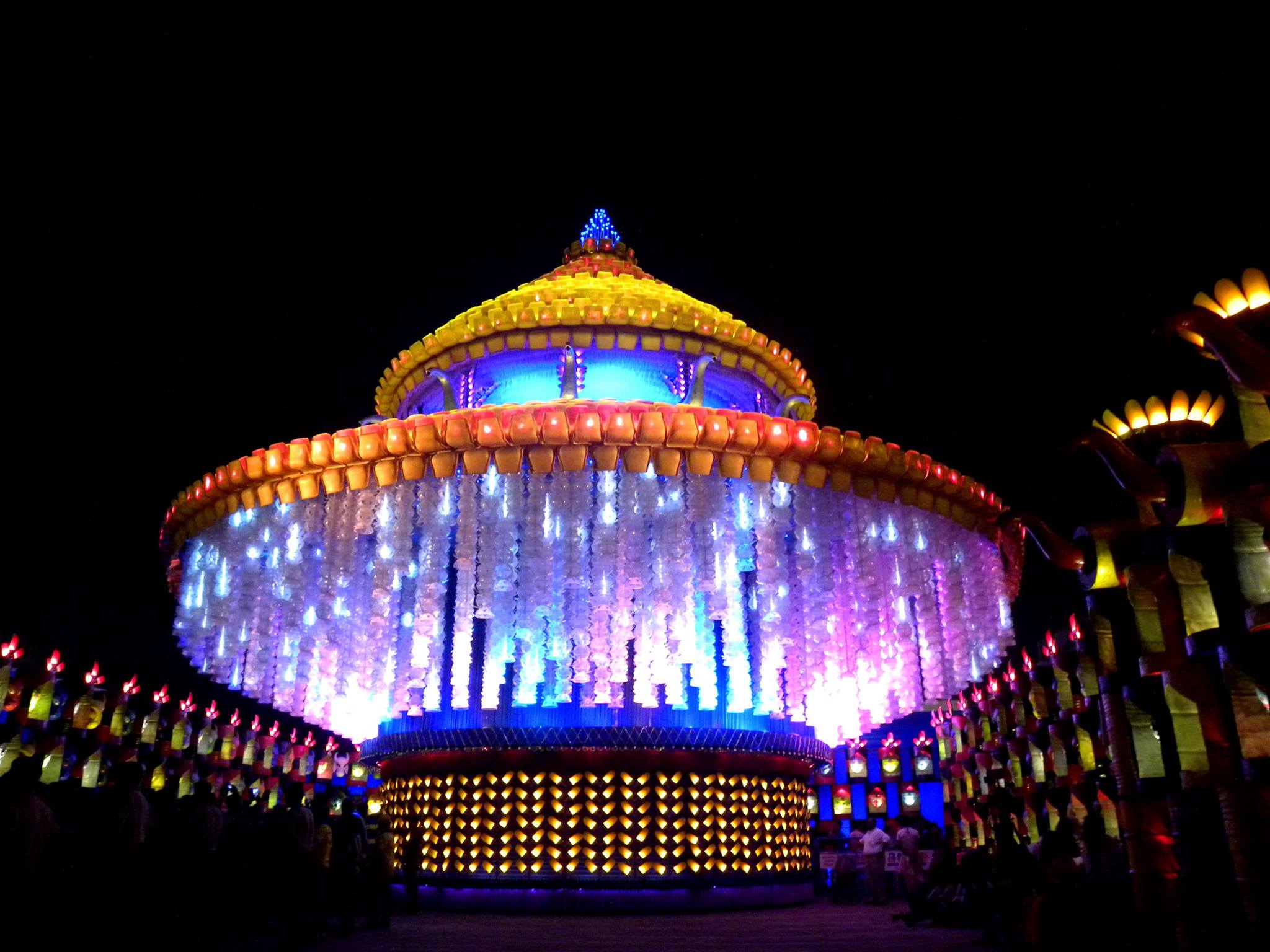
Artworks and decorations in a pandal
A beautiful light and shadow effect in a pandalThe pandal with the largest idol
So, the whole festival isn’t about culture and mythology alone. It’s about livelihoods. It’s about living. As much as we live today it’s because of such disappearing livelihoods.
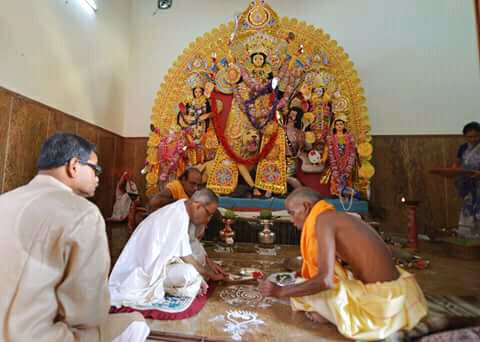
The actual pujo being performedFormer Indian President Pranab Mukherjee performing Durga Puja at his ancestral home
Inktober is a special month dedicated to hone your artistic skills. You may draw well or sketch well or doodle well or may just paint well – whatever it is, this the time to improve your skills to push your limits.
Started by artist Jake Parker to hone his artistic abilities, this has become a cult avenue for artists all over the world. Every year artists all over the world take part in this.
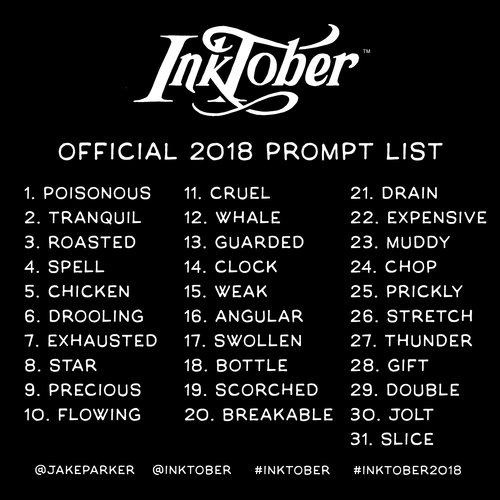
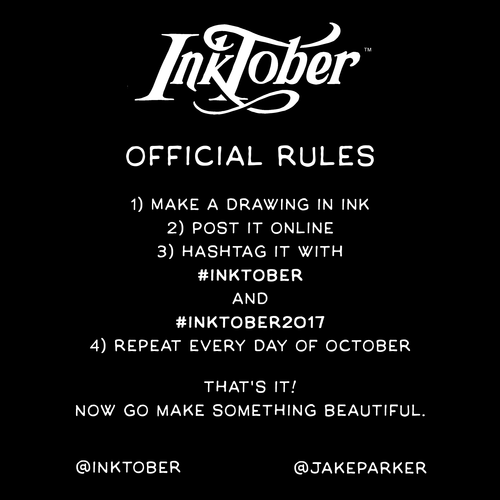
The rules are pretty simple, there’s a list of prompts – a specific word for each day in October and you have to create your own version of that word and upload it on social media handles like twitter, facebook, Instagram etc. tagging and hashtagging inktober.
2018 prompt listThe rules of Inktober
The reason this is unique is that of the range it offers. Not only do you improve yourself in the process but you also get to know several more artists and their thought processes.
Here’s a list of the prompts of 2017 and some of my sketches chronicling it.
2017 Prompt List
The Day 29 prompt was “FALL” which reminded me of many a thing – the old poem we read at school “Jack and Jill”, the season of fall, and the fear of heights and falling down. So, I made 3 sketches out of it.
When you FALL in Love
Never let the fear of FALL conquer you. Climb your fears
Jack and Jill – climbing and falling
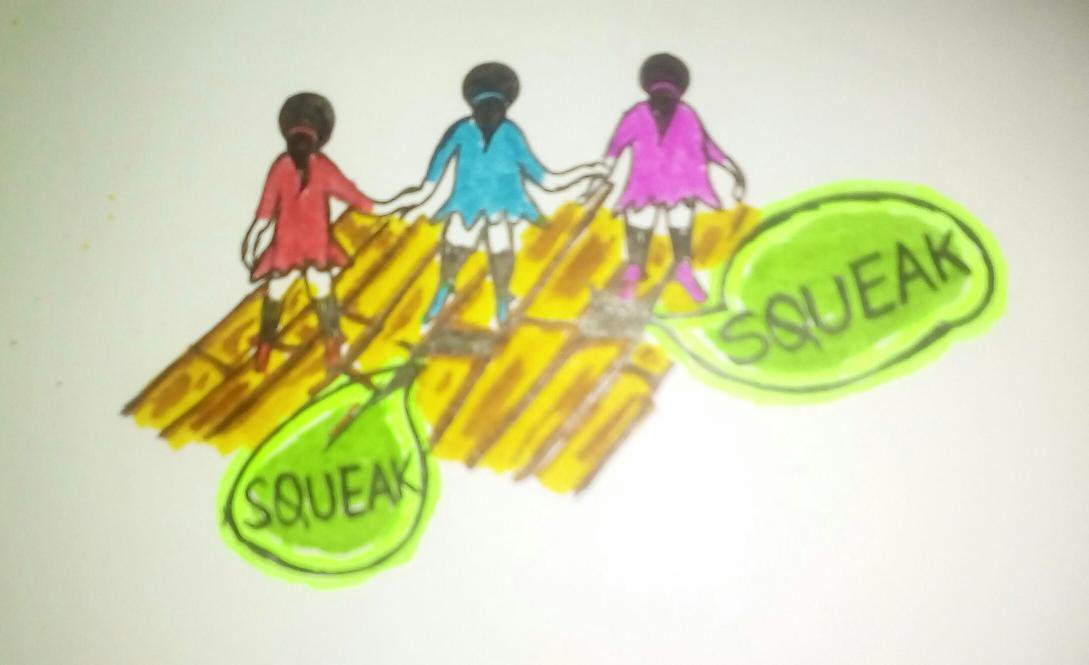
The26th day’s prompt was “SQUEAK” and I was reminded how we squeak past our adversities in order to excel in life
Adversities can never break us. We evade them skillfully.
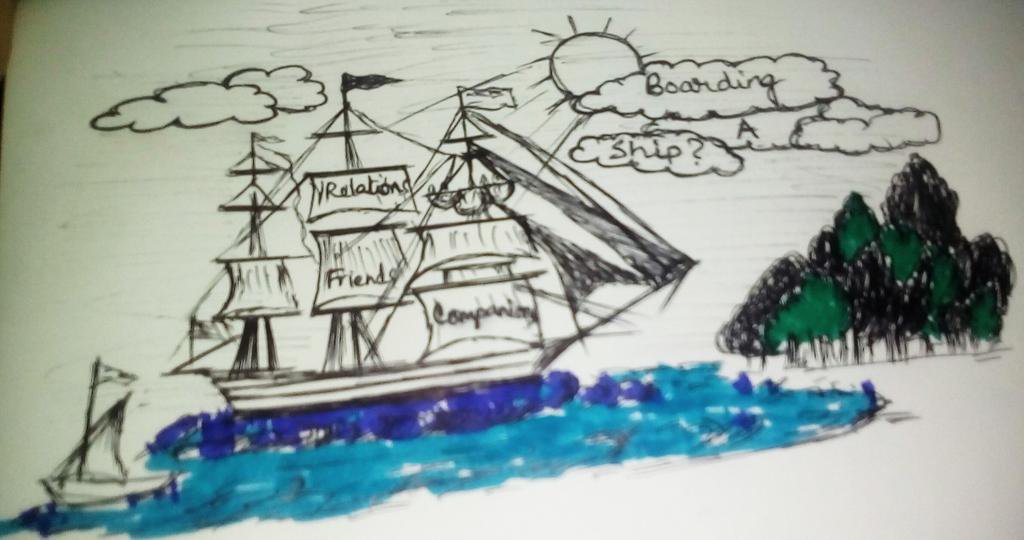
It was the time of the “SHIP” on 25th October and in came my thoughts on various ships which we hop on – willing or unwilling.
Ships that fly. Friendship or companionship? Choose wisely
Friends, relations or companions? Which ship are u looking for?
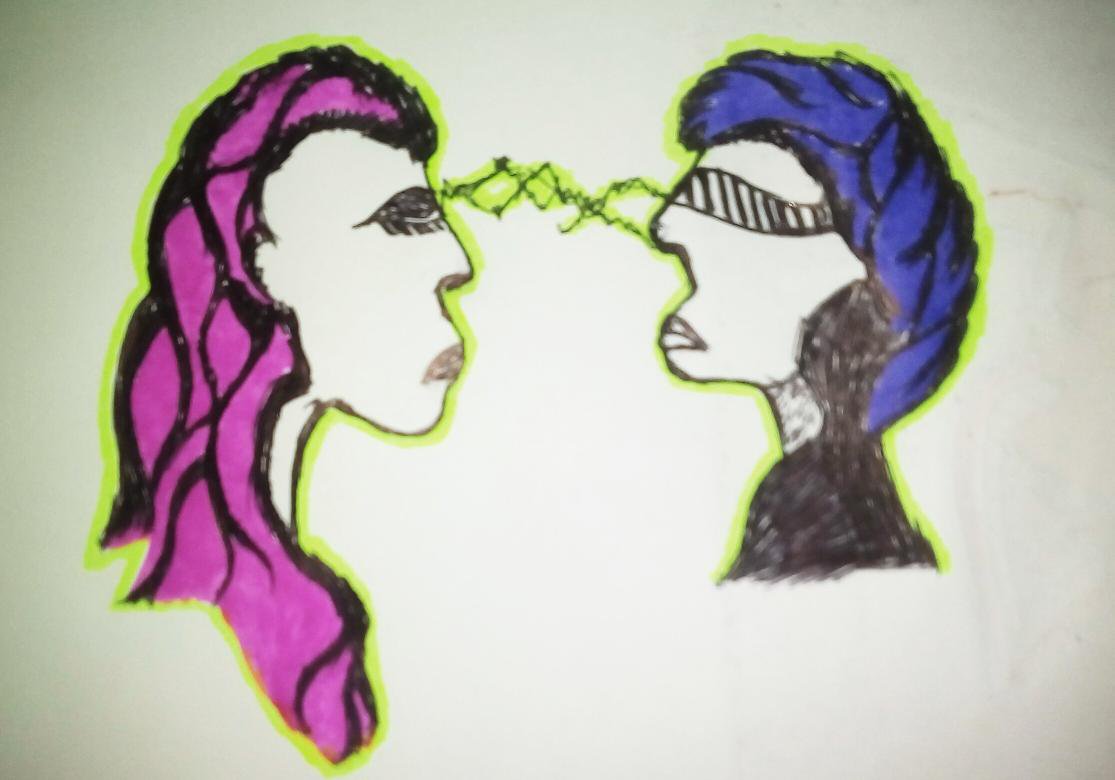
The 24th day reminded of blindness and vision. The prompt for the day was “BLIND”
Who’s blind? The one with eyes or those without?
The word for Day 23 and 22 was “BITE” and “JUICY” respectively, and here’s my take of it.
Let’s take a bite.Pssh! Do you want some juicy oranges?
The Day 20 prompt was “CLOUD” and it reminded of the Refugees and one of my poems about them. Here’s the poem
I KNOW WHY IT RAINS
Refugees are the cloud that comes down as rain. I know why it rains when there’s a sun over the horizon. It has buried the pains of engulfing a dreadful poison.
Of the acres of land we had,
couldn’t provide the clothes that clads.
Now each day’s harvest
lies in the distance traveled between successive rests.
I know why it rains
it speaks of a story that pains.
I know why it rains
When there’s very little to gain.
I know why it rains.
Refugees are the clouds that come down as rain.
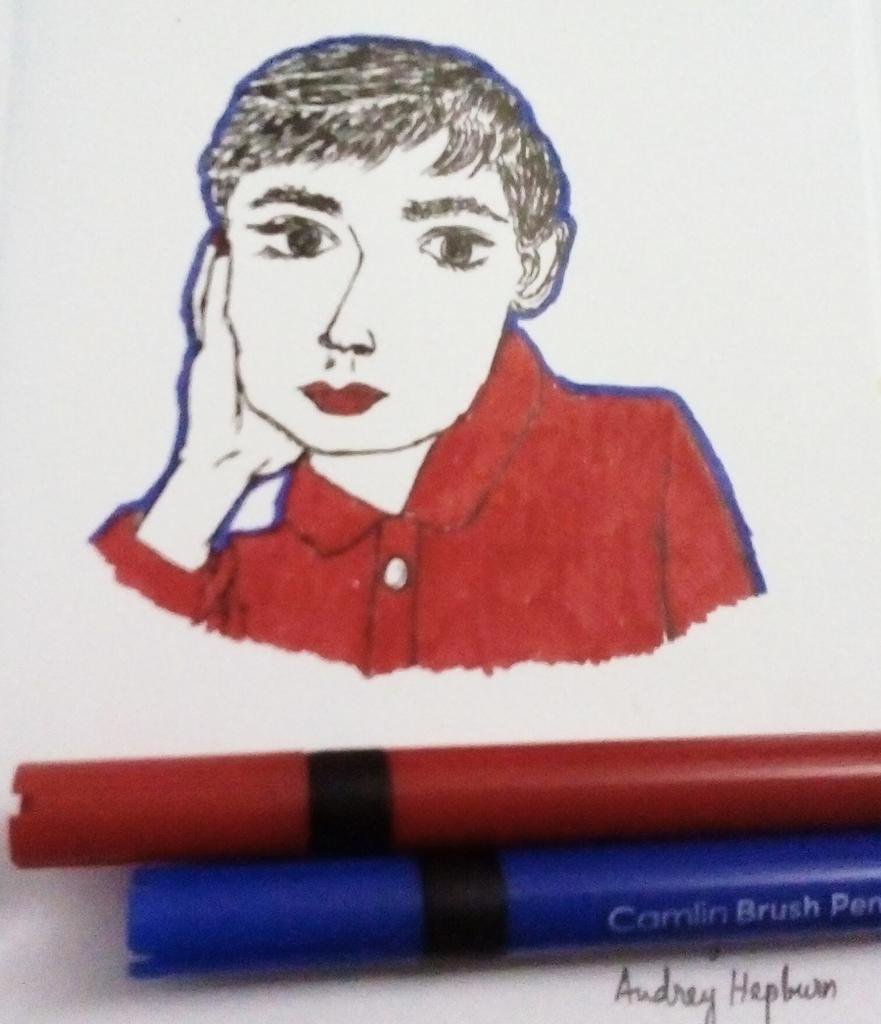
The 17th Day’s prompt was “GRACEFUL” and I was drawn towards Audrey Hepburn.
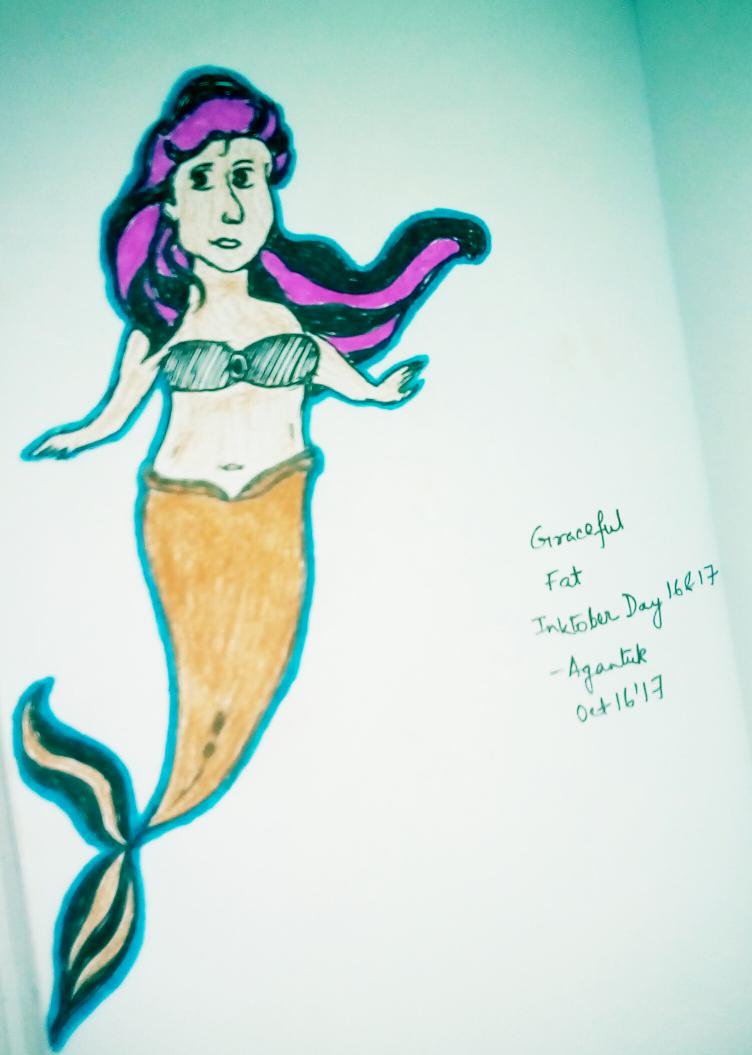
The meaning of the word and its perception drove towards many aspects of body image issues and that in turn gave away to the Day 16 prompt “FAT”
Fat yet graceful. Destroy the notions of beauty
Day 15 and 14 prompts were “FIERCE and “MYSTERIOUS”, respectively
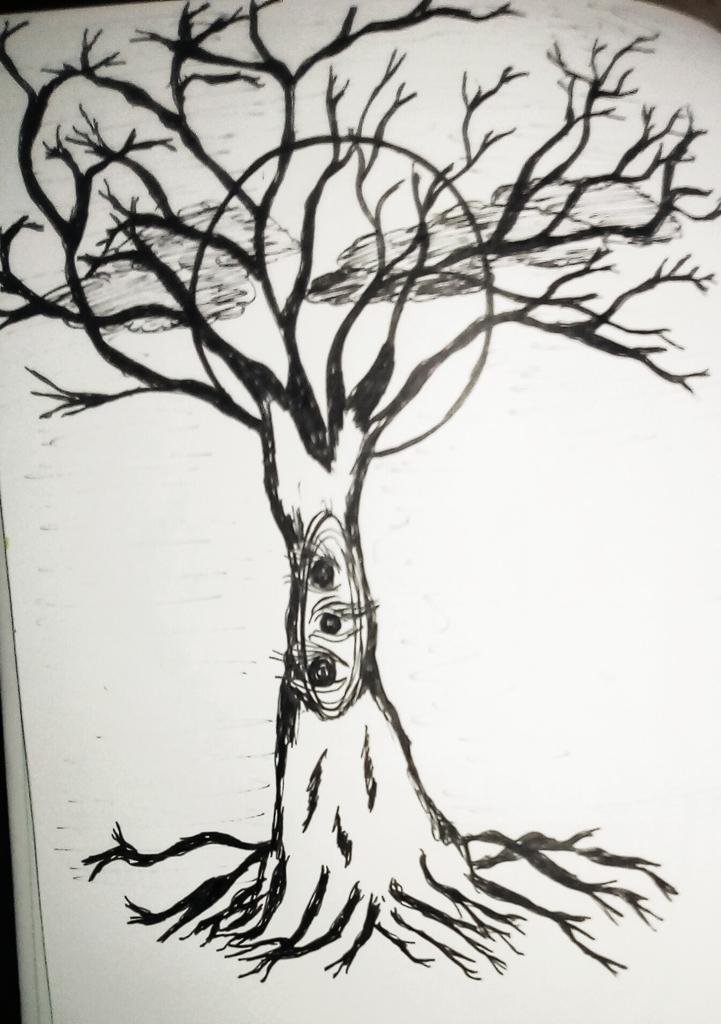
The Mysterious Tree
Fierce But Beautiful
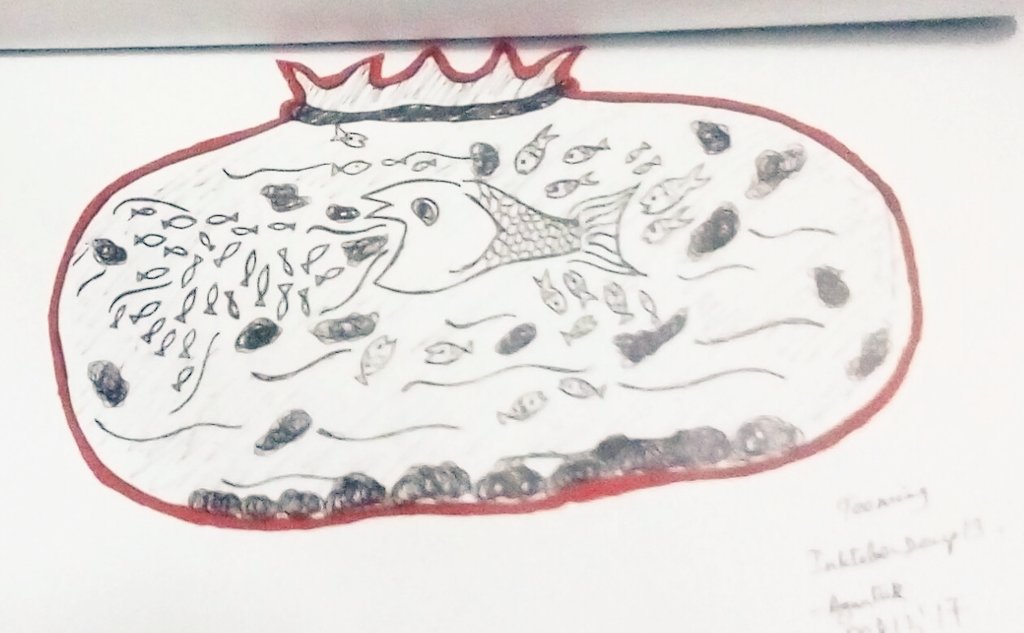
The unlucky 13 brought “Teeming” with it and so did the problem of plastic pollution in the ocean.
Teeming the ocean with plastic reduces it to a plastic bag
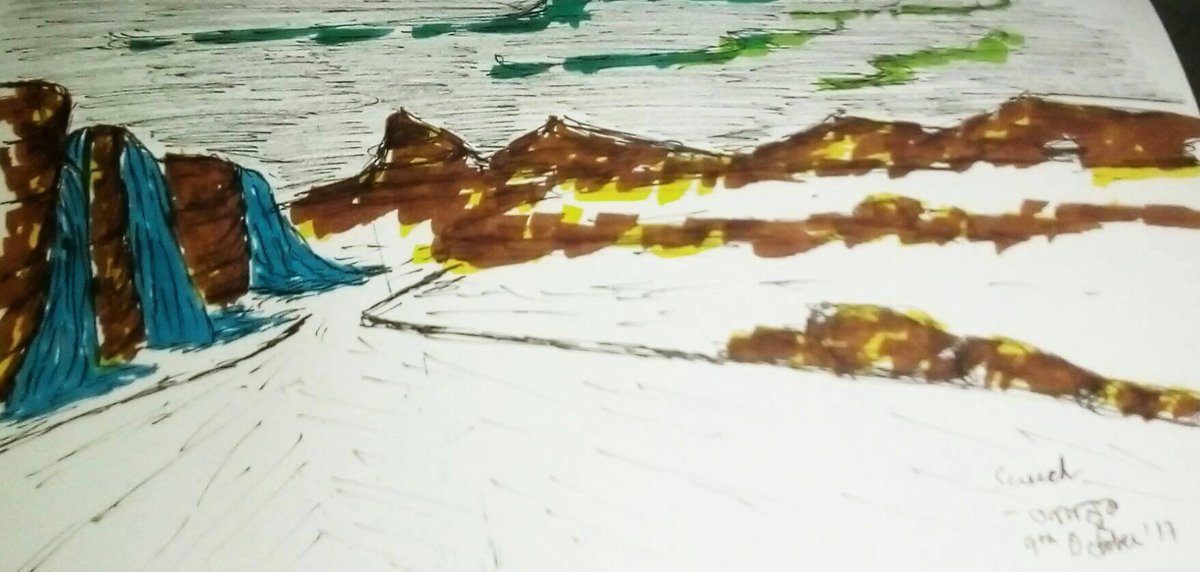
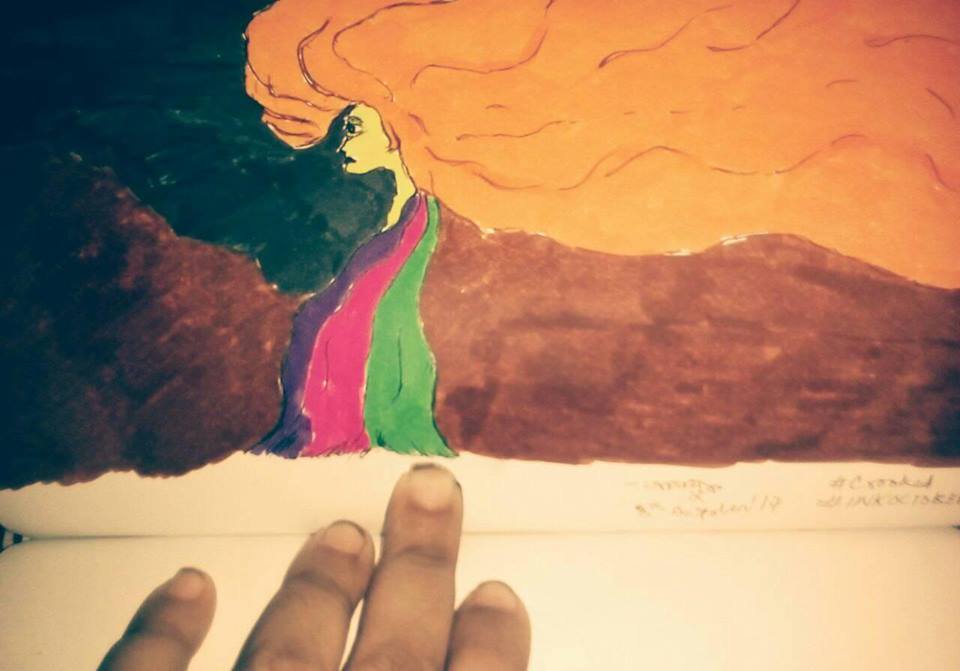
Day 9 and 8 were reserved for “PAIN” and “CROOKED”, respectively.
Nature gives us the courage to screech in excruciating pain. The pain of living.# Crooked: Isn’t bullying and ridiculing a person for her deformities a sign of deformity itself?
Day 6 was meant for “SWORD” and I was reflecting on “Depression”
Depression a Double-edged sword that creates an existential crisis. Pick up & place it in a showcase.
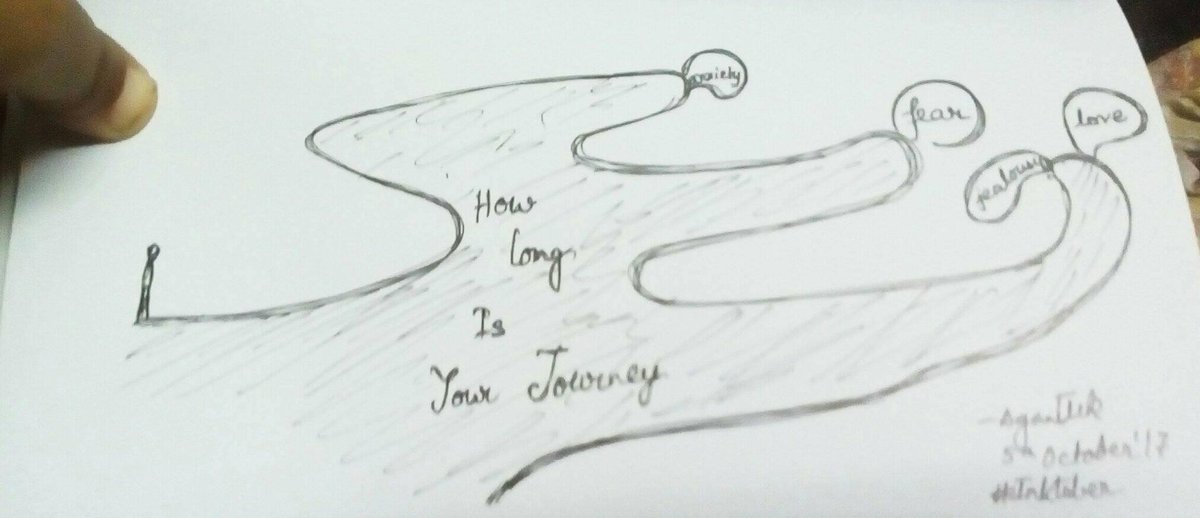
The long tiring day reminded of the Day 5 prompt “LONG” with which I started the Inktober 2017 journey.
The long convoluted journey of life through the obstacle of fear, anxiety, jealousy, and love
So, those were something I did last October and now you can do it too.
Just participate in it, in any way you like. You can do weekly challenges, daily challenges or even do it in once 2-3days, it’s entirely up to you. Just enjoy the process and rake up your imagination!
Going for an overseas travel is a traveling dream for many, especially for women. Whether you want to do it solo or with family, on a bike trail or a caravan trail – traveling overseas is an experience altogether.
However, not all of us prepare for it. In the heat of the moment and excitement of it, we tend to forget about our health. We do all the homework and research about the place but we conveniently forget to look after our health.
Traveling healthy or healthy traveling is an essential thing these days, especially for people opting for solo bike trails and motorbiking adventure. Take your health as seriously as you take care of your bike. Ultimately it’s the only thing that’s taking you through your traveling sojourn.
So, in order to make people aware about traveling well, here are 6 things to keep in mind when you plan your first overseas tour.
Keep yourself updated with the region
When we say keep yourself updated, we don’t mean know about the places to visit, things to do etc. Of course, those are essential but there are some things more important than that. It’s your health.
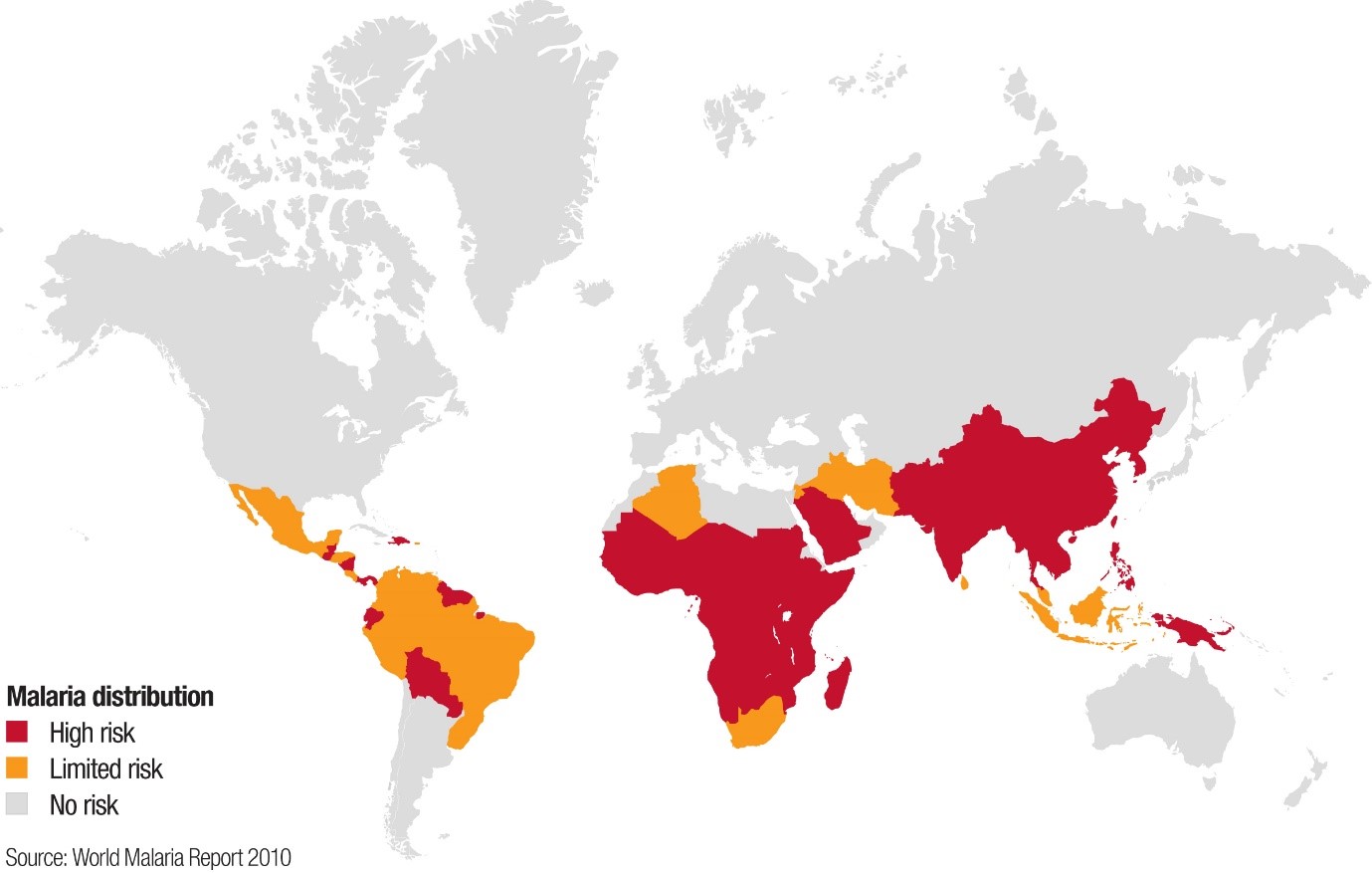
Surely you don’t want to communicate a disease and put your life at risk. Even some lesser evil like normal ailments are dangerous when you are traveling. Keep in mind that you are traveling to a foreign land whose climate and conditions might not suit your body.
So, do ample research of the prevailing health conditions in the place. Know the diseases prevalent there and vaccinate yourself. Carry vitamins and other supplements to balance your dietary requirements. Pack adequate skincare and body care things to protect yourself from seasonal nuisances and climatic conditions.
Lastly carry insecticides, insect repellents, and similar things if you are traveling in the wild.
Take Stock of Your Vacation Time
Timing is important here. Certain places are suitable in a certain time of the year. So, do your research and visit accordingly. Now, this timing should include planning for the time duration as well.
You have to thoroughly understand how long will you be there. While planning the tour duration keep in mind of detours, cancellations, weather problems and any other thing which might cause occasional delays.
Keep those in mind and plan your cash, travel expenses, visa allowance and necessary medicines etc. accordingly. In a foreign land, you might not get the exact oils and medicines you use.
So, if you are one of those who is fighting with a severe back problem which needs a specific kind of oil to get rid of lower back pain, then you are in for trouble. In a foreign land such pure essential oils and other medicinal things may not be available and ordering them will be time-consuming.
Hence, make sure you are packed for the days you are traveling for.
Have the documents sorted
The three most crucial things for traveling overseas are your documents, money and the embassy details.
You never know what kind of trouble awaits in a foreign land and you simply can’t trust others blindly. The only people who can help you here, are your own people. So, register with your embassy and keep a stock of the nearest consulates.
Hold your passport and Visa as sacrosanct. Always keep them with you wherever you go and never leave it with anyone. Also, remember to carry multiple copies of these documents and your passport size photographs for security reasons.
Be Careful About Food
Just like the climate, the food here is also different from what you have in your country. While experiencing local food is an essential part of the traveling experience, make sure about its quality and the ingredients.
If you are eating in open markets or roadside places check that they are using fresh things and also implore about the ingredients used, especially if you are allergic to certain food items.
It’s better to carry some packaged food items and dry fruits to meet your nutritional requirements. This is necessary if you are traveling with kids. Cooking your own food with the help of the locals might be a good option here.
Check the flight deals and accommodation
Traveling overseas has its perks and one of them is flight fare and accommodation. Together this to can make a dent in your pocket.
So, check way advance and look for the cheapest flight deals. You might make a plan of several stops flight and cover some other destinations as well or do an offseason booking.
For accommodation choose sharing options such as Airbnb or shared apartments etc. Even some cheap local homestays might be good.
Take Care of the Currency Factor
Lastly, make sure you are good at maths and have done your currency conversion homework properly.
In a foreign land, you have to work as per their system. So, make sure you know the conversion rate and have enough cash with you. Additionally, check that your credit cards are functional and accepted there.
These are the few things to remember while planning your first foreign trip.
Note : All images are representational images. I don’t own the rights of these images. The copyright of the images belongs to mentioned source.
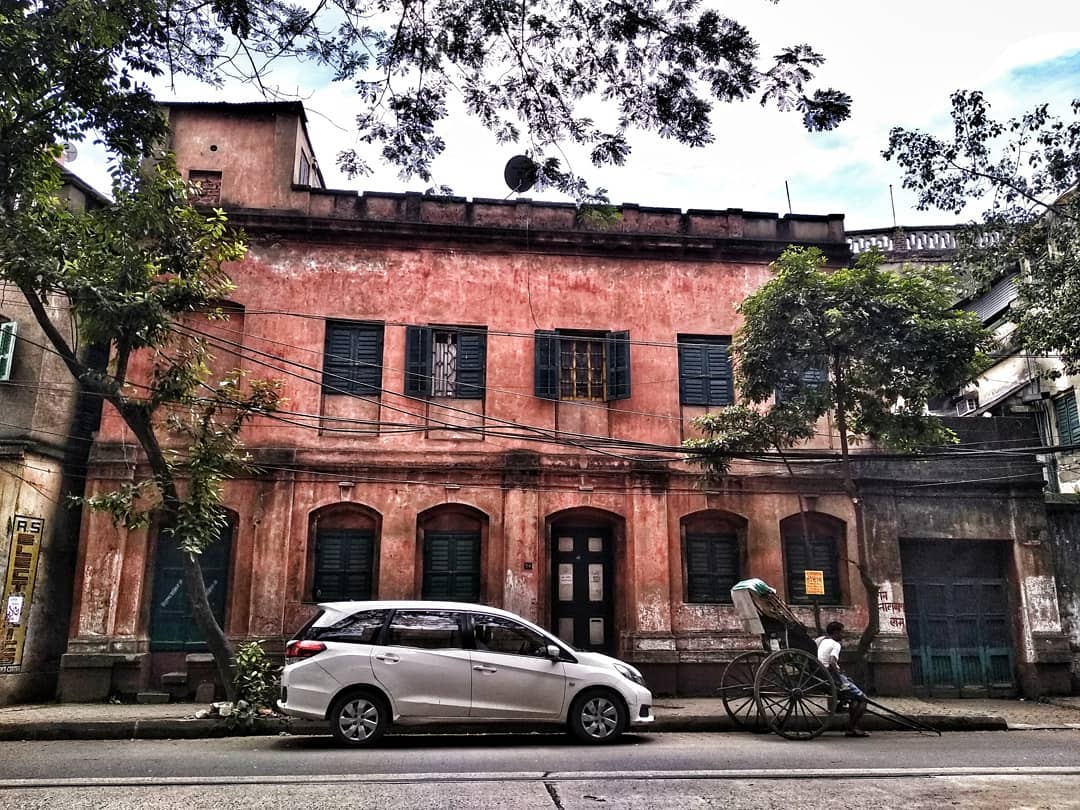
কলকাতার ব্যস্ততার শহরের এক উপাখ্যান যেখানে পুরাতন হারায় নতুনের ডাকে।
তেমনি অবস্থা কলকতার আর্কিটেকচার আর হেরিটেজের।
যার প্রাচুর্য এক সময় ছিল বিস্তর এখন সে ঢাকা পোর খাওয়া বাঙালির সামাজিকতার চাপে।
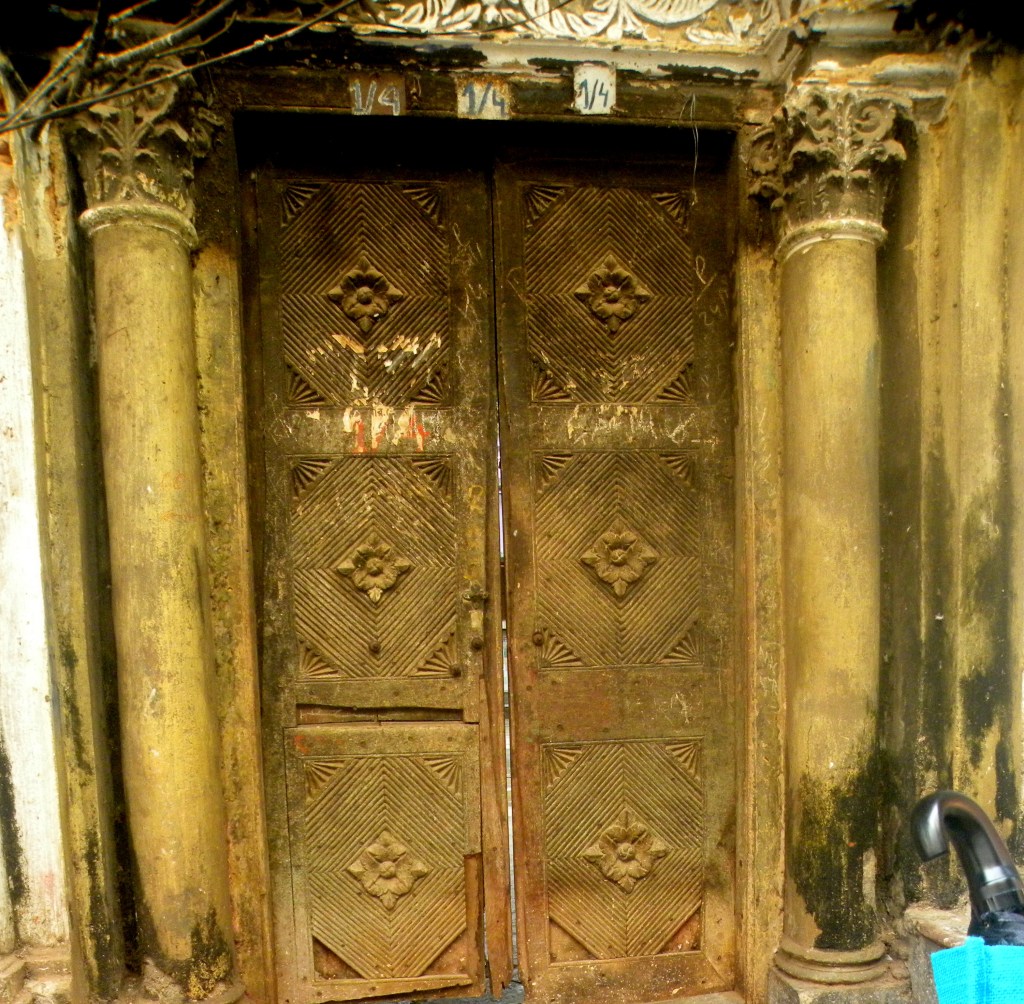
তেমনি এক বাড়ি হলো বিপিন বিহারি গাঙ্গুলি স্ট্রিটের এই বাড়িটি ,
যা এক কালে এক স্বর্ণকারের বাসস্থান ছিল।
আজ কের কবিতা সেই সমস্ত অবলুপ্ত বাড়ি-ঘর নিয়ে।
A life always guards a house
গোপন পুরীর অজানা পথিক

নিঝুম খেলাতে মজেছে আজ ,

পুরনো প্রান্তর ধূসর সে কলেবর

মন মাতানো ম্যাজিক সব।

শ্রান্ত গৃহকোণ অক্লান্ত পরিশ্রম

রাত্রের ফাঁকে অবসাদে ভোগে এ প্রাসাদ প্রান্তর,

প্রবীণ সে হয় আজ নবীনের ডাকে

রাত্রি নামে অবিরাম বর্ষা হয়ে।

প্রাচীরের সে বৃক্ষরোপন আজ তাঁর অন্তিম বিশ্রাম।

-আগন্তুক
Whose house is it? I ask.
Are you deserted like the summer afternoon?
With memories of children playing
And murdered relations.
Did you play with the dawn and dusk?
Of thousand splendid suns
And sordid affairs.
Have you plied through edges of history?
Alone and forlorn
A mistress sang in your courtyard
and the rioters booked the coffin guards
Whose house is it? I ask
Are you the ones who plague my dream?
Alone, tranquil and bereft
An undeciphered language you speak.
Streaming of deadly laughters and silent sorrows
Are you the one for me?
 A spendthrift night toils hour by hour.

![[Book Review] The Woman in the Window](https://agantukpratiti.com/wp-content/uploads/2019/01/49801106_355401675243351_1158032013177913344_n-1.jpg?w=613)

 The novel is set in a normal New York City neighborhood in late October and chronicles the life of lonely child psychiatrist Anna Fox. It’s spanned out for 3 weeks but each day is filled with intrinsic turn of events and mild psychological overdoses.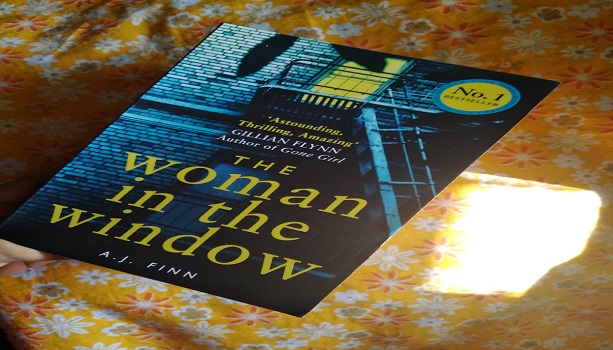



























 Agantuk's Desk - Explore, Implore, Reverberate