– Gary Snyder, American Poet, Environmental Activist
Every year on July 28, the UN celebrates World Nature Conservation Day to stress the necessity of conserving nature and preventing the exploitation of natural resources on air, soil, and water.
This year’s World Nature Conservation Day theme is “Forests & Livelihood – Sustaining People & Planet” which has a direct link with UN Sustainable Development Goals 11 and 12 that calls for building sustainable cities & communities, and responsible consumption & production by 2030.
In its true sense, conservation is a dedicated way of preserving species and habitats from being destroyed by human activities like greenhouse gas emission, deforestation, and land fragmentation for different developmental projects.
However, beyond this, there is a vast scope of nature conservation efforts in our day-to-day life simply by opting for local eco-friendly plant-based products that allow for habitat conservation.
Plantable products form a key element in this. So, let’s take a look at how plantables help in nature conservation
Whatare Plantables?
Before we delve deeper let’s first get to know these plantable phenomena. In recent years, various eco startups and businesses have come up with plantable solutions which make day-to-day products like masks, stationeries, wristbands, or rakhis, etc simply by embedding seeds in them.
These eco-friendly products are made up of biodegradable natural materials which come embedded with seeds. So, when their use has been fulfilled they can be planted to give rise to plants and trees.
5 Ways Plantables Help in Nature Conservation
Now that we know about them, let’s check out how they help.
1.Reduces Tree Cutting
Nearly 4 billion trees are cut down every year to make paper, pencils, and other things.Plantable products aren’t made from trees rather they are processed from bamboo pulp. Now, bamboo is the fastest growing plant in the world so it can cater to the huge demand for the products. Then these products are embedded with seeds to make plantable solutions. So, Plantables reduce tree cutting and deforestation, making a direct contribution to conservation.
2. Promotes Planting Trees
The primary reason for using Plantables is their ability to promote planting habits amongst people. Unlike other stationery products and masks, plantable seed paper masks and stationeries don’t end up in the landfill. They aren’t wasted once you are done with them. Rather they help you in inculcating a habit of planting trees. If you substitute conventional products with these eco-friendly alternatives you are bound to have more plants around you and most of them are vegetables, fruits, or flowers that are used by us.
3. Reduces Plastic Pollution
Our regular daily items contain microplastics having harmful chemicals like phthalates and Bisphenol A (BPA)which causeshormonal imbalance in invertebrates and other animals.It further affectsmarine speciesand causescoral reefs to degenerate
With plantable products like stationeries, paper bags, and masks the problem of plastic waste is solved. This plastic waste won’t end up in the forest and ocean, thus helping in conservation efforts.
4. Fewer Forest Fires
With less plastic and less toxic chemicals released into the environment, the probability of man-made forest fires decreases. Plantable products play an indirect role in this. With plantable stationeries and masks, you are no longer polluting forest land.
So, when we adopt plantable products in everyday life, the plastics and chemicals reduce, and hence you will see less harmful forest fires.
5. Saves Forest Land
Nearly 20% of forest land vanishes every year due to the necessity of paper.The total amount of forest land engulfed for human consumption and production is even more. Between 2015-2020, 10 million hectares of forest land were lost due to this.
Plantables can indirectly help in saving this. With plantables becoming the norm, the need for trees for paper will reduce. Also as they are made with fast-growing plants like bamboo and sugarcane we don’t need much land to have the necessary plant raw materials for the production of these products.
So, there you go some concrete insights on how plantables can be used for nature conservation efforts. Your small step isn’t that small after all. You can be a changemaker from the comfort of your home. UN’s AWorld App will help you in this regard. Download this app and measure how your activities are faring and also find out new exciting ways of doing it from tons of other users.
Remember this when you opt for conservation efforts. Conservation can only happen when daily lifestyle decisions are coupled with on-the-field conservation efforts. So, ditch those high utility products and go for Plantables. With such mass pressure, this might be the only way to make big corporations understand the issue, forcing them to take a stance. This will in turn help local communities who are the backbone of conservation efforts.
Empower the locals and conserve nature for a better world with your life’s choices.
AI or Artificial Intelligence is the new mantra of life. It has been there in the technology driven industries like the supply chains for a few years now but gradually other sectors are opening up to it.
The AI enabled operation has reached every sphere in life – from mass production to deliveries to schools to hospitals to mental health support. Artificial Intelligence is addressing the employment and skill gap issue, all the while making our life easier and understandable.
So much so that, schools and universities have understood the importance of AI and machine learning in making the pupils learn in a more sustainable manner which enhances their specific aptitude and skill. They know it’s here to stay and it will take us to the future. That’s why AI and Machine Learning are being introduced to kids at an early age as it can develop the nascent brain quickly.
The earlier you start using the better is your prospect of benefiting from it.
So, let’s take a look how AI and Machine Learning helps our kids to learn better and develop a thinking for the future.
Addresses the Teacher-Student Gap
As we have seen in other sectors, AI and Machine Learning is being used in the education sector to tend to the gaps in the system, making it resilient.
It’s something like Isaac Asimov’s story where robots replace teachers. While teachers can’t be replaced artificial intelligence and machine learning can make them more efficient by reducing their mundane work. So, the regular tasks of homework, screening and test development can be done through AI while the teacher tends to each student’s needs and caters to their personal queries. This eventually gives the child scope for better interaction and learning
Reduces The Disparity in Learning
With AI and Machine Learning, the disparity in learning might reduce to a great extent as this can be used to enhance the cognitive and noncognitive levels of individuals to develop a way of teaching suitable for them. AI can also solve the teacher student unavailability ratio as a single teacher can simultaneously reach out to more students with this. Also, this makes way for more collaboration and interaction amongst the kids which ultimately helps them provide a wider perspective, making their learning comprehensive. In today’s pandemic driven world, when the world is moving towards a virtual life, this is one avenue which helps us to grow and learn
24/7 Individual Support & Learning
AI learning isn’t restricted to the classroom and to the syllabus alone. It is a hassle free life process which lets the kid think and react, resulting in better analytical and interpersonal skills. Like a mental health support system, AI enabled educational systems can be made available to the kids 24/7. So whenever they have a query or a curiosity they can converse and share it with other students in the forum. Moreover, AI enabled platforms lets you rejoin your classes where you left off. So, you can go back and play it again to learn what you overlooked before. It can also make a huge pool of resources and activities available for the kids based on their cognitive level and interest. This individualized yet uniform learning is the right step towards learning
With the correct usage of AI, no child will say in the future like Einstein that “My Education Is the Only Thing That Comes in the Way of My Learning”
Powered by an inclusive learning, man one day will fulfil his basic instinct, which Einstein referred to as “What flying is to birds, thinking is to humans”
The Tokyo Olympics is around the corner after a year of delay due to the pandemic. All eyes are now on Tokyo and what the athletes do this time. While the usual range of athletics sports draws the most attention, there are some bizarre sports that can make you go crazy.
Every year, the Olympics include certain sports which aren’t there regularly but get included from time to time. It may be as simple as the game of archery. However, beyond the alternative entries, some unusual sports get added every year.
Let’s check out some of these unusual sports on World Olympics Day.
1.Pigeon Shooting
This is the most bizarre Olympics sport of all time. You must be thinking how did the Olympics committee get convinced to include it in the 1900 Paris Games?.
Although pigeon shooting was an Olympics sport for just a year, it led to the death of 300 pigeons. Yes, that’s how crazy they were back then. The IOC has never acknowledged this sport on their official website but innumerable sources have mentioned it in the event.
This hunting-type Olympian sport needed every participant to shoot live pigeons and missing 2 consecutive shots led to elimination. Leon de Lunden of Belgium became the undisputed king of pigeon shooting in that Olympics by winning 21 medals.
But the organizers were red-faced as the venue was littered with pigeon carcasses, prompting animal rights protests.
Later on, clay pigeons replaced actual pigeons but that couldn’t rescue the sport and it soon fell out of favour.
2. Trampoline
Trampolinists at the 2012 London Olympics
Remember the fun game of jumping on the trampoline that you did as a kid? Well, that’s an Olympic sport now and you could well become an Olympian.
Trampoline entered the Olympics back in 2000. So, it’s been just 21 years since we have got to know the world’s leading trampolinists.
However, being an Olympic trampolinist requires plenty of acrobatics skills and not just simple jumping on the trampoline.
Trampolinists are judged by their ability to perform at least 10 different acrobatic movements in the Olympics and based on that they get scores from 5 judges.
As of now, Canada has bagged the pole position in Trampoline by securing 6 medals since 2000.
3. Deer Shooting
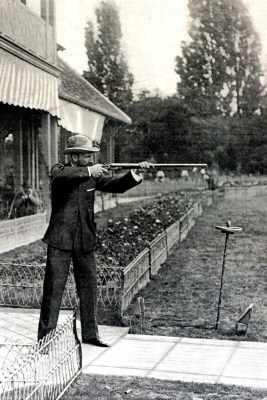
Much like pigeon shooting, this too was a bizarre hunting-type game that got included in the 1908 London Olympics.
However, unlike the pigeon shooting sports, this one didn’t have live deers rather moving deer cutouts.
The deer cutouts had circular targets which zipped past participants standing 100 meters away at a speed of 23 meters and they had to shoot it in 2 shots.
Swedish sportsman Oscar Swahn was the most celebrated performer of this event. After this event, he became the oldest gold medalist with both individual and team event medal. He was 60 when he made his Olympics debut in this sport in 1908.
Deer Shooting later got eliminated from Olympics sports but it did enjoy a brief stint in the Olympics for nearly 10 years. Oscar continued to play on all the events till 1920. He won a silver in the 1920 deer Shooting event.
4. Club Swinging
Yes, the game of moving bowling pin-shaped clubs around the body was an Olympics sport once. Crazy isn’t it?
As a sport, club Swinging made its debut back in the 1904 Olympics and it continued to be an Olympics sport for 28 years until the 1932 summer Olympics.
This sport came during the time of the Great Depression when hungry and unemployed sportsmen like George Roth of America won gold.
Roth had won the Club Swinging gold medal in front of 60,000 people at the 1932 Olympics and moments later he went home.
That was how dry the game was. The pattern of the game was like any other rhythmic gymnastics of today where you have to showcase different movements. Only here it was with the bowling clubs.
5. Tug of War
Tug of War at 1900 Paris Olympics
Everyone’s favourite childhood game was once an Olympics sport. Who knew we could strike gold with a tug of war? Apparently, the 1900 Paris Olympics sportsmen did.
Another unusual sport that made it to the Olympics that year and went on to enjoy its status for 20years until the 1920 Olympics.
This track and field game needed 8 people on both sides of the rope for the Olympics and you need to pull the opponent team by 6feet in 5 mins to win. In case the time limit was exhausted with no conclusive results, the team who pulled the furthest was declared the winner.
It became even more bizarre when the US team alleged that the British team had won illegally as they had advantageous footwear in the 1908 Olympics.
6. Steeplechase
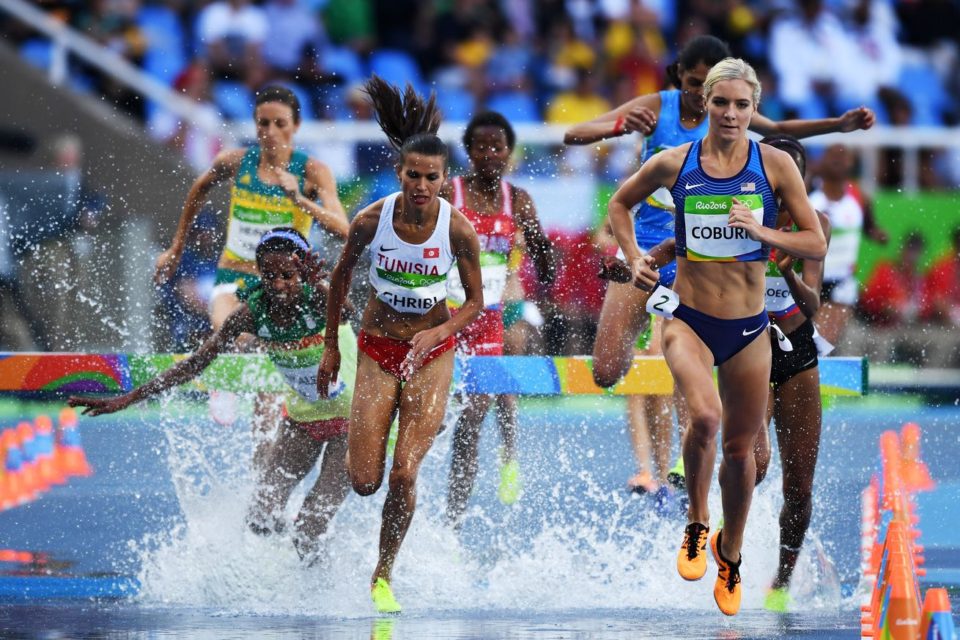
This weird Olympic sport is a cross between track events and water hurdles. Officially included as a track and field supports, steeplechase requires athletes to race for 3000 metres by conquering a small hurdle of water body in the track.
Astonishingly, this 1900 introduced Olympics sport is still part of the Olympics and often gets included in the games. It’s considered the longest obstacle track event. In 2008, the International Olympics Committee included steeplechase in the Olympics.
So far Kenya is the most successful steeplechase nation followed by Finland and Sweden. Kenya has won medals in steeplechase events since the 1968 Olympics barring in 1974 and 1980. Kenya also has the most medals in women’s steeplechase, winning 3 out 9 that were awarded.
7. BMX
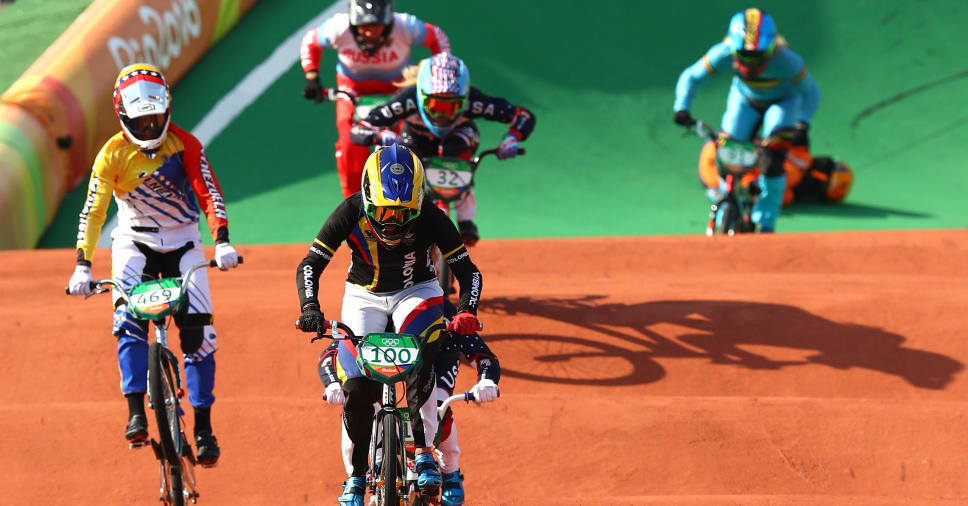
Nobody ever thought that a motor racing sport like BMX would be an Olympics sport one day until the 2008 summer Olympics.
This riding sport became an Olympics sport based on its racing capacity. It’s judged by time. The person completing the BMX racing in the shortest time gets to be the winner. Other elements of the sport like dirt jumping, freestyling etc don’t make any difference in BMX in the Olympics.
BMX racing is a recurrent event in every summer Olympics since its introduction in 2008
In the last Olympics, Connor Fields from America won the BMX gold with 34.642 racing time. The Netherlands bagged the silver while Colombia settled for bronze in the 2016 event. 32 people from 21 nations participated in the BMX racing in the 2016 Olympics.
So, there you go the most unusual Olympics sports from past and present Olympic games. Which one is your favourite? Do you have a favourite game that should absolutely be in the Olympics? Let us know! Who knows you could be the next Olympian.
Looking for an easy way to speed up the recruitment process in your company?
Well, you might start off by looking at some recruitment softwares.
Not sure what they really are? Are you?
We can definitely help with that.
Specially, when we know how tiring it gets to screen through thousands of applications to find the right fit. Hiring the right person can turn your business upside down. Hence we don’t want you to gamble with that.
Recruitment Softwares Your Go To Solution
Companies all over the world often take the help of recruitment software to hasten the process of recruitment and save time through the menial work of screening and comparing different profiles.
For a single position, thousands of applications are submitted. Most of them fulfill the criteria while others don’t. You must be tired of processing those applications. Checking their profiles, running a background check, assessing their expertise and past experiences, and then assigning tasks and evaluating them is a long and tedious process that often goes on for days.
What if there is a software that can do it? That’s like an elixir. Isn’t it? All your recruitment worries and delays in hiring can be sorted by recruitment software.
These are highly automated AI-enabled software that guides you through the whole process of recruitments – from finding the right match to evaluating to onboarding – everything can be done through this software.
It’s kind of like telehealth softwares used by doctors and patients to fix appointments or find the correct doctor and then follow up through the whole treatment process.
There are a plethora of such recruitment softwares available in the market. While some are paid others are free. Mostly, people look for paid recruitment softwares that offer premium quality services. Just like premium plagiarism checkers, these softwares too, provide the most authentic and useful service in their respective area.
While most of them are centered around speeding up the hiring process and making the recruitment team more productive, every recruitment software fulfills a certain target area in the hiring process. Some are good at doing background checks while others would be crucial for assessing and comparing candidates. There are specific tools that track candidates and initiate communication with potential prospects. Others are good at lining tasks and assigning them.
This makes recruitment softwares unique and user-specific in nature which is cultivated over time as we get to learn more about them.
Benefits Of Using Recruitment Software
You must be thinking it’s just like any other app or software on the internet.
Does it really solve the problem? Is it hassle-free to use? Or is it one of those bug-filled problematic softwares with tons of ads?
Does it really save time or will it make the life of the recruiter more problematic? Do we need to train the team to operate it?
Are these questions bothering you? Well, recruitment softwares aren’t your regular softwares which needs extensive training to use.
They are quite simple and authentic. You just need to know them. It’s like finding the exact specialized doctor for your special problem.
In a broader sense, the primary benefits of good recruitment software involve
1. Capitalizing on Recruitment Trends
A good recruitment software will always come with an integrated Applicant Tracking System (AIS) and a social media interface that works in tandem with growing trends in the recruitment market. So, it will automatically optimize your job postings and recommend things to be more relevant even during low unemployment times. It’s like building a network, where you can find candidates faster because someone or the other in your network will know someone who fits the bill.
2. Helping in Sourcing
Companies spend quite a lot of time writing an attractive job post and then promote it on social media and advertise it in different forums. All this can be sped up and done in a hassle-free manner with recruitment softwares which has a specific web interface and format to attract candidates and rank your job posting higher in the feed.
3. Pre-Screening Background Check
Background check and analyzing profiles of the candidates take up a lot of time and manual work. Recruitment softwares can validate and verify candidates’ profiles quickly. They can even do an initial comparison of the profiles and suggest potential candidates. That saves a lot of pre-screening hassle.
4. Efficiently Evaluating & Assessing Tasks
Allocating tasks to the potential shortlisted candidates and evaluating their work requires quite a bit of time and analysis. The basic part of this allocation, tracking, assessing the tasks that can be done by recruitment softwares, making your hiring process go faster. With the correct recruitment software tool, you can automatically assign tasks to the potential candidates and monitor their progress. It also ensures a time-centric movement and gives every applicant a fair chance to be evaluated.
5. Scheduling Interviews and Onboarding
Recruitment softwares work doesn’t end at job posting, attracting candidates, and evaluating them, they further enhance the process of interviews and onboarding.
Scheduling interviews and keeping track of them is quite a daunting task and often gets haphazard even when you use tools like google calendar etc. to mark them. Recruitment softwares ensure that this goes smoothly and there are no hiccups in the road to interviews and video meetings. The onboarding process needs to be tracked and assigned smoothly so that all orientation, induction, group meetings, and basic training run in an automated manner.
So, you need not worry about grooming and evaluating the candidates, you have help at hand. Your recruitment software is preparing the base while you use your team’s skill to sharpen it.
The Perfect Recruitment Software for Each Stage of Hiring
1. For Assessing the Hiring Need
You know you need to hire someone when you understand that there’s a hiring gap in the organization that needs to be filled. Say you need to hire a content writer for a specific domain or an analyst for a special segment. Or it can be a mundane need to fulfill a recently vacated position or the need to hire more people as your company grows.
Whatever be the reason for hiring, surely it isn’t an easy task. Is it? So, that’s where you need to start. Get recruitment software that analyses the gaps.
iCIMS is the apt tool to meet this need as it offers business intelligence insights and consultation to gauge this gap in the organization. You can even consult with their experts to analyze your situation before proceeding to use it further.
After all, we all need to know more to decide what exactly we want.
2. For Job Posting
Creating a demo profile in big billerPlacement reports in Big Biller
You want to attract the right candidates through your job postings right? Obviously, a well-articulated rightly ascertained job posting helps in the process but much more than that it’s the strong AIS and CRM features of the website that works.
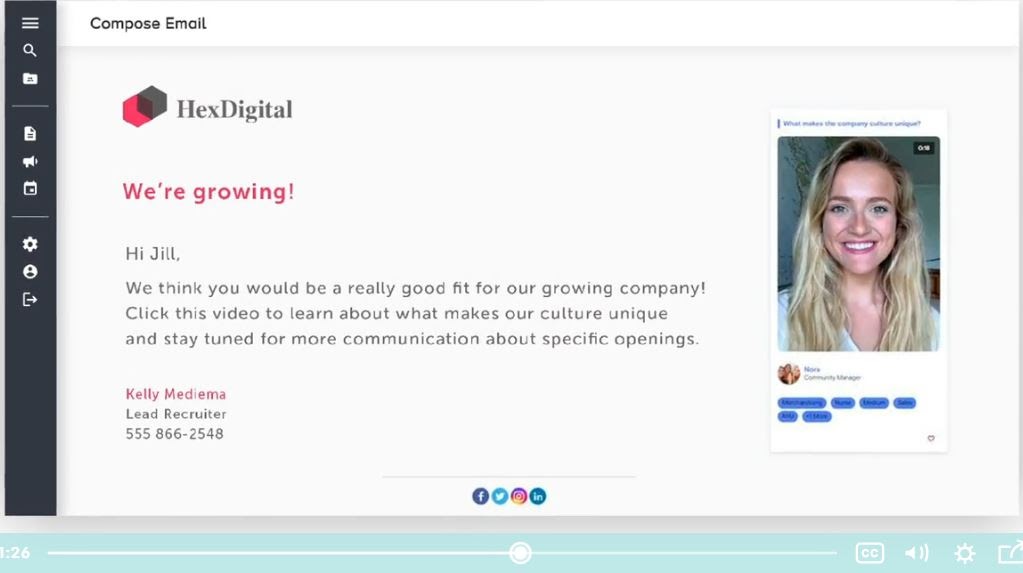
The best way to enhance that is using recruitment softwares like Big Biller, Zoho Recruit that offers a range of Candidate Relationship Management (CRM) and Applicant Tracking System (AIS) features. This ensures your job posting is more visible to potential candidates based on the recruitment trends and looks good with an excellent interface. Also, it comes integrated with email marketing, social media marketing, and other facilities, making you reach directly to people and follow up with them.
3. For CV evaluation and background check
Candidate contact and profile in iCIMS
You are looking at thousands of CVs to screen potential candidates for the company, right? There’s so much to do. You are not sure if you can evaluate them accurately and run a background check just in time for hiring. Well, that’s the reason people use recruitment software.
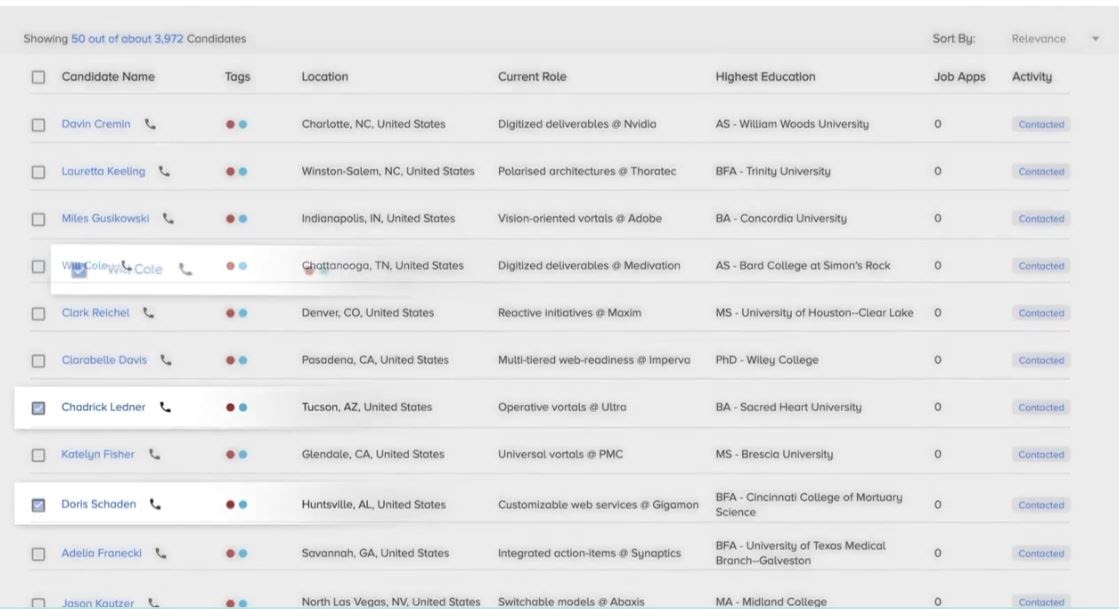
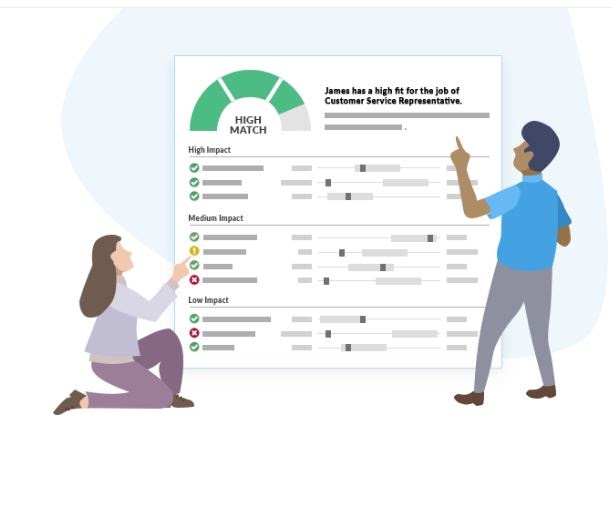
All recruitment softwares have this basic facility of candidate evaluation and pre-screening background checking. CEIPAL TalentHire, Zoho Recruit, iCIMS, and Ideal are the best in business for such candidate evaluation and background check as it comes with features like AI-driven data and talent screening, former employer references, etc.
4. For Task Analysis and Assessment
Assessment and candidate suitability checks in Berke
You might be wondering how to analyze the skills and talents of the candidates. Every individual comes with a different level of intelligence and skill, isn’t it? It’s hard to assess them based on a single task. That’s why recruitment software is quite the rage among employers. They have the perfect blend of technology and human intelligence to assess tasks and also track and assign them.
Softwares like Ideal, Athena Assessment, Berke Assessment are excellent platforms to assign tasks and assess candidates as their integrated data-driven intelligence tracking facilities easily compare them and finds the suitable candidate. Most importantly, they often come with human intelligence facilities that can detect a person’s attitude, behavior, personality, and risk-taking abilities.
5. For Scheduling Interviews and Onboarding
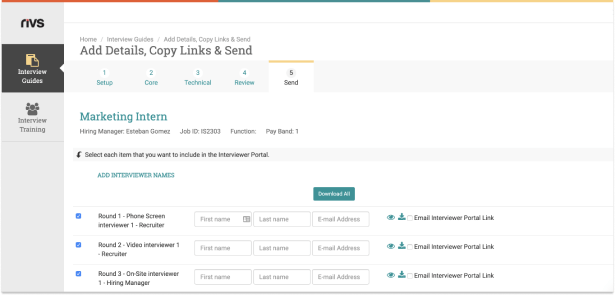
Interview builder interface in Interviewstream
The last leg of hiring happens to be the most draining one. You are on your toes taking interviews after interviews, often missing the exact timelines. Onboarding is even tough with group meetings, orientation, and induction facilities involved.
You want to speed that up and get the right candidate to work, quickly. Isn’t it? That’s where you need a recruitment software. With that in place you don’t need to worry about anything, everything is lined as per the schedule and the team just needs to work accordingly.
Interviewstream, VidCruiter are some of the best interview scheduling recruitment software which comes with intelligent setups and interface, including prep facilities, mentality assessment, interview building, interview analyses features. For onboarding Zoho Recruit, iCIMS are quite efficient with their inbuild automated system which perfectly aligns and schedules all orientation, group meetings, and other important events of induction.
So, whichever stage you are in, there’s a perfect recruitment software for you, somewhere. You just need to find it.
Top 3 Recruitment Software of 2021
Now, let’s check out the top recruitment softwares. One that’s authentic, useful, and modern in all its way, making the life of recruiters easier.
The best ones are those who take care of all your needs and perform.
1. Zoho Recruit
Job Posting form in ZohoRecruit
If you have carefully gone through this article so far you must have seen this pop up quite often. Well, that’s because of its relative ease of use and a wide range of features, making it a win-win situation for all.
Features:
Fully automated system with job posting, resume parsing, background checking, and onboarding facilities
Support response from the web
Linked to popular career sites
Tracks interviews
Keeps the candidates posted
Have CRM facilities like analytics report and emailing
Separate features for staffing agencies, corporate HRs, and temporary workforce hiring
Pricing: It has a free version as well as a premium version.
The premium version costs 25$ monthly expense for personal use.
Pros: It’s perfect as an all-purpose recruitment software. Fulfills all the basic needs of recruitment agencies and business houses.
Cons: This software isn’t suitable for specialized companies looking for in-depth human analysis like behavioral patterns, mindset, challenge-taking abilities, and other complex things.
2. iCIMS
Candidate Relationship Management, CRM in iCIMS
Another recruitment software that is popular amongst recruitment agencies and business houses around the world. This US-based integrated talent acquisition software is a good place to start.
Features
Facilities like job posting, background screening, evaluation, application tracking, interview scheduling, onboarding, etc.
Specific candidate experience creating facility
Automatic identification of top candidates
Linked to career sites
CRM facilities
Industry-specific solutions like hospitals, pharma, manufacturing, IT, etc.
Pricing: $39 per month for small to medium-sized enterprises.
A free trial of this software is also available
Pros: It’s the number one all-purpose recruitment software used by all kinds of industries all over the globe. iCIMS is well suited for your specific industry-wise needs as you can consult them ask for quotes suitable for your business
Cons: This might not be that much affordable for smaller organizations. Also, the organizations looking for specialized in-depth assessments into a person’s character and personality might not be satisfied.
3. BreezyHR
Candidate Search on BreezyHR
This easy-to-use ATS recruitment software with a smooth AI is the talking point of every recruiter and HR. Its user-friendly features and cloud-based ATS acts as catalysts for its wider fan base.
Features
User-friendly and easy to use drag-drop interface
Comes with a smooth UI and efficient ATS system
Includes sourcing extension features
Video interview scheduling features
Linked to career sites
Efficient sourcing tools
Easy to use application forms
GDPR compliance & automation and resume parsing features
Team involving interface
Pricing: It’s priced at 143-171$ per month and also has a free trial version.
Pros: This recruitment software has a user-friendly interface that can be used by anyone in the team, making it ideal for the non-tech savvy person as well.
Cons: It might not be as efficient as other tools as their features are quite basic. It’s only good for basic screening and interview scheduling processes.
That’s how the top most recruitment softwares work.
Now that you have got an idea about recruitment software, you know where to begin. Wherever you start from it is a very good place to start. You will eventually get there and hire the best for your company. Just trust in yourself and capitalize on your chosen tool.
Understand how the recruiters and companies recruit people using this softwares, this is your best to understand the workforce on May Day.
Bleeding disorders and Bleeding problems has been troubling people from ancient time but it took one event involving a royal family to get to the details of the Royal Disease, Haemophilia.
In 1905, the then Czar of Russia, Nicholas had a son who was suffering from a bleeding disorder. The young man was being treated by a Russian Holy man known to heal wounds but it was of no use. Many didn’t know then that the young man’s mother, Queen Alice, had carried a gene from her grandmother England’s Queen Victoria.
A thorough analysis of the British Royal family revealed how a single genetic factor caused the rare genetic disease Hemophilia.The Queen Victoria family tree analysis revealed how the genes are passed down from the carrier females through their X chromosomes to her sons and daughters leading to fatal condition in the males. Since then, it has been known as a royal disease as the daughters of Queen Victoria spread the disease to Spanish, Russian and German royal families after they married into these families.
But there’s much more to the disease than this. Over the years many more types of Haemophilia has been discovered as scientists unravelled the genetics of the disease. The disease gained prominence during the World Wars as bleeding wounds from war injuries became a potent problem.
The disease is a potent problem for most people as it causes unstoppable bleeding from any cuts and wounds, and since it’s a hereditary disease people need to be screened before marriage. This led to the development of World Haemophilia Day, which is celebrated on 17th April every year, commemorating the foundation of World Federation of Haemophilia back in 1963.
Since 1989, the initiation year, the World Haemophilia Day has always acted to normalize the life of people suffering from the disease and to create awareness amongst the general public at large. Despite the best of the efforts people aren’t that sure of the disease, specially the not so popular types of the disease. Together with Thalassemia, Haemophilia remains the topmost genetic blood disorder of the world.
So let discuss and burst the myths
What is Haemophilia?
The CDC defines Haemophilia as an inherited bleeding disorder which results in uncontrolled bleeding because of the blood’s inability to clot.
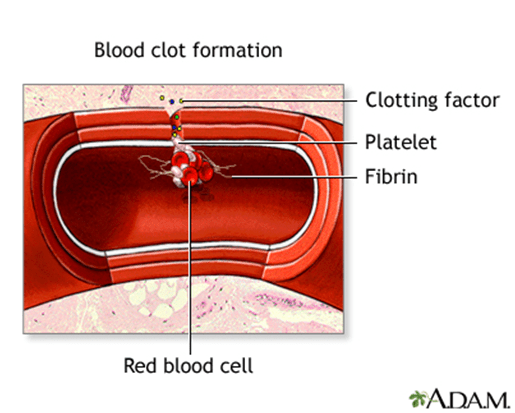
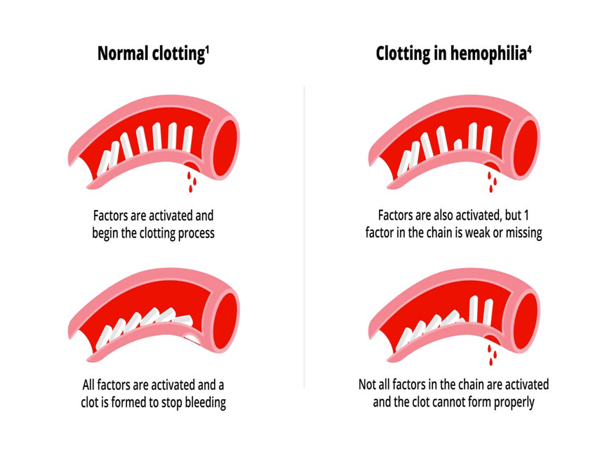
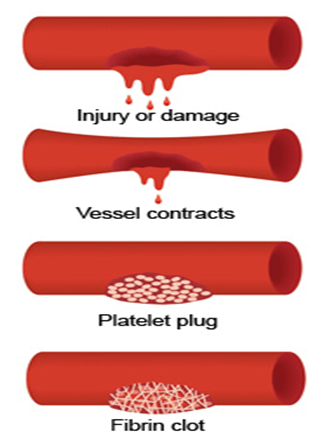
This happens due to the absence of blood clotting factors which helps the blood to clot and stops bleeding after a wound, cut or injury. Now, for a normal person bleeding would stop in few minutes as the clotting factors will rush to the wounded region to prevent bleeding.
But for a person suffering from haemphilia the situation is different as there is a deficiency of factor VIII (8) or factor IX (9) which are needed to stop bleeding.
Types of Haemophilia
Depending on the clotting factors affected, the disease is of 2 kinds
Haemophilia A or the Royal Haemophilia caused due to clotting factor VIII(8) deficiency
Hemophilia B or Christmas Disease) caused due to clotting factor IX (9) deficiency
Another very rare type of Haemophilia came to be known to the world in 1953. Haemphilic C is a rare disease where there is a deficiency of clotting factor XI (11) or thromboplastin. This is a very rare form of the disease occuring in 1 in 100,000 people.
This particular kind is quite prevalent in Israeli Jews because intermarriage.
This third kind isn’t that serious as it doesn’t cause profuse bleeding like that seen in the other 2 kinds.
Thromboplastin, the affected factor in this type of Haemophilia is the chief agent responsible for developing the clotting cascade. This protein creates thrombin which governs the function of the primary factor the brings the platelets together for blood clotting. Thrombin converts Fibrinogen to fibrin and this fibrin helps in platelet accumulation required for blood clotting.
How these clotting factors change?
Haemophilia genetics is governed by how these clotting factors change in a person suffering from the disease. As with other such biological components of blood, the clotting factors too are protein by nature.
Now, proteins are the chief biomolecules which drive cell function but major problems of proteins begin when they are made. Any problem anywhere in their making, packaging or assembling process changes the whole function of the proteins.
Proteins are made when a gene properly codes for it. Thereby giving proper information of making the protein. Whenever there’s a fault in the gene that information is lost and the proteins aren’t expressed. This is what happens in case of Hemophilia.
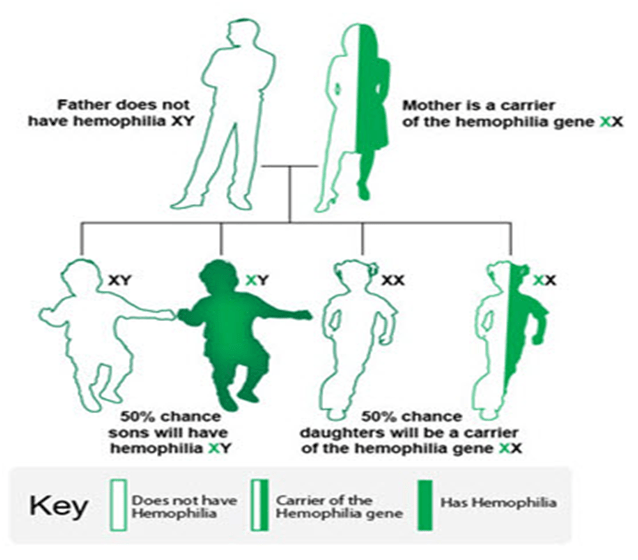
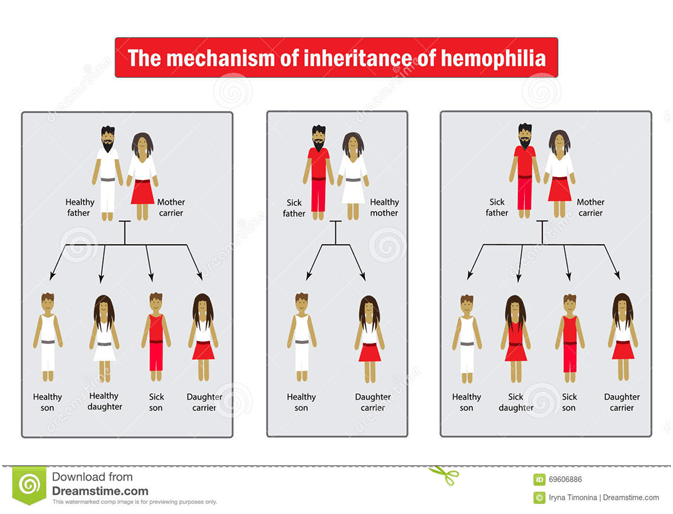
Now, the genes that express these proteins are only found in the X-chromosome. So, by that logic, both men and women would have been affected by the disease. However, that isn’t the case as X chromosome has different distribution levels in males and females. Men have only one copy of X while women have 2 copiesof X.
Thus, even if 1 X chromosome of a female suffering from Haemophilia carries the mutation and doesn’t produce the clotting factors, the other one compensates for it. In such a scenario that female is called a carrier. She doesn’t have the disease but she carries a defetictive gene which she can pass down to her sons and daughter. That’s exactly what happened to Queen Victoria.
Now, men have only 1 X chromosome which they get from their mother. So, they are heavily affected by the disease.
Since, children get the 1 chromosome from their mother and 1 from their father, and females need 2 X chromosomes while males need 1 X chromosome and 1 Y chromosome to live, the men always gets the disease while the women can either be a carrier of the disease (1 affected X chromosome) or suffer from the disease ( 2 affected X chromosome)
While this is the common nature of Haemophilia genetics, there’s a slight deviation in case of Haemophilia C.
Unlike the other 2 types, this disease can be carried from one affected parent. You can have only 1 copy of the X affected chromosome and still show disease symptoms. Although children with this line of autosomal dominant inheritance of chromosome from an affected parent rarely develop the disease, still possibilities are there.
Symptoms
The primary nature of the disease is uncontrolled bleeding both internal and external.
So, people suffering from any kinds of Haemophilia will have bleeding in joints and in the brain leading to joint pains and seizures respectively, even paralysis if unchecked
Other conditions include bleeding under the skin or bruising, blood build up under bruises, bleeding gums, nosebleeds, circumcision bleeding, childbirth bleeding, urine stool bleeding, vaccinations bleeding etc.
In short, nay kind of possible incisions which result in bleeding.
The disease is so much fatal that it can result in death if the bleeding goes unchecked for a prolonged time
Diagnosis & Treatment
Because of the nature of the disease it is crucial you take a physician’s guide at every step and take medications under expert supervisions.
Treatments and diagnosis is quite simple and mainly dwells on blood testing and proper medicine uptake and careful monitoring.
Bleeding time test, platelet test and the specific factor blood tests are the primary process of diagnosis.
Treatment involves replenishing the blood clotting factors with regular infusions which can be done by the patients themselves after proper guidance. Some people can develop antibodies or inhibitors to these clotting factors given as a treatment. For these 15-20% people the treatment is more vigorous involving several clotting factors
So, that’s how you steer clear bleeding disorders like Haemophilia. Awareness and family medical history is key to the survival of a Haemophilia patient. So, remember to get yourself tested for this gene mutation and lead a bleed free life.
Sustainability is the foremost thing that’s needed in our life nowadays. The earth has entered into the next mass extinction phase and this time we are in danger along with other critical species just like the dinosaurs were millions of years ago.
All this has happened because of the activities of a single species – Human Beings.
On World Health Day, your best bet for the world and the environment, is to have a SUSTAINABLE LIFESTYLE.
One that will reduce the environmental burden of our activities, that is, our carbon footprint. The world first set out for this sustainable lifestyle concept in the 1992 earth summit when we initiated the concept of sustainable development.
It took more than 2 decades to make a sustainable development roadmap and finally announce sustainable development goals to be achieved by 2030.
The key ingredient of this is to replace every non-environment-friendly thing in our life with eco-friendly sustainable alternatives. This would reduce the carbon emission potential of everything in our life, thereby making way for sustainable living.
Here’s how we can achieve such a sustainable lifestyle. All of these goes into the effort of reducing our global carbon footprint to 2 tons of CO2 per year by 2050. This is necessary to curtail the 2 degree Celsius rise in temperature which will further accelerate the effects of global warming and climate change.
1. Eat Organic Food, Reduce Meat
The biggest carbon emitters come from the food that we eat, specially meat products. This impact is more if we are eating imported and processed food items. The way towards a sustainable and healthy life starts with eating local produce. Here “think global act local” is the key. Opting for organic food produced in a natural and chemical-free way that doesn’t involve much processing, high-end manufacturing, transportation and packaging holds the key. Each of these processes adds more carbon emission potential to your food.
So, the correct way is to grow food on your rooftop garden or your balcony along with the purchase of locally produced organic food.
2. Buy Fewer Clothes, Buy Organic Clothing
Next to food, it’s the clothes we wear which need to change. Most of the fabrics we wear undergo heavy processing and manufacturing which requires gallons of water. While fabric materials like polyester, georgette, nylon etc are harmful to the environment because of their non-biodegradable plastic nature, seemingly eco-friendly fabrics like cotton are not so far behind either. A simple pair of jeans or cotton shirts use gallons of water to be made.
We surely can’t waste that much water to fulfil our never-ending need for fashionable clothes. The only way to make way for a sustainable life is sustainable fashion which starts with judicious buying of clothes, restricting too much purchase. Even if you have to buy new clothes, go for sustainable clothing or organic clothing made from natural sources.
fabric waste
Some have even recycled and reused fabric waste and other kinds of waste to make sustainable clothing, opt for those.
The way to a sustainable life starts from a sustainable kitchen. The heart of the home lies in its kitchen and when it turns eco-friendly our life turns eco-friendly. The conventional products that we use in our kitchen such as food containers, storage jars, utensils, cutleries, trash bags, disposable plates, tissues and napkins – all are harmful for us. Most of these have some form of plastic or Styrofoam which chokes the planet. Moreover, the production of these items requires a huge amount of water, electricity and other resources which adds to its carbon emission potential.
So for sustainable life, we need to switch to eco-friendly products for our kitchen. This includes basic kitchenware like storage jars, bottles and utensils which has readily available clay, ceramics, copperware and other alternatives. We can further reduce plastic pollution by switching to disposable cutleries and plates made of sugarcane, bamboo, seaweed, areca leaf, banana leaf etc. This can be easily broken down and turned into compostables as they degrade in 45-60 days.
Tissue rolls and napkins too have eco-friendly alternatives like those made of bamboo fibres. Similarly, your regular plastic trash bags can be replaced with eco-friendly compostable bags made with corn.
This way we can build a sustainable kitchen.
4. Use Natural Detergents & Bathing Products
The next thing to change in our way to sustainable life lies in our bathrooms. Let’s start with the bathroom, shall we? Everything we use here is toxic to the environment – right from the chemical-laden soaps, shampoos and body lotions to the plastic toothbrushes to the synthetic loofas
So switch to eco-friendly solutions. Instead of commercial soaps, shampoos and body lotions opt for eco-friendly handmade alternatives made using natural cleansers like aloe vera, lavender, charcoal etc. It’s quite safe for use as they seldom react with your skin.
Green life concept
Detergents have the same problem of having toxic chemicals in them and sometimes even plastic elements. So replace them with eco-friendly cleaners, disinfectants and detergents made directly from natural antimicrobial and antibacterial sources like lemon, neem, tulsi, manjistha etc.
The plastic toothbrushes can be replaced with bamboo ones and our synthetic loofahs can be replaced by natural scrubbers.
That’s how you make a sustainable bathroom, an important aspect of sustainable living.
5. Use Natural Cosmetics & Beauty Products
Lastly, your skincare, cosmetics and beauty products need to change to support the environment. Most contain harmful chemicals and parabens which harms the environment.
Switch to eco-friendly face washes, cleansers, moisturizer, lipstick, kajals etc which are made from natural sources in a cruelty-free non-toxic way.
Together all of these speak for an earth-friendly sustainable life where you are living in harmony with other species and not causing any damages to the environment.
India as we know it has survived the rule of many empires. From the ancient period to the medieval period to the modern period – the plethora of rulers and empires are vast. Calcutta and Bengal bear the same lineage like the rest of the country.
But the thing that stands out in the history and heritage of its monuments are those dating back to the medieval and modern period. The towering monuments that saw the gruesomest battles fought and stood the test of time includes the popular mughal structures of the erstwhile mughal capital of Bengal – Murshidabad.
Today, we are going to talk about those crumbling monuments which saw the transition from the Mughal empire to British empire and had sown the seed of colonialism in India back in 1757 when the British East India Company’s Robert Clive defeated the last Nawab of Bengal, Siraj-ud-Daula in the Battle of Plassey
Murshidabad is a town in West Bengal lying to the East of Hooghly river, a region which Job Charnock became the chief agent of East India Company back in 1686, 4 years before he took over Calcutta in 1690. Murshidabad town lies nearly 43 kms away from Calcutta, in the district of modern day Murshidabad whose district capital is Berhampore. Here too, the town grew up on the banks of Ganges which is known as the Bhagirathi here.
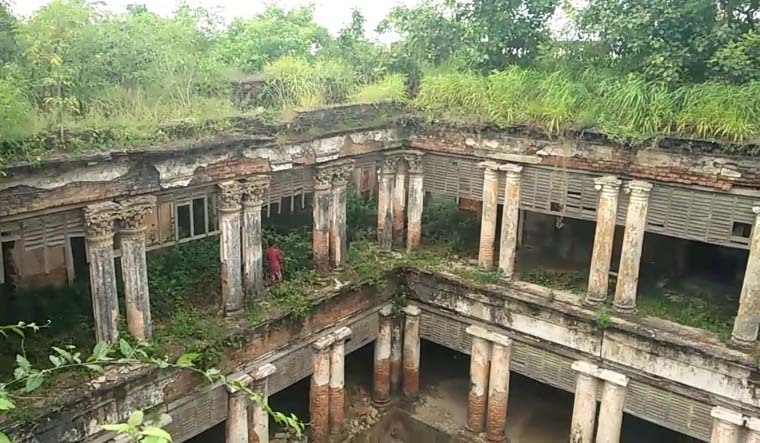
So, before Charnock landed here in Cossimbazar, Berhampore area back in 1656, Murshidabad was ruled by the Nawabs of Bengal who were under the Mughal Empire. Under these nawabs, several zamindars flourished and developed large estates. Traditional architectural style bengali houses and kothis were created by them which still survives. These 200 year old traditional zamindar houses or Rajbaris like Bari Kothi of Azimgunj and Cossimbazar Palace Roy’s still survives the test of time and acta as heritage stays and hotels for the region. The opulent bengali styled kothis give out the fervour of bengali culture specially during Durga Puja, when more than 300 year old family festivals are opened to the public – both global and local visitors. Many like the Nimtita Rajbari, Kathgola Palace have also been used as a storyline and shooting spot in films like Satyajit Ray’s Jalsaghar, Srijit Mukherjee’s Ek Je Chilo Raja
The Cossimbazar Palace Roy – a 200 year old ancestral zamindari building turned into a heritage stayKathgola Palace Nimtita Rajbari RuinsA scene from Ray’s iconic film “Jalsaghar’ shot in Nimtita RajbariDurga Puja at 100 year old Cossimbazar Palace Roy’s
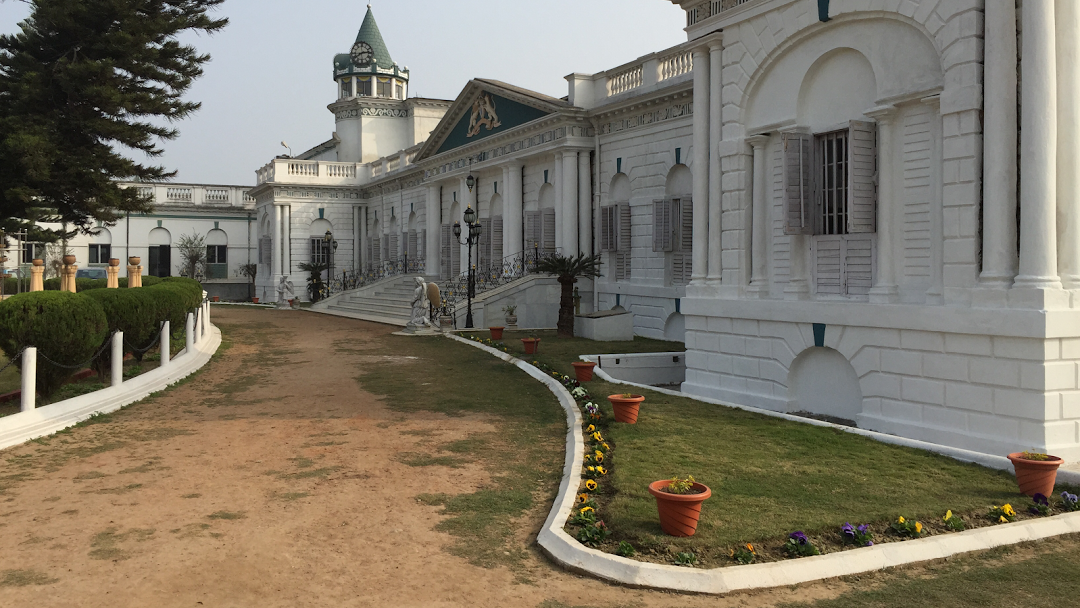
Now, coming back to the Mughals and the remains of the Mughal empire monuments of Murshidabad, the Nawabi Capital of Bengal – the chief attraction is the Hazarduari Palace or the Palace of Thousand Doors. This 1829 built, administrative building was commissioned by the then Nawab of Bengal , Humayun Jah for administrative purposes. At that time the Nawab was just a titular head and the British rule had already started – in fact it’s more than 50 years after the Battle of Plassey. So, this opulent structure was built under the supervision of a 19th century British architect Duncan McLeod, who was part of the Bengal Corp of Engineers
Hazarduari Palace with the Clock Tower opposite of it
Hazarduari was meant to be an administrative building lying just opposite to the Nizamat Imambara, the largest congregation hall for the muslims in India. The whole area was well planned to have a clock tower and a mosque called madina mosque – thus serving all facets of religion and trade. The clock tower was used to determine the time of arrival of sailors and merchants at banks of river bhagirathi. Now, this 130 metres long opulent structure with 1000 doors (of which 100 are false doors) serves as a museum depicting the history of the Mughal era in Bengal. The Nizamat Imambara lying opposite to was built in 1848 when the original imambara built by the last of Nawab of Bengal, Siraj Ud Daula burned down in a fire in 1847
The Nizamat Imambara with the clock tower at front and the Madina Mosque on the leftKatra Masjid, the oldest mosque of murshidabad having the grave of its founder Murshid Quli Khan
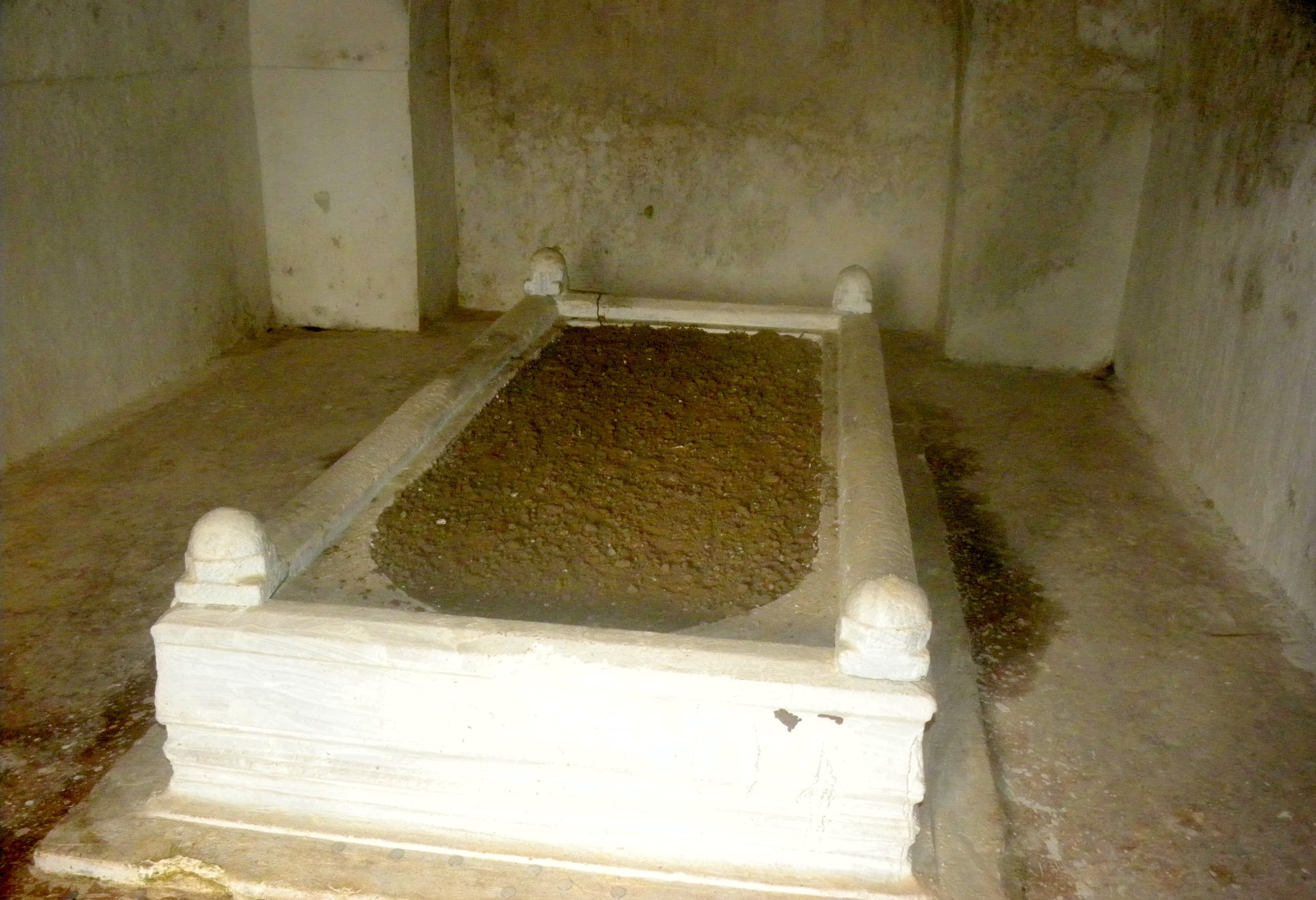
Moving back in time, we visit another popular structure of Mughal Bengal – the largest mosque of Murshidabad, the Katra Masjid which houses the grave of the founder of Murshidabad, Murshid Quli Khan. This was the largest caravanserais of India which was built in 1724. The mosque with properly lined domed cells where maulavis performed namaz is a spectacle to watch, specially the 2 large towers which flanks on either sides. One of the towers got destroyed in the 1897 earthquake . The mosque had several domed cells which collectively housed 700 people for reading the Quran. The masjid is situated on a raised platform and one has to climb a flight of stairs to enter. Below these flight of stairs lies the tomb of Murshid Quli Khan, the founder of Murshidabad
Murshid Quli Khan’s grave
Murshid Quli Khan, a Hindu brahmin from the Deccan Plateau region was the first Nawab of Bengal. He changed religion after he was bought by a mughal Haji Safi. He worked as a Divan of Vidarbha region in Emperor Aurangzeb’s court . He was later transferred to Murshidabad and made the first Nawab of Bengal in 1717 by Faruskhiyar. It was Aurangzeb who gave him the title Murshid Quli Khan and permitted him to name the town on himself, – the city of Murshid Quli Khan, Murshidabad. He changed the city name when he finally got back to Murshidabad in 1717. He was the pioneer who changed the jagirdari and mansabdari system of medieval india to zamindari system.
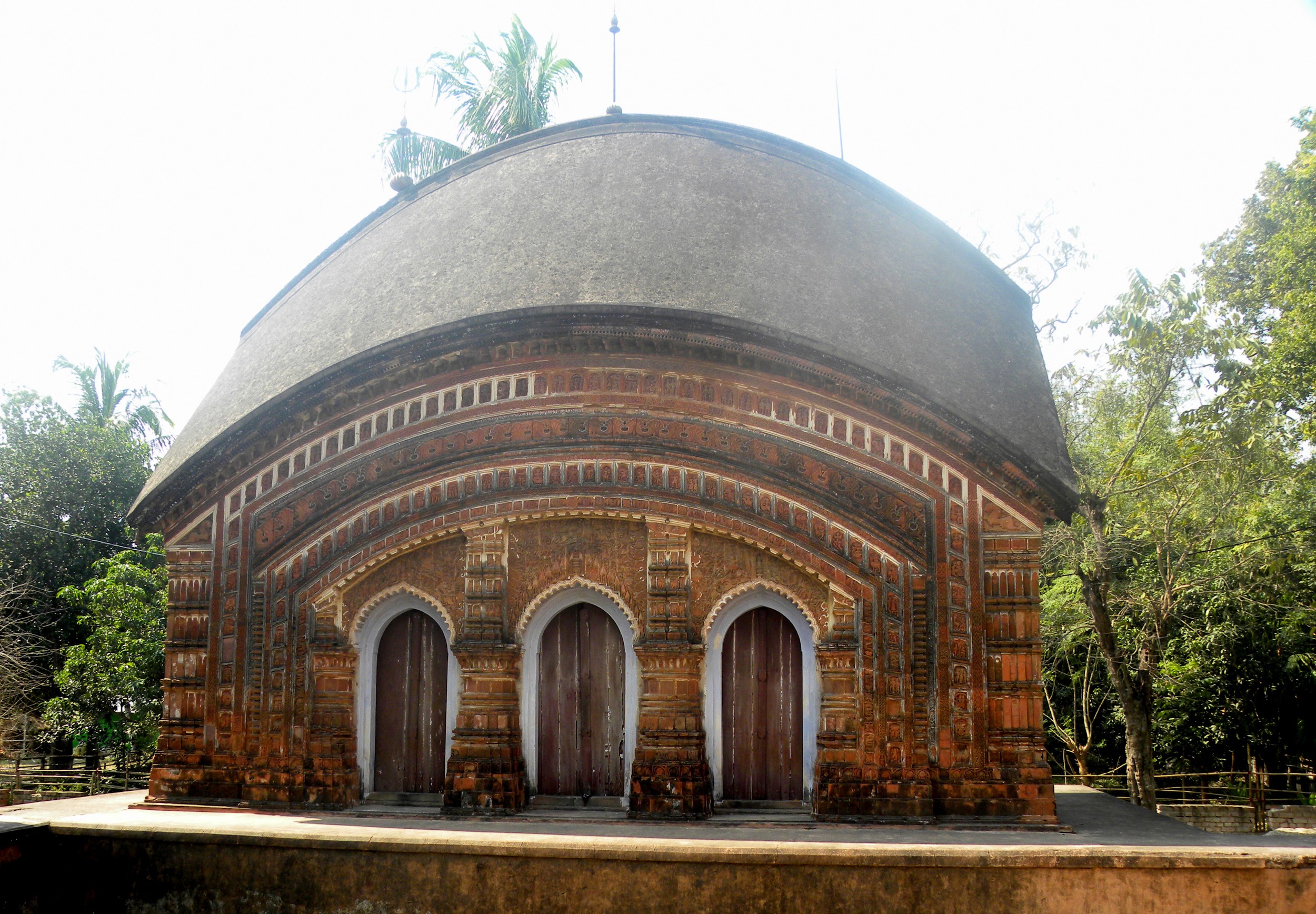
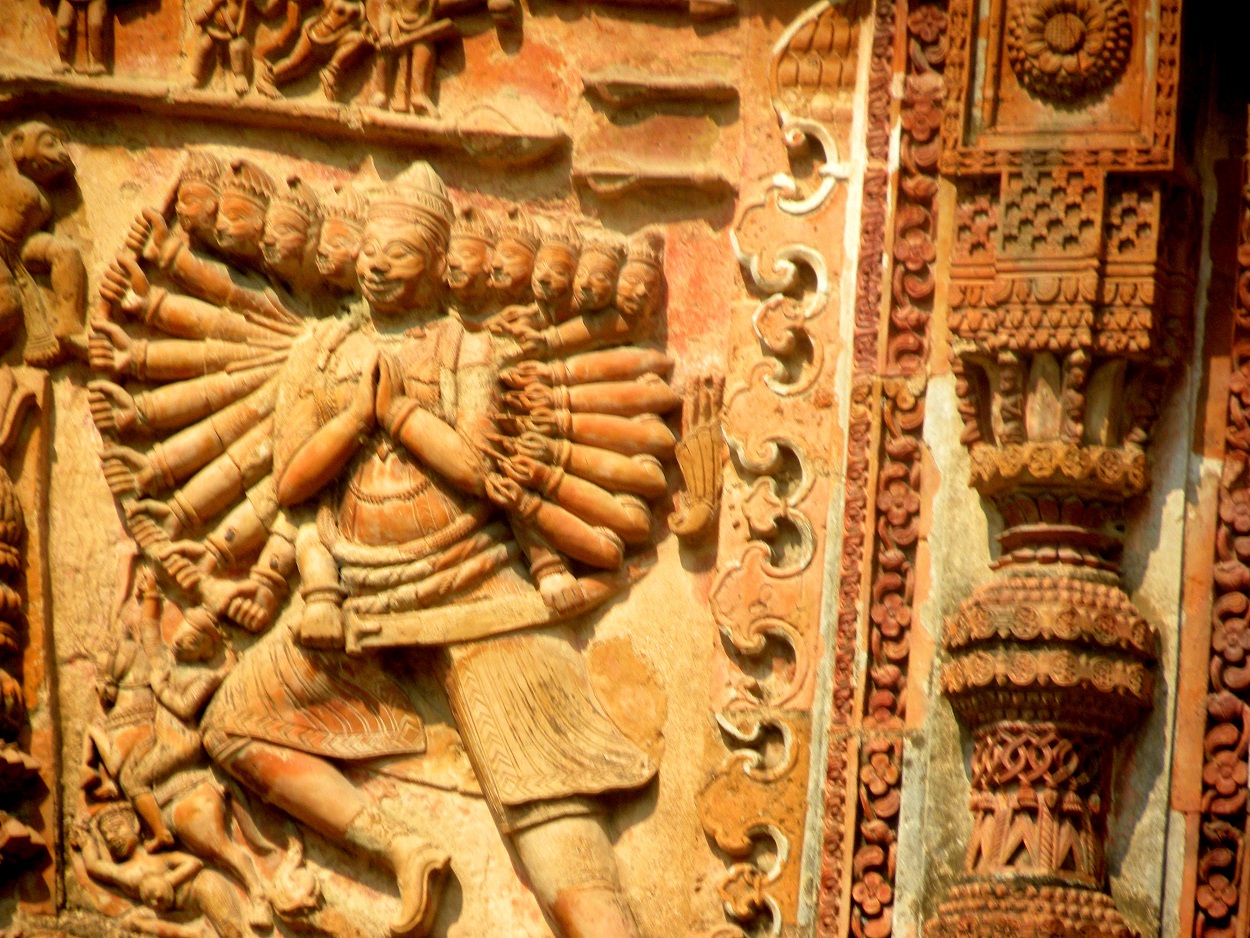
The first Nawab of Bengal was known for his taste in culture and religion. He not only built the Katra Masjid in 1727 but also built several terracotta temples all over Murshidabad district which bears testimonial to the rich craft of Bengal’s artwork and architecture. There were more than 500 terracotta temples, of which few like the Char Bangla temples still survives today showcasing the finest specimens of Bengal’s way of life, culture and religion.
The Charbangla Terracotta TemplesA scene from Ramayana depicted on the panels of the Charbangla temples
He was a pious man who regularly participated in local hindu festivals. He wanted to be touched by the footprints of noble men and hence wanted to be buried near a mosque. So, when he died in 30th June, 1727, he was buried under the stairs of the Katra Masjid, the mosque he entrusted an architect friend Murad Farash Khan to built
After his death, his grandson Sarfaraz Khan took over the reins but his father, Murshid’s son opposed it so he gave it away. After Murshid’s son’s death Sarfaraz took over the throne but he was soon attacked and defeated by Alivardi Khan in1746. His unfinished mosque still lies in Murshidabad.
The Unfinished Mosque of Sarfaraz Khan
Alivardi reigned till 1756 and defeated the Marathas in the Burdwan war. He saved many a bengalis from the Maratha attacks. It was the grandchild of Alivardi, Siraj Ud Daula who finally took over the throne in 1756 and thus began the story of treachery and british annexation
The last Nawab of Bengal, Sira Ud Daula faced opposition from both within the family and from outside. His aunt Ghasti Begum was against him and wanted her father’s throne while the British were trying to capture the town. Ultimately, Robert Clive defeated him in the Battle of Plassey playing a cruel game. Despite having the advantage of a large army of 50,000 people, horses and elephants, guns and canons, Siraj lost as his aunt Ghasiti Begum and his general Mir Jafar conspired against him and gave information to the British. Added to this was monsoon rains which made the Indian soldiers gun powder wet while the British could save theirs. Ultimately Siraj was assassinated by treacherous Mir Jafar and he was appointed the titular Nawab of Bengal by the British. Mir Jafar hounded down and killed every member of the Siraj’s family including Ghasiti Begum and her sons who now liea buried along with Siraj in Khosbagh
Namak Haram Deori
Jafarganj Cemetery
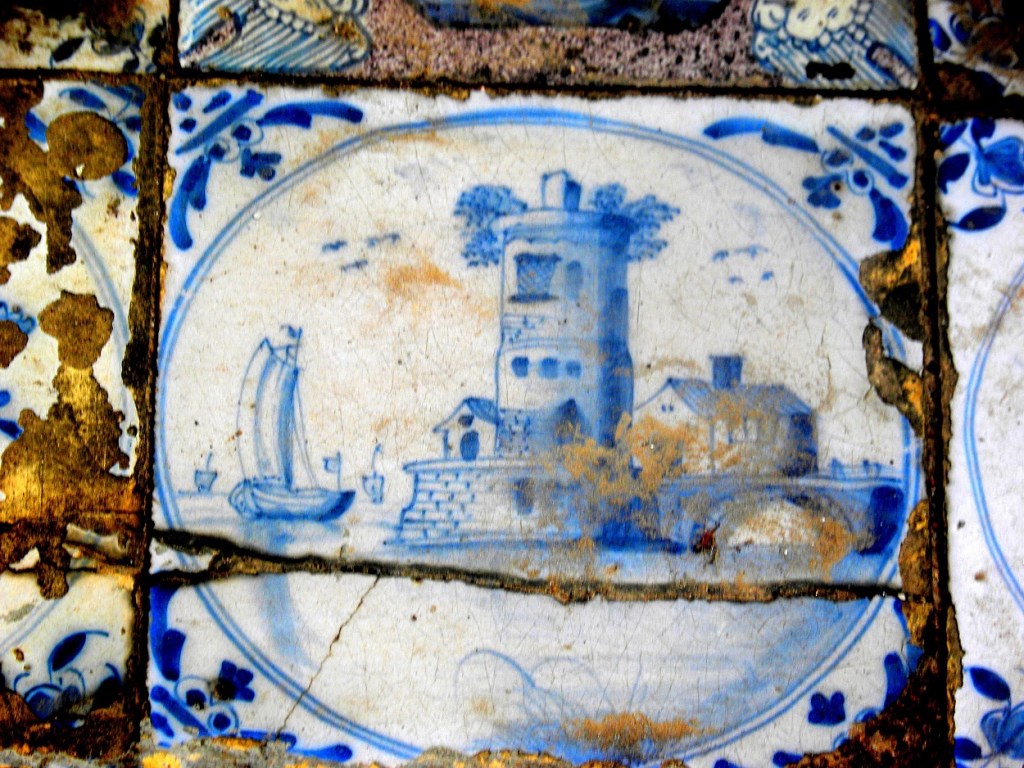
Imported tiles on the graves
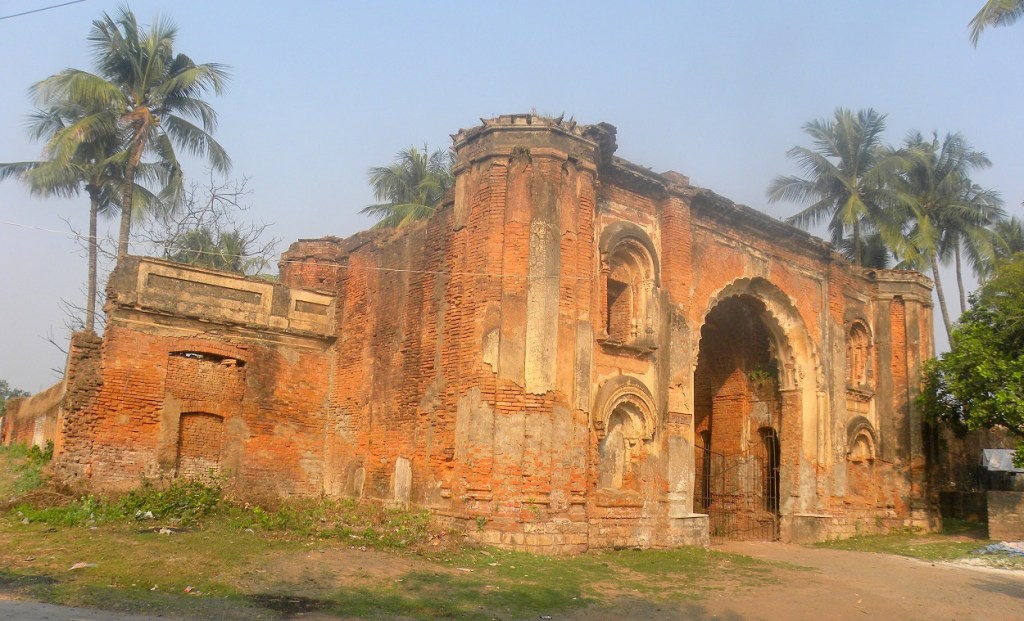
Mir Jafar’s treachery was marked in history and collective memory of Indians, so much so that even today people call a traitor by his name. The descendants of Mir Jafar still live in Murshidabad under this humiliation while the town is rife with monuments and structures built by him and his successors. Mir Jafar and his clan lie buried in an elaborate cemetery in Jafarganj,the ruins of his palace, Namak Haram Deori are still there while nothing survives of Siraj.
Some plaques and ruins remain in the Battlefield of Plassey, some kilometers away of Murshidabad. The house and office of Jagat Seth, a diwan and money lender of Siraj still remains. It is here where the Battle of Plassey deal was signed between Robert Clive and Ghasiti Begum and Mir Jafar.
Residency Cemetery for Europeans
Much later in the colonial period, the British moved the capital of Murshidabad district to Cossimbazar, Berhampore, site where Charnock landed first. It’s here modern administrative power lies in the Murshidabad district of bengal. The then Governor general Warren Hastings used to visit and stay in Berhampore and so did a substantial British, Dutch and other colonial population. In fact, his wife is buried in Berhampore’s Old English cemetery which is also an ASI heritage spot. So several elaborate cemeteries like the Dutch cemetery, Residency Cemetery, Old English Cemetery came up steeped in european architecture which are now designated ASI listed heritage monuments
Today, all this is visible when you visit the erstwhile capital of Mughal Bengal, Murshidabad and watch the scenes unfold in the 40 mins light and sound show which showcases the bengal story at the horse shoe shaped Moti Jheel in Murshidabad.
Moti Jheel – The horse shoe lake opposite to Moti Jheel Mosque bulit for Ghasiti Begum
Historian and writer, William Darlymple’s latest book,
“The Anarchy” chronicles this story of the British East Company’s rise very well.
“All Andamanese tradition dates back to some great cataclysm which submerged a greater part of the land. The Andamanese say that before this cataclysm they were all one tribe, and spoke the same language, but that after it, the survivors became separated into tribes, their languages gradually differed until at last they became mutually unintelligible as at present”
–MV Portman
These words by MV Portman, the Officer in charge of the Andamanese back in 1899, and the writer of ‘A History of Our Relations with the Andamanese’ rang in my ears when I landed in Port Blair for my maiden Andaman visit.
Andaman and Nicobar Islands
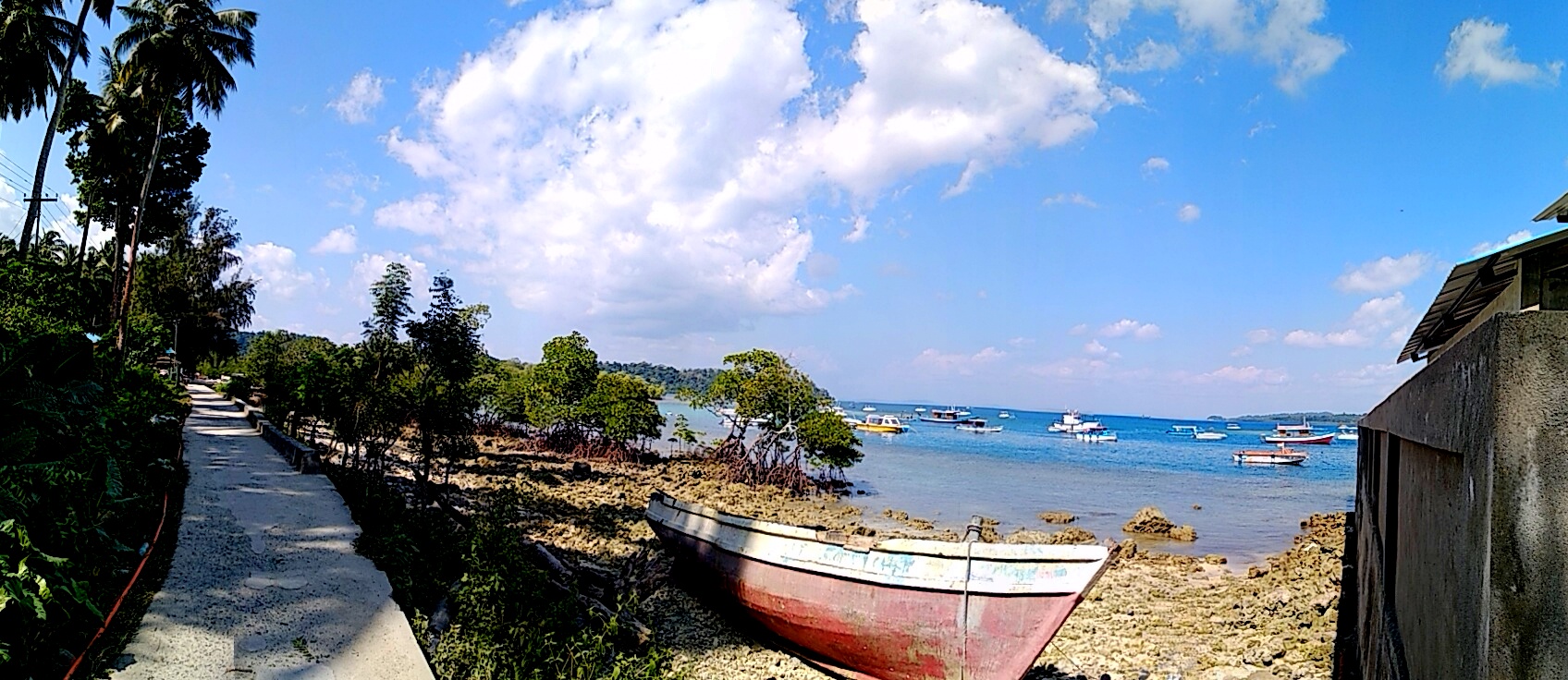
Andaman and Nicobar Islands, an archipelago of 500 odd tropical islands which sits in the Pacific Ring of fire is a molten hotspot of history, culture, evolution, and wildlife – everything a country is built on.
It’s not just science and evolution which demarcates how life starts on the island and then moves onto the mainland. It’s years of history and development of civilization that islands teach us the same origin theory. Andaman with its indigenous population and the history of British penal settlement, the Kalapani concept makes for a unique experience. It can be compared to the Amazon of India or the Galapagos Island of India.
Exploring the Islands
Having years of anticipation of reading about these unique tribes right from the time I read Arthur Conan Doyle’s “The Sign of Four” part of the Adventures of the Sherlock Holmes series. Yes, that tribal boy in the story is taken from the actual capturing of a 10-year-old Andamanese boy “Jack Andaman” who was transported to Calcutta so the British could study him.
Having fed these stories along with the modern perception of an exotic island vacation, I begin on the journey of exploring the islands.
As soon as I set foot on the capital of Andaman and Nicobar Islands, Port Blair, I knew what I was looking for. It’s not just the regular tourist exploits but the urge to dig deeper into the region.
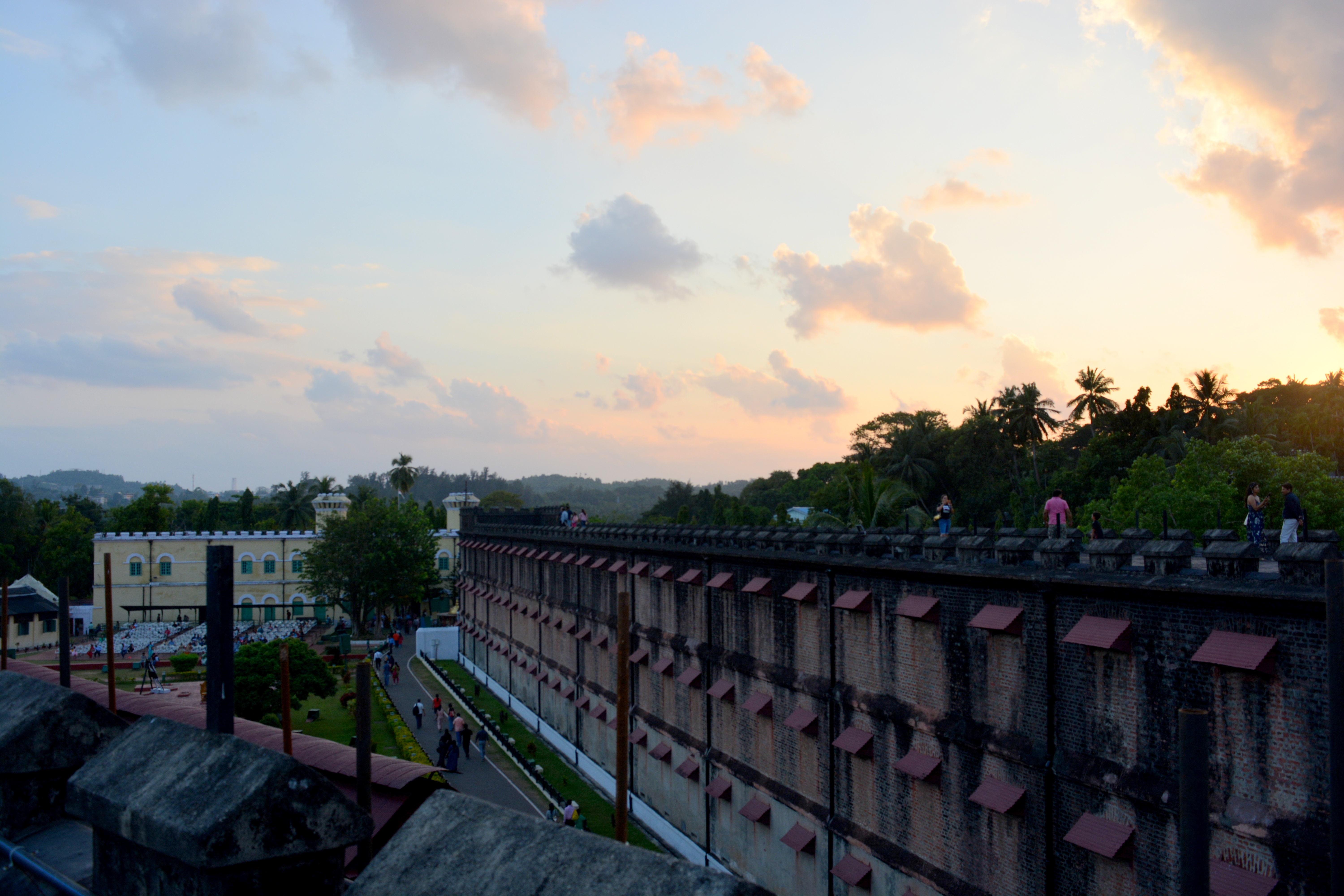
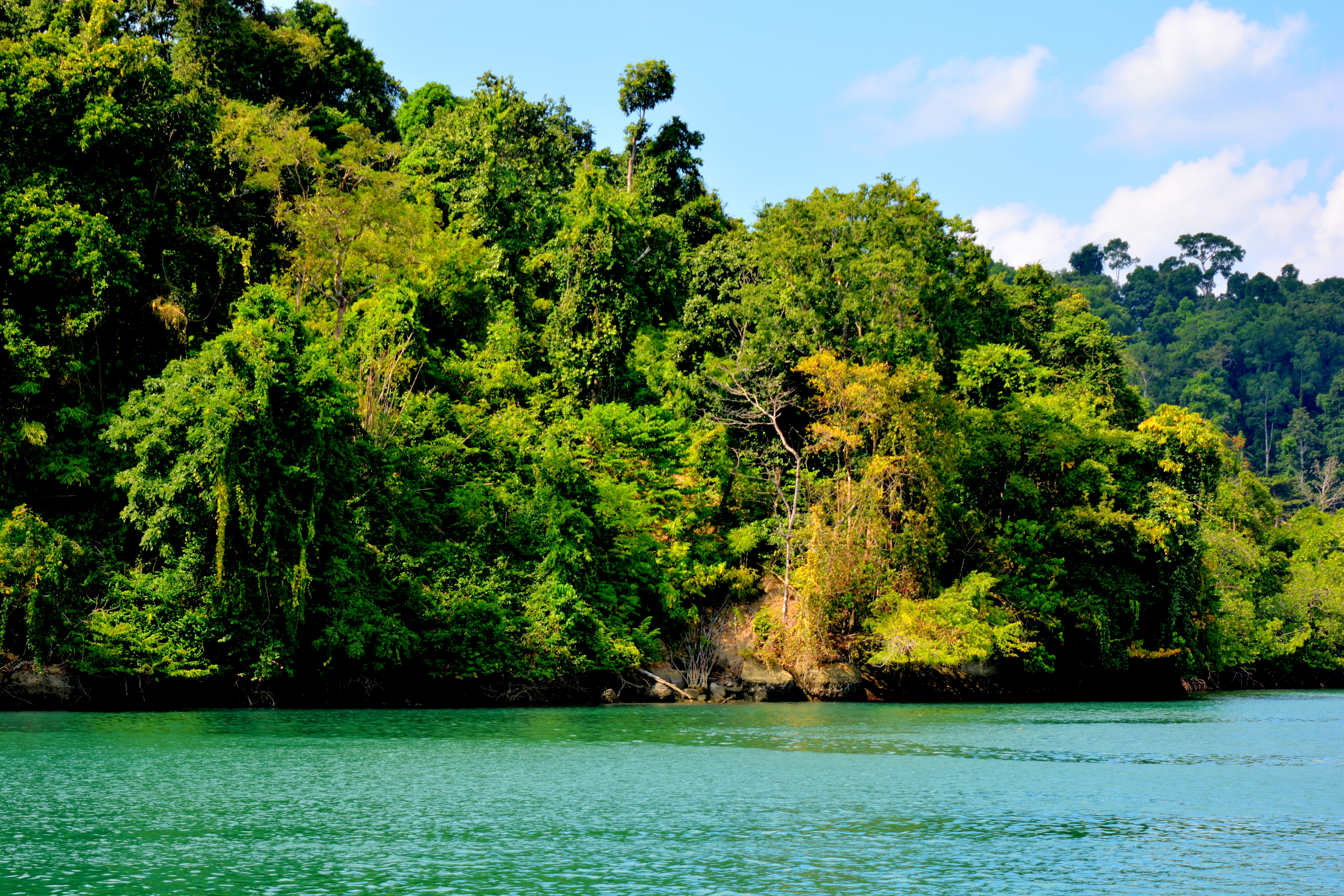
Cellular JailJarwa Land – Forests of Baratang
I began with a Cellular Jail tour where delved deeper into the exploits of the British who transported prisoners mainly Hindu rebels to quash their spirit with hard labor and brutal torture, ultimately killing many and making fanatics out of many people like Veer Savarkar.
This is just the beginning of the torture. The land which once belonged to 5 tribes has been plundered and rendered into a citadel of Bengalis, Telugu, and Tamil people who inherited the legacy of the British colonial masters.
Finding the Tribes
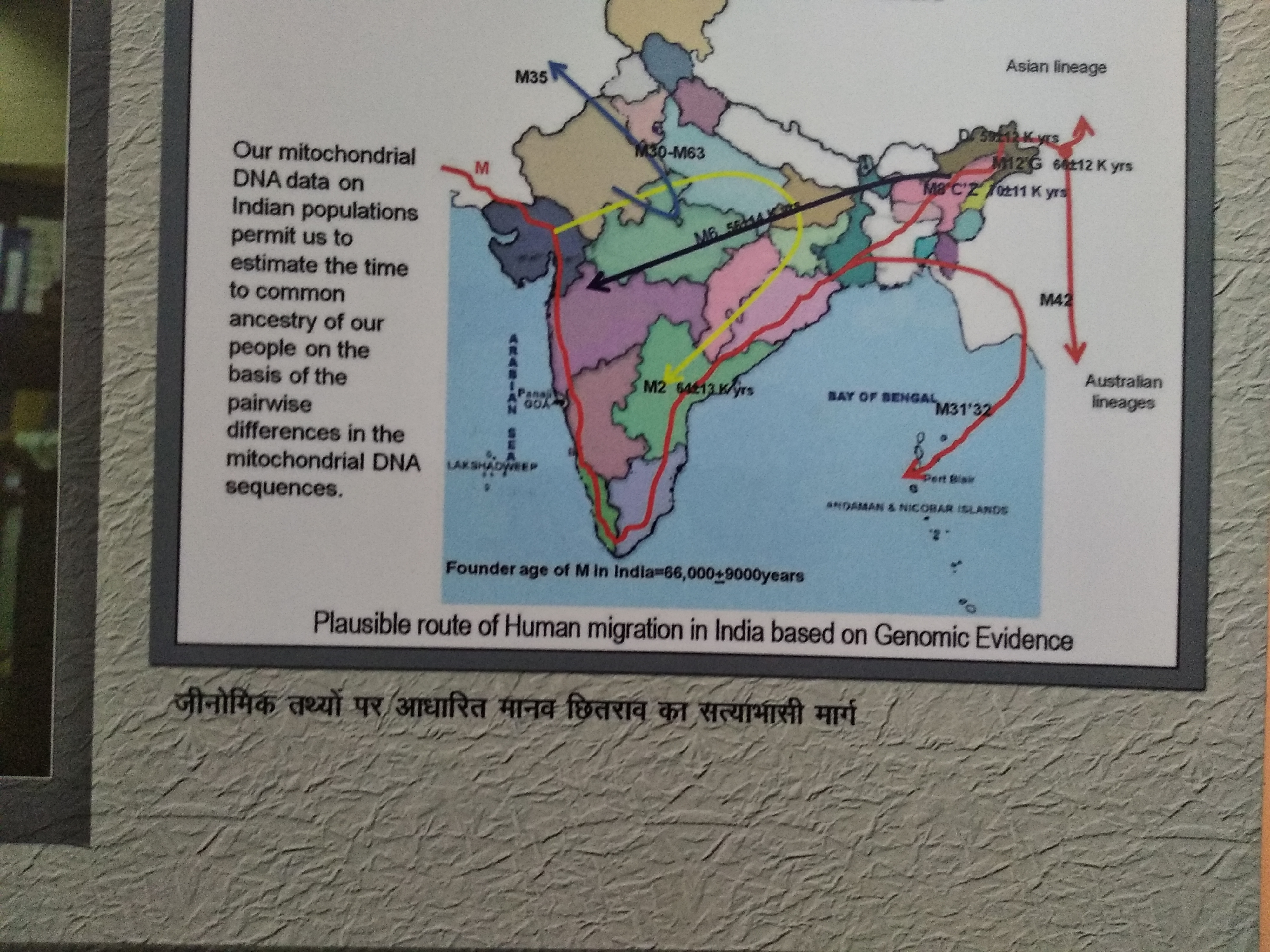
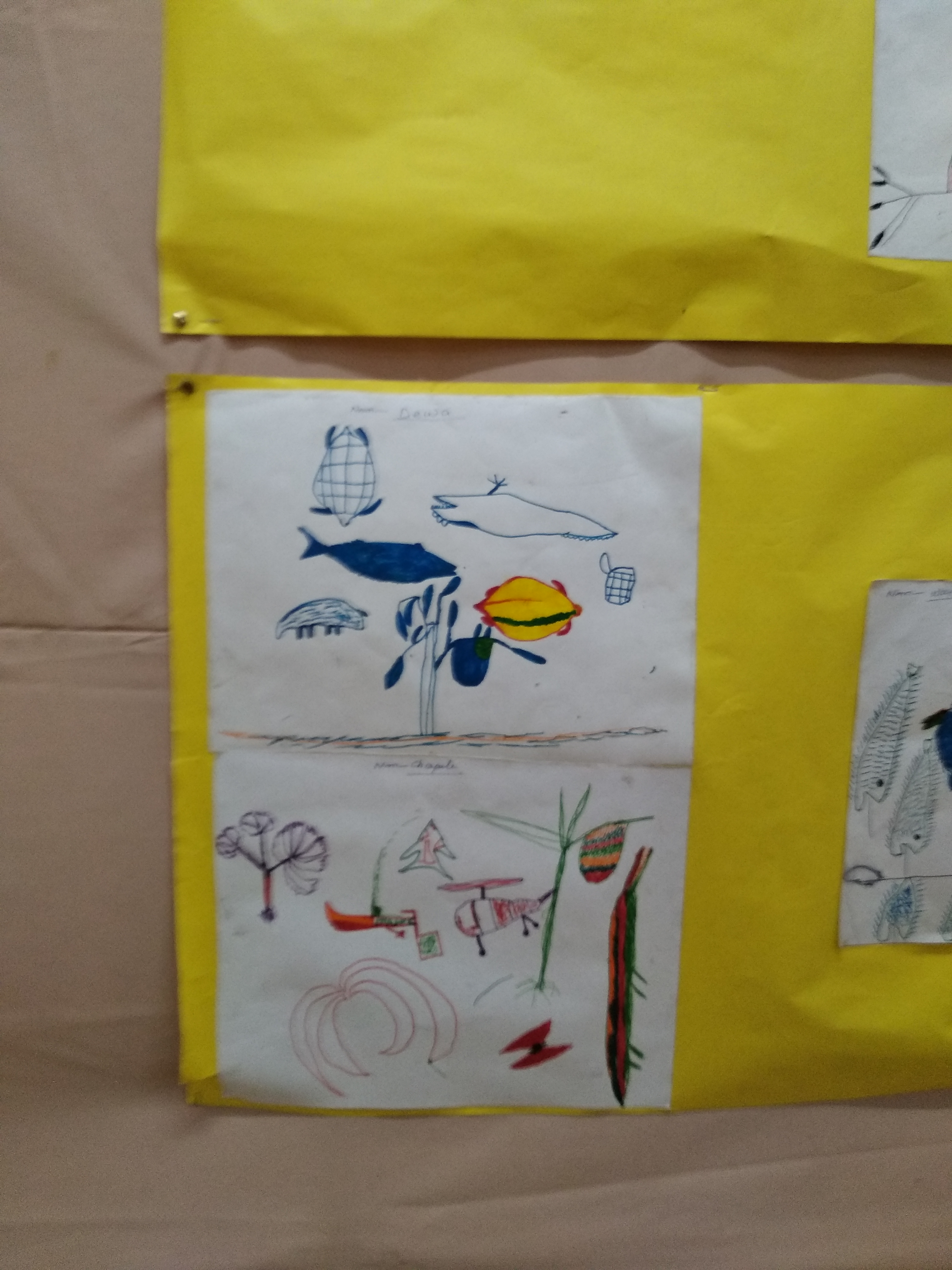
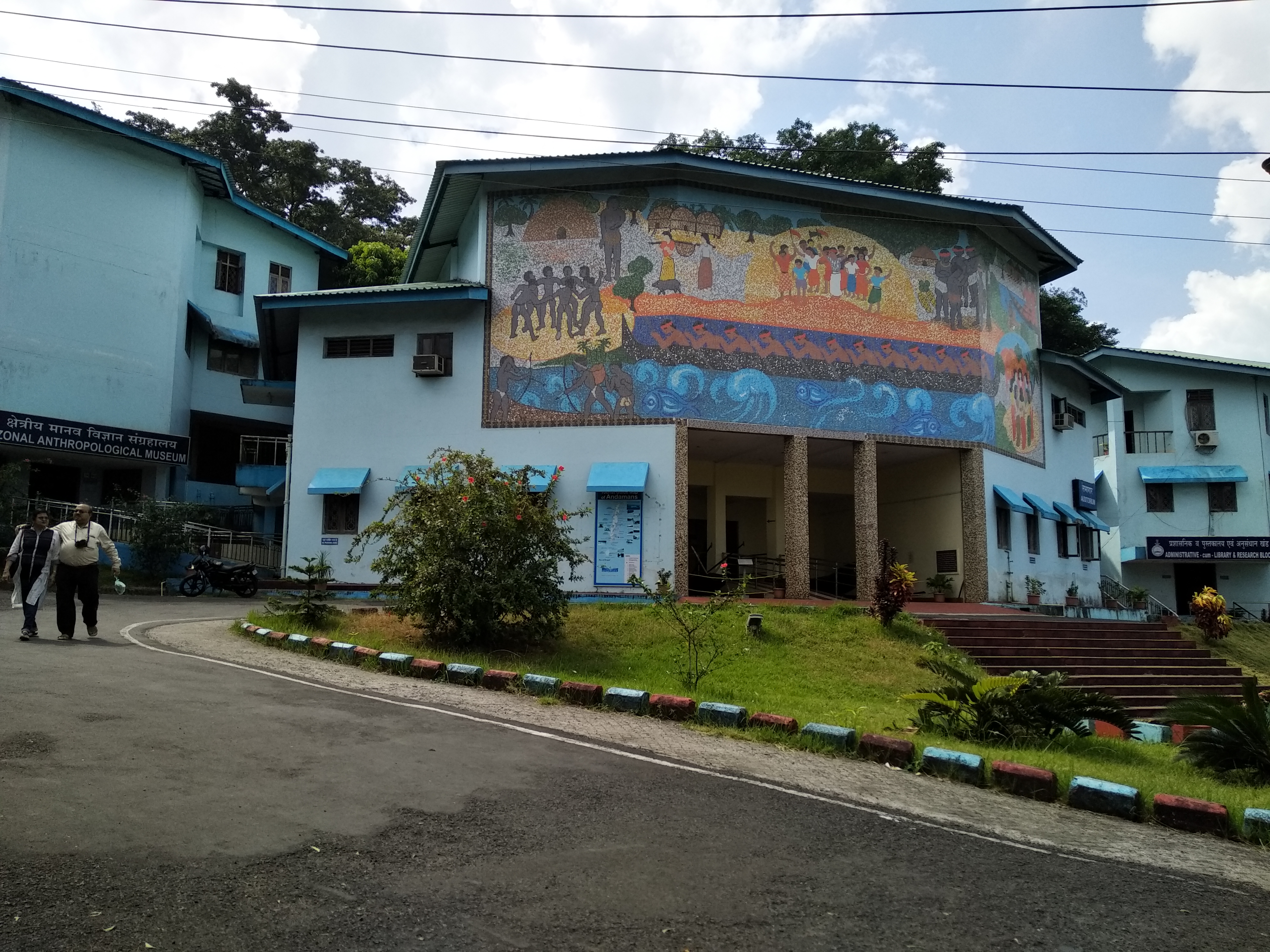
When you visit the anthropological museum of Port Blair and explore the rich cultural heritage of the place you understand Andaman isn’t just about the Jarawas you hear about. Neither is it about those exotic scuba diving and snorkeling destinations of Neil and Havelock islands. These fragile islands host a rich ecosystem, something that makes you think of Darwin’s Galapagos Islands tales.
human migration and indigenous tribesartwork by jarwa children displayed in the anthropological museumThe Anthropological Museum of Andaman
And it is this that the indigenous communities tried to protect when the British carved out the citadel from the forests. In fact, one of the bloodiest battles for saving the forests and nature was fought by the Greater Andamanese Tribe who went extinct when thousands of them were killed in the Battle of Aberdeen.
From thousands, they are reduced to a population of 15 who live under designated regions now. The story doesn’t end here several other tribes live in this region.
Categorically there are 5 distinct tribes living in Andaman – 3 Negrito Tribes; the Greater Andamanese, Onge, Jarawa, Sentinelese and 2 Mongoloid Tribes; Shompen and Nicobarese
Of these, we know only the story of 2 tribes – the Greater Andamanese and the Nicobarese whom the British have exploited much.
Cut to this day these 2 indigenous communities live in harmony with millions of others who throng the land. But the others still resist outsiders including the Sentinelese who kill people trying to reach their island, just like some Amazon tribes.
The Jarawas on the other hand seeks harmony by living on their own, foraging in the forest, and occasionally interacting with the forest officials. The administrators of Andaman fought a hard battle trying to tame these Jarawas. Today the main road connecting the whole Andaman, the Andaman Trunk Road runs through the Jarawa Tribal Reserve. Hundreds of tourists ply through this road to reach Baratang – a mangrove creek region harboring unique limestone caves, a mud volcano, and an island full of 30 exotic species of Parrots, the Parrot Island.
I was on my 3rd day of Andaman exploration when I encountered the fleeting glimpse of one such Jarawa Man. In these 3 days, I have known the history, heritage, culture, people, and the fragile environment of the islands. All this has made Portman’s writing more meaningful.
The Reminder of the Legacy
Indeed, the fragile islands with rich biodiversity, ecosystem, and people were one. Their struggle was one and it still is. Together with the indigenous people, Andaman with its new sets of people is fighting a battle to save their forests, their land, especially in times of a global pandemic which has affected most people on the islands.
A legacy of time
That’s how I remember the most cherished experience of my life and that’s how the people of this land should be remembered – the Unity of the Forest and the Blue Waters – the Tribe of Oneness
A book and a hot cuppa are an eternal couple which can’t be separated, especially when the rain comes calling at your door. Who doesn’t love to get cosy with a book on a rainy evening. It’s like the rains have stopped time so that you can slow down and look around.
Did you hear something? Is there someone at the door? Or is it the earthy smell at the window? Perhaps a musical balladplaying on the tinned roof? Or is it a distant rainbow?
Whatever be it, the rain gives us the wings to our imagination. So, when you get to hear it in a book it’s as if you can hear a podcast of rain sounds.
But it’s hard to find such a book. Have you met one? Perhaps on a coffee date in a heavy downpour in July.
Chasing the Monsoon by Alexander Frater
Well, if you haven’t these monsoon book recommendations are certainly for you.
“As a romantic ideal, turbulent, impoverished India could still weave its spell, and the key to it all – the colours, the moods, the scents, the subtle, mysterious light, the poetry, the heightened expectations, the kind of beauty that made your heart miss a beat – well, that remained the monsoon.”
If you’re a traveler waiting to unleash the pluviophile in you then this monsoon trail through India is just the thing from you. From the wettest place on earth in Meghalaya to the Monsoon music of Kerala. This is a story hard to miss.
One Hundred Years of Solitude by Gabriel Garcia Marquez
Surely, you have heard of this iconic mystical classic. The fictional town of Macondo with all its ups and downs, troubles and melancholy is just like the water. The water that come down as rains
“On rainy afternoons, embroidering with a group of friends on the begonia porch, she would lose the thread of the conversation and a tear of nostalgia would salt her palate when she saw the strips of damp earth and the piles of mud that the earthworms had pushed up in the garden. Those secret tastes, defeated in the past by oranges and rhubarb, broke out into an irrepressible urge when she began to weep. She went back to eating earth.
The first time she did it almost out of curiosity, sure that the bad taste would be the best cure for the temptation. And, in fact, she could not bear the earth in her mouth. But she persevered, overcome by the growing anxiety, and little by little she was getting back her ancestral appetite, the taste of primary minerals, the unbridled satisfaction of what was the original food.
She would put handfuls of earth in her pockets, and ate them in small bits without being seen, with a confused feeling of pleasure and rage, as she instructed her girl friends in the most difficult needlepoint and spoke about other men, who did not deserve the sacrifice of having one eat the whitewash on the walls because of them. The handfuls of earth made the only man who deserved that show of degradation less remote and more certain, as if the ground that he walked on with his fine patent leather boots in another part of the world were transmitting to her the weight and the temperature of his blood in a mineral savor that left a harsh aftertaste in her mouth and a sediment of peace in her heart.”
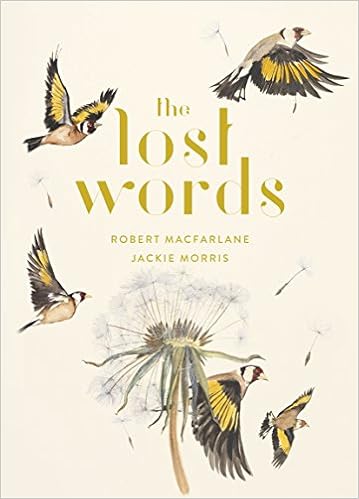
Robert Macfarlane’s The Lost Words
It’s not just fiction which can thrill you with monsoon nature. This book telling the tales of birds and wildlife can equally cast a spell on you. Artist Jackie Morris has created some beautiful illustrations which literally transforms your surroundings and transfixes you to nature.
All over the country, there are words disappearing from children’s lives. Words like Dandelion, Otter, Bramble, Acorn and Lark represent the natural world of childhood, a rich landscape of discovery and imagination that is fading from children’s minds.
The Lost Words stands against the disappearance of wild childhood. It is a joyful celebration of the poetry of nature words and the living glory of our distinctive, British countryside. With acrostic spell-poems by peerless wordsmith Robert Macfarlane and hand-painted illustrations by Jackie Morris, this enchanting book captures the irreplaceable magic of language and nature for all ages.
Remember the carefree childhood days when ‘rainy day’ meant a holiday. A day snuggled up in bed with your favourite food and book. And splashing those puddles in the evening while displaying your colourful umbrella. With the magic of your favourite childhood author, Ruskin Bond, you can get all those back. Just tune in and play the Blue Umbrella. This innocent and witty novella starring a young girl and a shopkeeper will take you back in time
“She walked home through the darkening glade, singing of the stars; and the trees stood still and listened to her, and the mountains were glad.”
J.K. Rowling’s Harry Potter Series
Who wouldn’t love to take dip into the magical blue world of Hogwarts. The spooky air and the mushy terrains with a black and blue theme, surely resembles our rainy world. Perfect fit for our imagination. It’s as if the rain is saying Wingardium Leviosa and drifting you to your magical wand – the books.
“Happiness can be found, even in the darkest of times, if one only remembers to turn on the light.”
Where the Rain Is Born Edited by Anita Nair
This list wouldn’t be complete without this breathtaking collection of stories taken from the best writers of india. This collection of short stories from Paul Zacharia, Kamala Das and other Malayalam writers has a petrichor effect as you peruse. One of the best short stories here is MT Vasudevan’s Karkitakam. Reading short stories is a privilege as they always leave you yearning for more, just like the rain. And you can always read in between your busy schedule.
7.Yann Martel’s Life of Pi
Last but not the least, is this epic tale of human and animal bonding which is best suited for a rainy day read. This is the ultimate choice to be in reality and in fiction all at the same time. It’s like taking your clouds to the sea to ride a growing cyclone. That’s how you make an adventure.
“Life is so beautiful that death has fallen in love with it, a jealous, possessive love that grabs at what it can. But life leaps over oblivion lightly, losing only a thing or two of no importance, and gloom is but the passing shadow of a cloud…”
So, there you go, books that cast a monsoon spell. Remember to take them out on a coffee date sometime. The rains are waiting for you two.
What’s raging these days apart from the pandemic? It’s a cyclone. Surely you have heard about raging cyclones all over the world. Within 2 week, 2 different parts of India experienced cyclones. Mumbai and Kolkata were devastated in the month of May and even after a month the situation has not improved much. Meanwhile countries like Mexico have also faced cyclones making people’s life miserable.
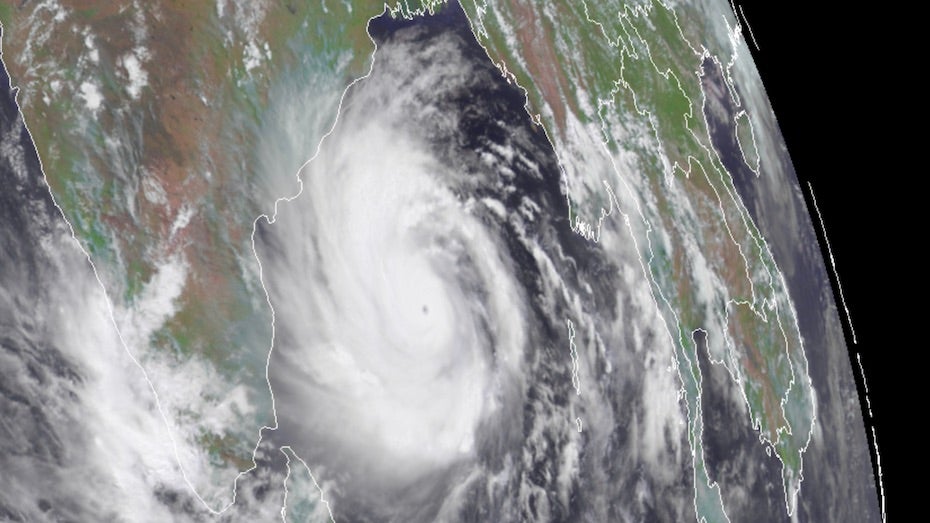
cyclone amphan
Now cyclones are quite common in the tropics and the subtropics. 2020 started with rising temperatures in the pacific belt which resulted in cyclonic formations. There are more than 46 cyclones that have emerged in the region but only a few were deadly. Of this the Cyclone Harold in the South Pacific was the most destructive. But what makes some of these cyclones work while others don’t? Let’s investigate.
How do air circulate?
Now, before we delve deeper into cyclone structure, let us look at how cyclones are formed.
Why and How a Cyclone emerges? It’s a simple process of atmospheric air circulations that causes this.
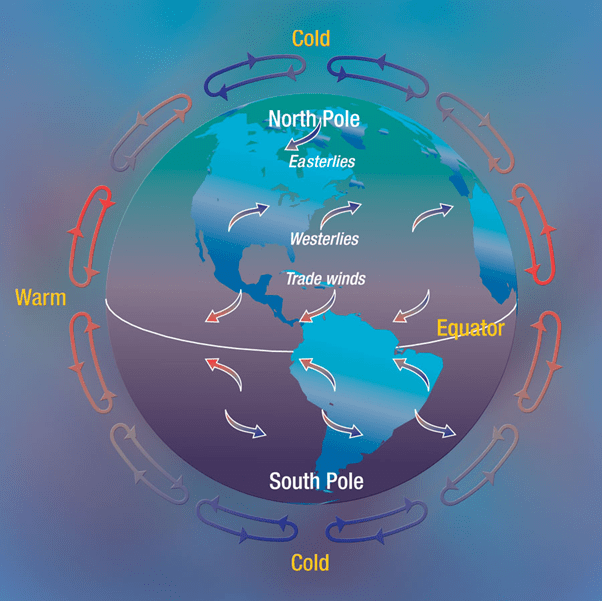
As the sun rays hit the earth, everything heats up including the air in the sky and the water in the ocean. This heat moves in a systematic way. It moves in layers and passes down from one layer to another. As one layer becomes warm it moves up just like a hot air balloon and the cold air comes down to the surface. This way air is circulated from the equator to the polar region.
Now, if you think the earth as a stationary object this is quite simple. Sun rays fall on the equator. Warm air rises from the equator and then moves through the region to cool down, ultimately descending into the poles as cold air. So, the region where this cold air lands has high atmospheric pressure while the warm equator region has low atmospheric pressure.
But the earth moves like a spinning top, only at a lesser speed as it is quite bigger in size. So everything around it including the atmospheric air and the ocean currents. This turbulence complicates the simple mode of heat movement, called convection. This ultimately results in ocean current and atmospheric currents imbalance. All this makes way for cyclones, hurricanes and tornadoes.
Now, let us look at how these natural elements develop.
As we see the earth rotates in its own axis like slow motion spinning top and hence everything on it bulges and moves along with it.
But this movement of the oceans and air isn’t haphazard. It moves in a systematic pattern. If you put a dot at both the upper and lower end of a spinning top and spin it, you would see that the 2 dots seem to move in different directions. This is exactly what happens on earth.
The ocean currents and the air on the northern part of earth moves in the right hand direction and those at the southern part moves in the left hand direction. The middle equator portion moves in a static kind of way. This is what is known as the Coriolis Effect and this acts as a catalyst for cyclone formation.
How does the Coriolis Effect create cyclones?
Now, the question is how does it create cyclones and why is it crucial in understanding cyclone forming patterns.
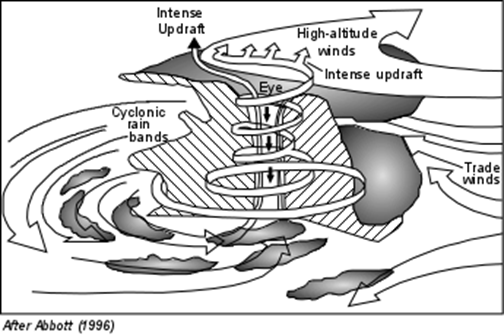
So, warm air rises up and creates low pressure in the area. Now, just like water flows from a high level to a lower level unless both are equal. Air too will move from the high pressure zone to the low pressure zone. But the Coriolis effect doesn’t let it do it. It diverts to the right hand side in the northern hemisphere which makes it move in a counterclockwise direction which results in a cyclone.
The opposite happens in the southern hemisphere and the air moves in a clockwise direction. This pattern of circular movements create cyclones
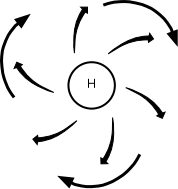
Now, Cold air tries to fall on the surface. It tries to descend in a spiral manner but the Coriolis effect diverts it to the right in the northern hemisphere and to the left in the southern hemisphere. This circular movements in high pressure region creates anticyclones
So, we get circular winds in both the hemispheres depending on the low pressure and high pressure zones. High pressure zones get anti-cyclonic winds and low pressure one get cyclonic winds.
What causes cyclones to be effective?
Now we see these cyclonic and anticyclonic winds developing daily but not all succeed in making proper cyclones. Cyclones emerge when these winds move in counter clockwise inward motion in the low pressure region . As they move inside they suck up clouds and thunderstorms creating a great depression and oncoming cyclone. This is the reason why most cyclones occur around the tropical region because of their warming nature and the spinning movement of the earth.
Now, as the cyclone moves towards land it loses some of its speed and inward movement intensity. Thus releasing some hot air and the thunderstorms.
It is this clouds and thunderstorms gathering which are picked up by satellites and warn us about a cyclone
So, that’s how a cyclone develops and the coriolis effect has a crucial role to play in it. So, the next time you are facing a cyclone you know where it comes from.







/arc-anglerfish-arc2-prod-tronc.s3.amazonaws.com/public/GUPCA5TRGDRCFVATAMMTVQX3AE.jpg)

















































 Agantuk's Desk - Explore, Implore, Reverberate