
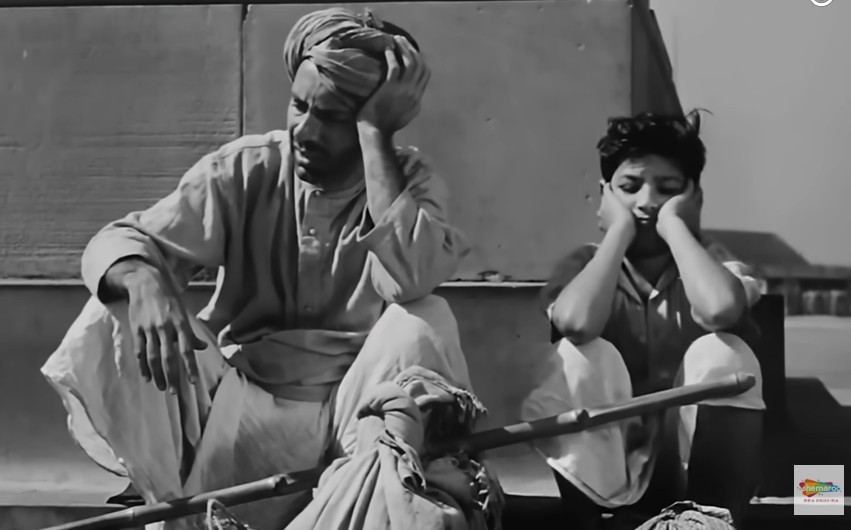
I first saw Bimal Roy’s ‘Do Bigha Zamin’ in my teenage years when I was heavily reading various Bengali literature, which influenced the film storyline. Not only Tagore’s poem (Dui Bigha Jomi) of the same name, but I also see context from various poems. The film’s depiction of how villages are gradually migrating into cities in a capitalist world where factories are taking over farmland reminds me of Subhas Mukhopadhyay’s poem “Sagoto” or “Welcome”, where there is a line called “gram uthe geche sohore, shuno ghor, shuno gola, dhanbona jomi ache pore”, roughly meaning “the villages have moved to cities, the houses and the fields are empty now, there is no one to harvest the paddy fields”.
The film has the deliberate iteration of land being the goldmine – if you have that, you can earn everything – including the context of the song “Mausam Bita Jaye”, which reminded me of the novel “Good Earth”, where even in hunger, the farmer knows he must keep some money for seeds for future crop planting.
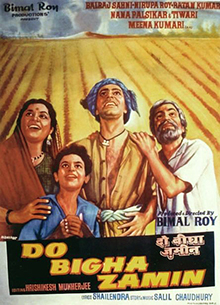
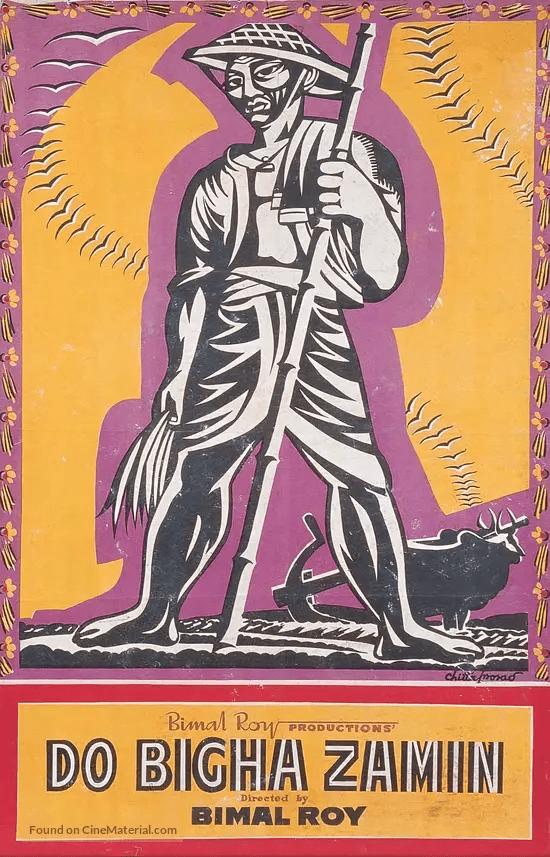
But after successive viewings of the film, I came to realise other aspects of the film, like the in-built depiction of patriarchy when farmers discuss their wives and when Sambhu refuses his wife’s idea that she too wants to work. Another important thing I noticed is how the idea of a model village or city has been subtly placed in the first half of the film, where we see Sambhu on a train to earn a living in the city, while some young men from the city discuss how the future is in villages and we should build “adarsh gao”.
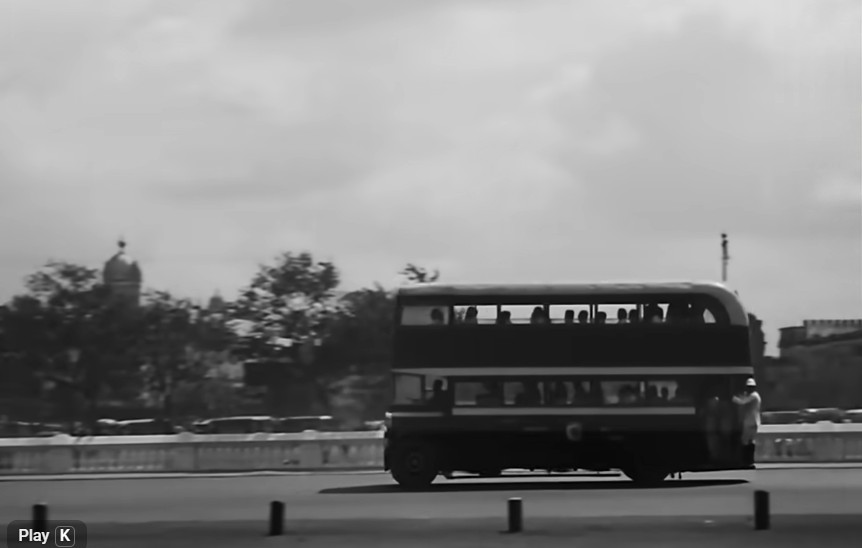
When I first saw the film, I had already heard Bimal Roy was influenced by Vittorio De Sica’s ‘Bicycle Thieves’, and I also knew that Raj Kapoor wished he had made a film like this, which he eventually did in ‘Boot Polish’. But back then, I had neither seen ‘Bicycle Thieves’ nor ‘Boot Polish’. So, after watching those two, I recognised how some scenes of Sambhu’s son exclaiming at double-decker buses and exploring the city were influenced by De Sica’s film.
Similarly, after watching ‘Boot Polish’, I realised not only is the same kid there in both the films, but also his mannerisms and dialogue delivery are kind of the same. How the boy took to pickpocketing in ‘Do Bigha Zamin’ can be compared to how he takes up begging in ‘Boot Polish’. In the same way, how Sambhu’s son reacts to his mother facing death due to an accident is quite similar to how the boy loses his sister in ‘Boot Polish’.
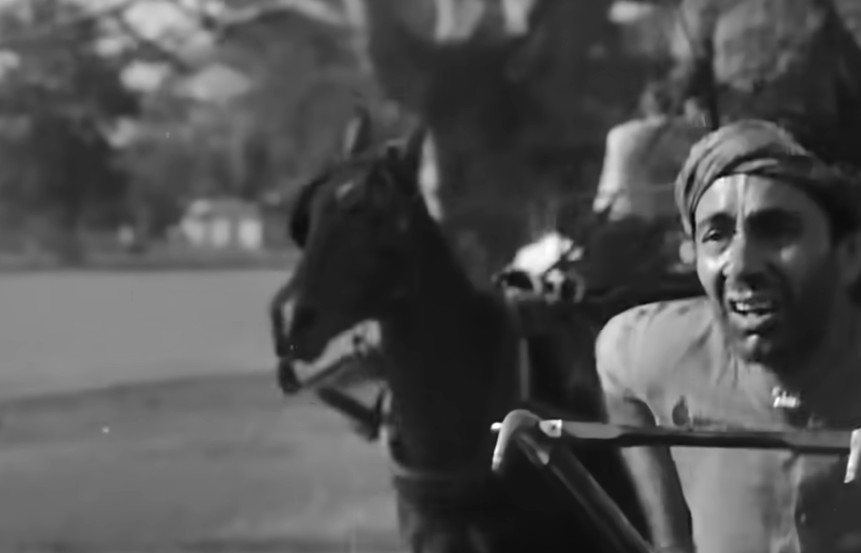
Lastly, viewing this again has made me realise the parallel between the iconic racing scene of ‘Do Bigha Zamin’ and ‘Naya Daur’. The man vs animal treatment depiction here is in similar lines with the cart vs motor car race, aka the industrialisation debate in ‘Naya Daur’. Only the context is different, making it look like different issues, but in the end, they are the same in different ages.
I would like to end by saying that seeing this film and ‘Mother India’ one after the other also made me realise the psychological difference in how people react to similar struggles.
Who decides the morality of the working class?
I should end this by adding one thing I learnt after writing this retrospective watch of ‘Do Bigha Zamin’, it’s an observation from a fellow classmate’s opinion about the film in the film appreciation course that I was doing. The young man had said that the film seems to showcase that the onus of morality is on the poor and not on the rich. This kind of stirred me and my class bias, the same way it stirred my bias when I heard my British penfriend use “wallah” for every Indian because (which he picked up from a Michael Bates comedy in his childhood), irrespective of their profession, like “editor wallah” or “journalist wallah”, etc. This made me feel odd, because we Indians only use the term “wallah” for working-class people like the “Rickshawallah” in “Do Bigha Zamin”, which ironically was the name of Salil Chowdhury’s story.
So, in essence, the boy from my class was right; we have put the onus on the poor in the film because in both these stories, Tagore’s poem and Salil Chowdhury’s short story (on which the film is based), are written from the upper-class or middle-class people’s point of view of the working class. It is not directly coming from someone like Monoronjon Baypari, a former rickshaw-puller turned writer.
 Agantuk's Desk - Explore, Implore, Reverberate
Leave a comment